

Automotive Basics

What to Verify About a Used Car Before Agreeing on a Price

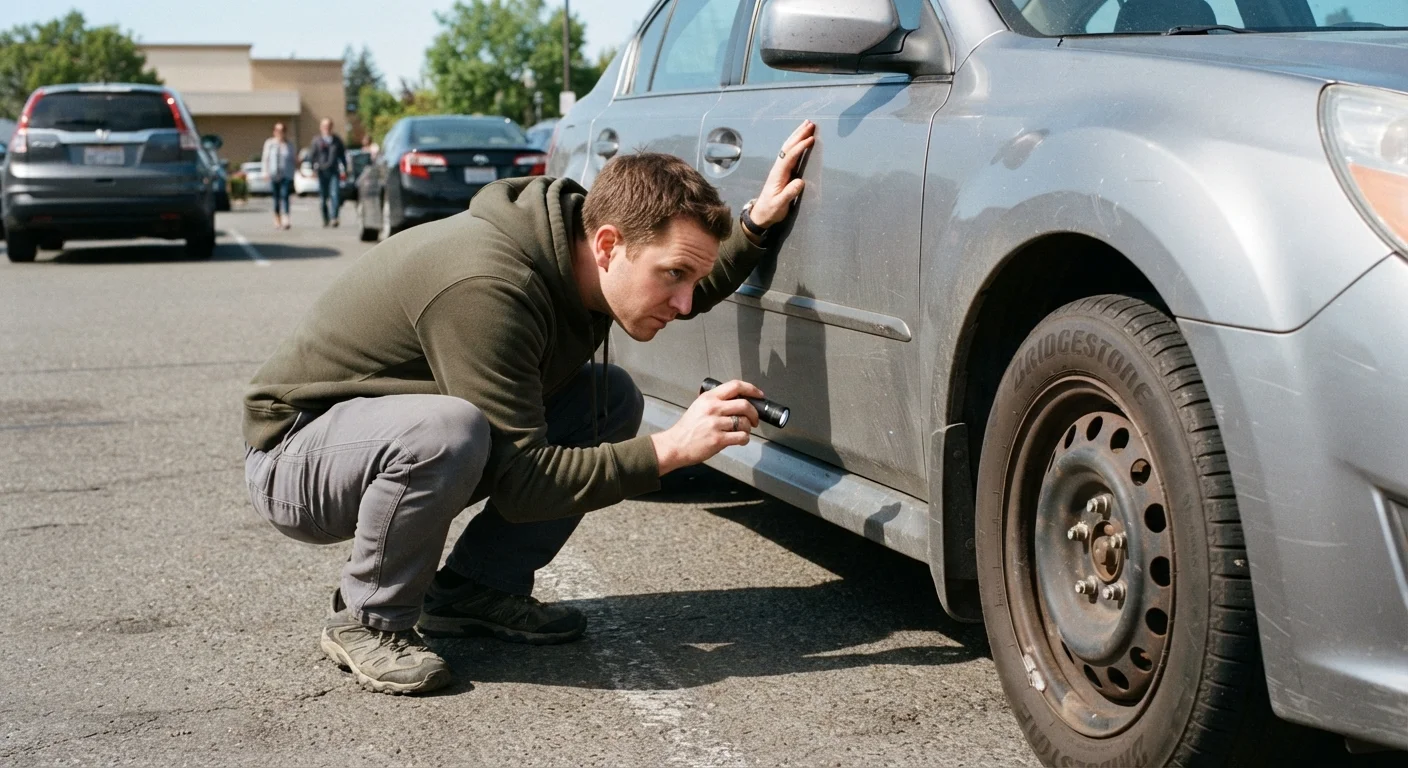
A buyer crouching to inspect the lower body panel of a used car in a parking lot

Key Takeaways

  • Always run a vehicle history report using the VIN before negotiating a price.
  • A clean title is essential — salvage or rebuilt titles significantly affect value and insurability.
  • An independent pre-purchase inspection by a mechanic can surface hidden mechanical issues.
  • Odometer readings, service records, and accident history all affect what a fair price looks like.
  • Never skip a test drive that includes highway speeds, sharp turns, and hard braking.
45–90 min

Summary

22 items · 45–90 minutes

Why Verification Comes Before Negotiation

Most buyers focus on negotiating price before they fully understand what they're buying. That's a costly sequence. A used car's fair market value depends entirely on its condition, history, and legal standing — none of which are visible from a photo or a seller's description alone.

The verification steps in this checklist are designed to be completed before you make or accept any price offer. Each item gives you either a reason to walk away or documented leverage to negotiate a lower number. Think of it as due diligence, not distrust.

For a broader framework you can apply to any significant purchase, see our pre-purchase checklist for smarter spending.

Document & History Verification

Locate the 17-character VIN (Vehicle Identification Number) on the dashboard near the windshield and confirm it matches the number on the title and any door-jamb stickers. Must
Run a vehicle history report using the VIN through a recognized reporting service to check for accident history, title changes, odometer rollbacks, and prior owners. Must
Verify the title is clean — confirm it is not branded as salvage, rebuilt, flood-damaged, or lemon law buyback, as these designations reduce value and can complicate insurance. Must
Check that the seller's name on the title matches the person or business you're dealing with; a mismatch can signal a curbsider or title-washing situation. Must
Ask for all available service records to establish whether oil changes, major services, and recalls were completed on schedule. Should
Search the NHTSA website (nhtsa.gov) for open recalls using the VIN to confirm any safety recalls have been resolved. Must

Physical & Mechanical Inspection

Inspect all body panels in direct daylight for mismatched paint, uneven gaps, or rippling — signs of prior collision repair that may not appear in a history report. Must
Check underneath the vehicle for rust on the frame, subframe, and suspension components — surface rust is common, but structural rust is a serious safety and cost concern. Must
Open the hood and inspect the engine bay for oil leaks, corroded battery terminals, cracked hoses, or a coolant level that appears low or discolored. Must
Check all fluid levels — engine oil, brake fluid, transmission fluid, and coolant — and note color and consistency, which can indicate maintenance neglect. Should
Test every electronic feature: windows, locks, mirrors, air conditioning, heat, infotainment system, and all exterior lights including turn signals and reverse lights. Should
Arrange a pre-purchase inspection (PPI) with an independent, licensed mechanic of your choosing — not one recommended by the seller — before finalizing any price. Must

Test Drive Evaluation

Drive the vehicle at highway speeds to listen for vibration, wind noise, or steering pull that may indicate alignment or tire issues. Must
Test braking firmly from 30 mph in a safe area — the car should stop straight without pulling, grinding, or pulsing in the brake pedal. Must
Note whether the transmission shifts smoothly through all gears, with no hesitation, slipping, or harsh clunks on acceleration. Must
Check that the dashboard warning lights (check engine, ABS, airbag, TPMS) illuminate briefly on startup and then turn off — any that stay on require investigation. Must
Use an OBD-II scanner (a small plug-in device that reads the car's onboard diagnostics) to check for stored or pending trouble codes that might not trigger a visible warning light. Should

Pricing & Market Context

Look up the vehicle's market value using multiple independent pricing guides to establish a realistic range before any price discussion begins. Must
Factor in the cost of any identified repairs or deferred maintenance when determining what you're willing to pay — these are real costs, not negotiating tactics. Must
Confirm the odometer reading is consistent with the vehicle's age and with the mileage reported in service records and the history report. Must
Research the typical insurance cost for this specific make, model, year, and trim level before agreeing on a price, as some vehicles carry significantly higher premiums. Nice to have

Tools You'll Need to Work Through This Checklist

Most of these steps can be completed with a smartphone and basic observational skills, but a few require outside services. Gather what you need before you visit the vehicle in person so you aren't scrambling on the spot.

Required

VIN History Report Service

Pulls accident records, title history, odometer data, and prior ownership from national databases using the vehicle's VIN.

Required

NHTSA Recall Lookup (nhtsa.gov)

Free government tool to search for open or unresolved safety recalls tied to any vehicle's VIN.

Optional

OBD-II Scanner

Plugs into the car's diagnostic port to read stored fault codes that may not trigger a dashboard warning light.

Required

Independent Licensed Mechanic

Performs a pre-purchase inspection to identify mechanical, structural, or safety issues that aren't visible during a casual walkthrough.

Required

Vehicle Pricing Reference (multiple guides)

Provides market value ranges based on year, make, model, trim, mileage, and condition to anchor your price expectations.

Once you've confirmed the car's history, mechanical condition, and title status, you'll be in a much stronger position to have a pricing conversation. If any item in this checklist raises a red flag, treat it as a negotiating point — or a reason to walk away entirely.

Don't Skip the Independent Inspection

Sellers — including dealerships — may offer an in-house inspection or claim the car was 'already inspected.' Always arrange your own inspection with a mechanic you choose independently. A pre-purchase inspection typically costs between $100 and $200 and can reveal problems worth thousands of dollars. If a seller refuses to allow an independent inspection, that resistance itself is a significant red flag.

After you've verified the vehicle and agreed on a price, your next step is understanding how the financing terms affect your total cost. Our guide on questions to ask before signing a car financing agreement covers what to watch for before you commit to a loan. And once you own the car, car maintenance basics will help you protect your investment for the long haul.

Automotive Basics Editorial Team is the collective byline for our editorial team and contributor network. Articles published under this byline or an editorial pen name are researched, written, and reviewed according to our editorial standards for clarity, consistency, and independence before publication.

View all articles by Automotive Basics Editorial Team →
Disclaimer: The content provided on our blog site traverses numerous categories, offering readers valuable and practical information. Readers can use the editorial team’s research and data to gain more insights into their topics of interest. However, they are requested not to treat the articles as conclusive. The website team cannot be held responsible for differences in data or inaccuracies found across other platforms. Please also note that the site might also miss out on various schemes and offers available that the readers may find more beneficial than the ones we cover.