
Battery, Alternator, or Starter? Understanding Your Car's Electrical Starting System

Key Takeaways
- The battery, alternator, and starter each play a distinct role - and each fails in a recognizable way.
- A clicking sound when you turn the key usually points to the battery or starter, not the alternator.
- A working alternator keeps the battery charged; a bad alternator will drain even a new battery.
- Simple voltage checks with an inexpensive multimeter can help you narrow down the problem before visiting a mechanic.
- Most starting system failures give warning signs - dim lights, slow cranking, or dashboard alerts - before a complete breakdown.
Electrical Starting System
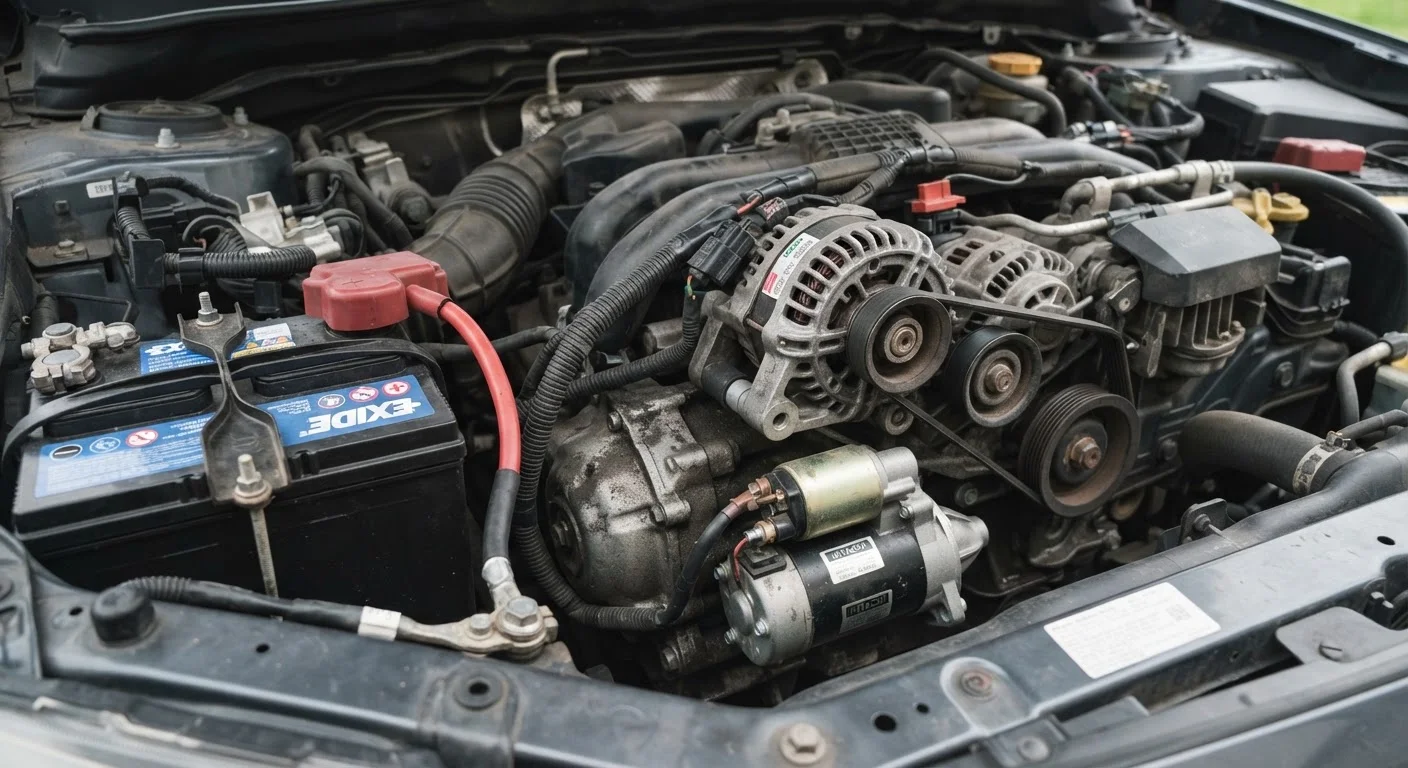
Your car's electrical starting system is the trio of components - battery, alternator, and starter motor - that work together to start your engine and keep it running. The battery supplies the initial burst of electricity, the starter uses that electricity to crank the engine, and the alternator recharges the battery while the engine runs. When any one of the three fails, your car may not start or may die unexpectedly.
These three components form a closed-loop circuit: the battery feeds the starter, the running engine spins the alternator, and the alternator replenishes the battery's charge - typically maintaining 13.5-14.5 volts while the engine runs.
What Each Component Actually Does
Understanding why your car won't start begins with knowing each component's specific job.
Battery: The battery stores chemical energy and converts it to electrical energy on demand. When you turn the ignition key or press the start button, the battery delivers a large surge of current - typically several hundred amps - to power the starter motor. It also powers your lights, radio, and other accessories when the engine is off.
Alternator: Once the engine is running, the alternator takes over as the primary electrical source. It converts mechanical energy from the spinning engine into electricity, recharging the battery and powering the car's electrical systems simultaneously. Without a functioning alternator, the battery would deplete within minutes of driving.
Starter Motor: The starter is an electric motor that physically cranks the engine until combustion takes over. It engages a small gear called a pinion with the engine's flywheel, spinning the engine fast enough to start. Once the engine fires, the starter disengages automatically.
3-5 years
Typical car battery lifespan
According to AAA, most conventional lead-acid batteries last between three and five years depending on climate and driving patterns.
~30%
Of roadside calls involve battery issues
AAA reports that battery-related problems are consistently among the most common reasons drivers call for roadside assistance each year.
13.5-14.5V
Healthy alternator output voltage
A properly functioning alternator should maintain this voltage range at the battery terminals while the engine is running at idle or above.
How to Tell Which Component Has Failed
Each failed component leaves a different set of clues. Paying attention to how your car behaves - or fails to behave - can save you an unnecessary repair bill.
Signs of a Failing Battery
- Engine cranks slowly or sluggishly before starting
- Clicking rapidly when you turn the key, but no cranking
- Headlights dim noticeably when starting
- Car sat unused for several days and won't start
- Battery warning light appears on dashboard
Signs of a Failing Alternator
- Battery warning light illuminates while driving
- Interior lights or headlights dim while the engine is running
- Electrical accessories behave erratically (radio resets, power windows slow)
- New battery dies again within a day or two of replacement
- Burning rubber or electrical smell from the engine bay
Signs of a Failing Starter
- Single loud click or complete silence when you turn the key
- Grinding noise during startup attempts
- Starter engages intermittently - works sometimes, not others
- Smoke or burning smell from beneath the car near the starter
A Simple Diagnostic Sequence
Before calling a tow truck or paying for a diagnostic appointment, a few quick checks can point you in the right direction. You don't need to be a mechanic - just observant.
- Check battery terminals first. Corroded or loose terminals mimic a dead battery. White or bluish buildup on the terminals can break the circuit. Clean connections with a wire brush and try again.
- Test battery voltage. A fully charged 12-volt battery should read approximately 12.6 volts when the engine is off. A reading below 12.0 volts indicates a discharged or failing battery. Inexpensive multimeters are available at most hardware stores.
- Try a jump-start. If the car starts with a jump, the battery is the most likely culprit - but run the alternator check next before buying a new battery.
- Check alternator output. With the engine running after a jump, measure voltage at the battery terminals again. A healthy alternator should produce 13.5-14.5 volts. A reading below 13 volts while running suggests alternator trouble.
- Listen at the starter. If battery voltage is fine but the car won't crank, have a helper turn the key while you listen for clicking or silence near the starter motor. A qualified mechanic can perform a starter draw test to confirm.
Get a Free Battery Test Before You Buy
Many auto parts retailers offer free battery and alternator testing using a handheld load tester. This takes about five minutes and gives you a pass/fail reading before you spend money replacing a component that may not be the root cause. It's one of the easiest ways to avoid a costly misdiagnosis.
This article is for general informational purposes only. For diagnosis and repair of your specific vehicle, consult a qualified automotive technician.