

Key Takeaways
- A pet first-aid kit handles minor injuries but never replaces professional veterinary care.
- Most supplies are inexpensive and available at pharmacies or grocery stores.
- Knowing when NOT to treat at home is just as important as knowing what to keep on hand.
- Check and restock your kit every six months to keep supplies current and unexpired.
- Store your vet's number and a 24-hour emergency clinic number inside the kit.
Summary
22 items · 20-40 minutes
Why Every Pet Owner Needs a First-Aid Kit
Minor injuries and sudden illness can happen to any pet - a cut paw on a trail, an insect sting in the backyard, or an upset stomach after getting into something they shouldn't. Having the right supplies within arm's reach lets you respond calmly and effectively in those first critical minutes before professional help is available.
A pet first-aid kit doesn't need to be elaborate or expensive. Most supplies cost just a few dollars each, and many overlap with a standard human first-aid kit. The real value isn't in the cost of the supplies - it's in knowing they're there and knowing how to use them appropriately.
This checklist covers what to include, how to organize it, and the equally important question of when home care is appropriate versus when your pet needs a veterinarian right away. For a broader look at the costs that catch new owners off guard - including emergency vet bills - see our article on the hidden costs of pet ownership.
Waterproof storage container
Keeps all supplies organized, dry, and easy to find in a hurry - a clearly labeled lunchbox-style case or small tackle box works well.
Digital rectal thermometer
Measures your pet's core temperature to help detect fever or hypothermia.
Sterile saline solution
Gently flushes wounds, debris, and irritants from eyes, paws, and skin.
Self-adhering bandage wrap (vet wrap)
Secures gauze over wounds without sticking painfully to fur or skin.
Blunt-tipped scissors
Safely cuts bandages and removes fur near wounds without risk of cutting skin.
Latex-free exam gloves
Protects you from contact with blood or bacteria during wound care.
Styptic powder
Quickly stops bleeding from broken or over-trimmed nails.
Small flashlight or penlight
Illuminates the mouth, ears, and throat for a basic visual examination.
The Checklist: What to Include in Your Pet First-Aid Kit
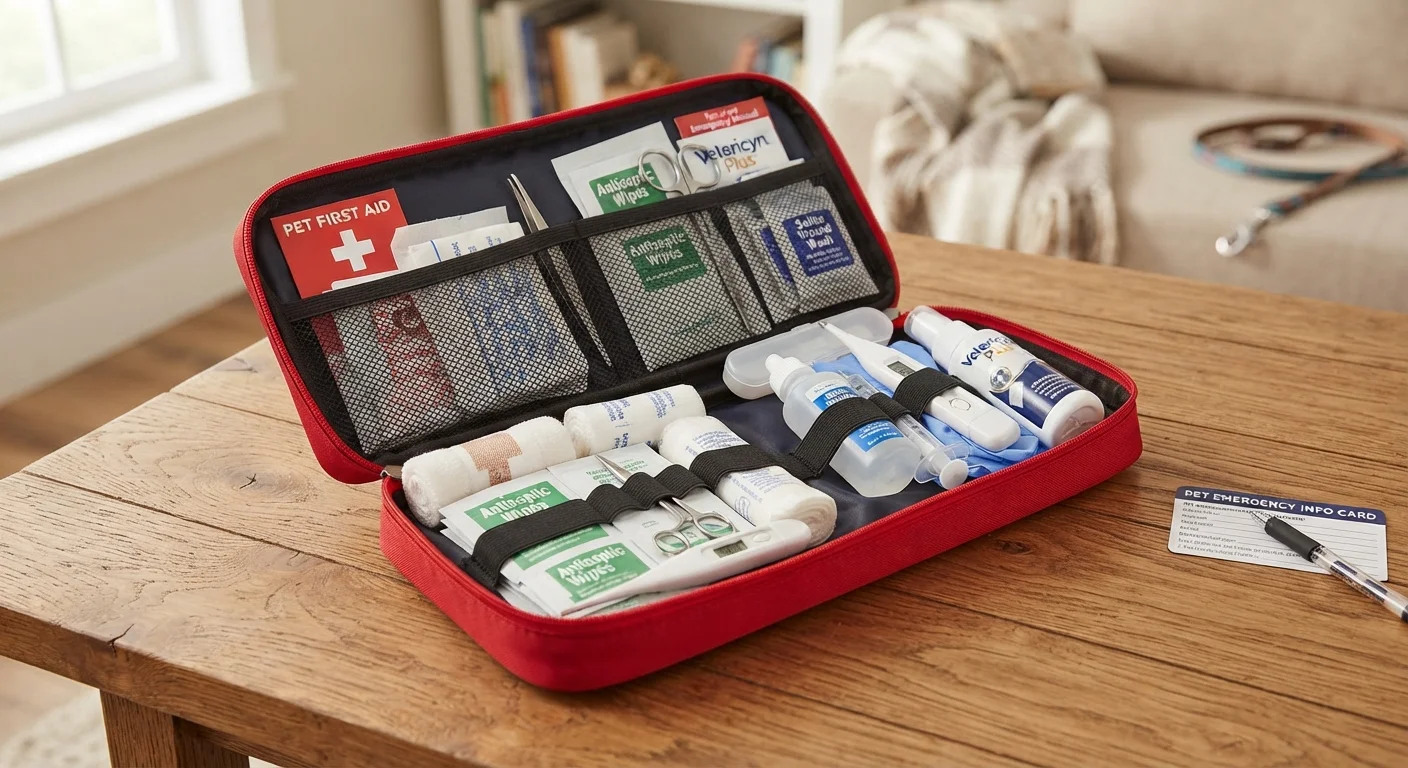
Organize your kit in a clearly labeled, waterproof container. Keep it in a consistent, accessible location so anyone in the household can find it quickly. Use the groups below as your assembly guide.
Wound Care & Bandaging
Monitoring & Examination Tools
Restraint & Safety
Medications & Treatments
Documentation & Emergency Contacts
Home Care Has Clear Limits - Know Them
A first-aid kit is designed to stabilize your pet until professional help is available, not to replace a veterinarian. If your pet is in severe distress, bleeding heavily, unconscious, or you suspect poisoning, go to an emergency animal clinic immediately. Do not attempt to treat serious injuries at home. Time matters in a true emergency - act quickly and let a professional take over.
Home Care vs. When to Call the Vet
A first-aid kit is a bridge, not a substitute for veterinary care. Home treatment is generally appropriate for minor, contained injuries - a small surface cut, a splinter, mild irritation, or a known-safe bee sting on a pet with no history of allergic reaction. In these cases, cleaning the wound, applying gentle pressure, and monitoring closely is a reasonable first step.
Seek veterinary care promptly if your pet shows any of the following: difficulty breathing, uncontrolled bleeding, suspected poisoning or toxin ingestion, loss of consciousness, seizures, severe vomiting or diarrhea, suspected broken bones, eye injuries, swollen face or throat, or any sign of significant pain. When in doubt, call your vet - most clinics will advise you over the phone on whether to come in immediately.
For a structured decision-making framework, our companion article on responsible home care vs. when to see a vet walks through common scenarios in detail. If cost is a concern when a vet visit is needed, explore low-cost veterinary care options that don't require compromising on your pet's health.
Finally, pair your kit habit with a regular preventive care routine. Our monthly pet care task checklist covers the ongoing steps that reduce the likelihood of a first-aid situation arising in the first place.
This article provides general educational information about pet first-aid preparedness and is not a substitute for professional veterinary advice, diagnosis, or treatment. Always consult a licensed veterinarian for guidance specific to your pet's health needs.