

Key Takeaways
- List every balance, interest rate, and minimum payment before building any repayment plan.
- Minimum-only payments can extend repayment by years and cost hundreds in extra interest.
- The avalanche method saves the most money; the snowball method builds the most momentum.
- Even small additional payments accelerate your payoff date significantly.
- Debt consolidation can simplify repayment but is not the right fit for every situation.
- A small emergency fund and spending guardrails help prevent falling back into debt.
Understanding What You Actually Owe
Before you can pay down credit card debt, you need a clear, honest picture of what you owe. Gather every credit card statement and record four things for each account: the current balance, the annual percentage rate (APR), the minimum monthly payment, and the due date. A simple spreadsheet or even a handwritten table works fine.
Add up all balances to get your total debt load. This number can feel uncomfortable to confront, but knowing it precisely is the first step to controlling it. Next, note which cards carry the highest APRs - this information will drive your payoff strategy in the next section.
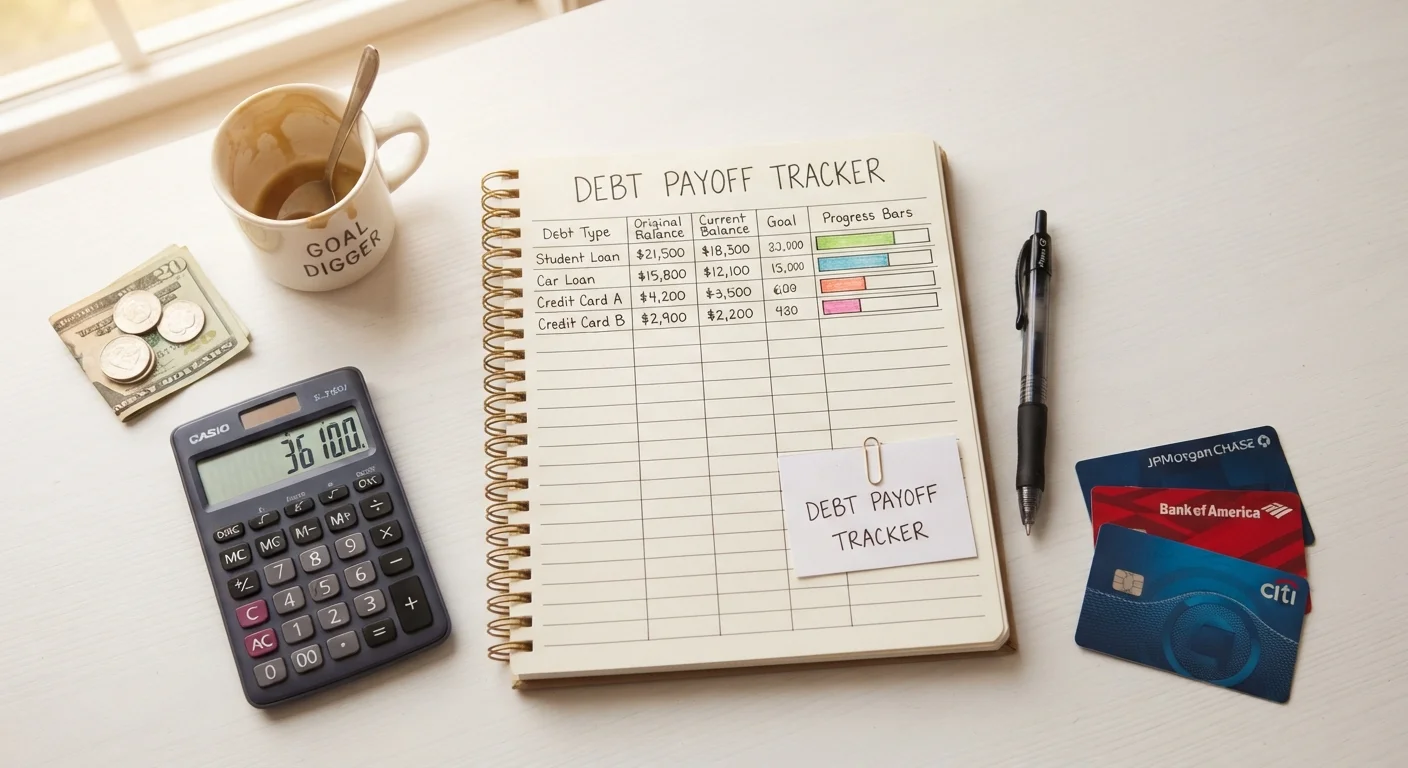
Set up a debt inventory document and update it monthly - seeing balances drop, even slightly, reinforces that your plan is working and keeps you from losing track of due dates.
Behavioral research shows that visible progress tracking improves follow-through on financial goals by creating accountability and motivation.
Call your card issuer and ask for a rate reduction - especially if you have a history of on-time payments. Many issuers will lower your APR as a courtesy, reducing how much interest accrues each month.
Interest rate reductions directly lower the cost of carrying a balance and accelerate payoff without requiring any additional payment.
Also review each statement for recurring charges you may have forgotten - subscriptions, annual fees, or services you no longer use. Canceling these frees up cash and reduces the activity keeping those balances alive.
Why Minimum Payments Work Against You
Credit card issuers calculate minimum payments as a small percentage of your balance - often around 1-2% or a fixed dollar floor, whichever is greater. Paying only that amount means the bulk of your payment covers interest, leaving your principal barely touched.
Consider a $5,000 balance at 22% APR. Paying the minimum each month could take well over a decade to resolve and cost more than the original balance in interest alone. The math is straightforward and sobering. See how the numbers play out in detail - even a modest increase above the minimum can shave years off your payoff timeline.
$6,500+
Average American credit card balance
According to Federal Reserve data, average revolving credit card balances per holder have consistently exceeded $6,000 in recent years.
20%+
Average credit card APR in the US
The Federal Reserve reports that average credit card interest rates have risen above 20% APR, making high-rate debt increasingly costly to carry.
10+ years
Potential repayment timeline on minimum payments
Financial calculators consistently show that minimum-only payments on a mid-size balance at typical APRs can extend repayment well beyond a decade.
Choosing a Payoff Strategy
Two evidence-backed methods dominate personal finance guidance, and neither requires a windfall to work:
- Debt Avalanche: Pay minimums on all cards, then direct every extra dollar to the card with the highest APR. Once it's paid off, roll that payment to the next-highest-rate card. This method minimizes total interest paid - it is mathematically optimal.
- Debt Snowball: Pay minimums on all cards, then target the card with the lowest balance first. Each payoff delivers a psychological win that can sustain motivation over a long repayment journey.
Research in behavioral economics suggests that people who feel early wins tend to persist longer, so neither approach is universally superior - the best method is the one you will actually stick with. If you are uncertain, consider reviewing common payoff misconceptions before committing to one path.
Finding Extra Money to Put Toward Debt
Accelerating your payoff requires channeling additional dollars to your highest-priority card each month. Common sources include:
- Budget trimming: Audit discretionary spending - dining out, streaming services, impulse purchases - and redirect even $50-$100 per month. Over a year, that adds up to $600-$1,200 in extra principal payments.
- Income boosts: Freelance work, selling unused items, or picking up extra hours can generate one-time or ongoing funds dedicated entirely to debt.
- Windfalls: Tax refunds, bonuses, and gifts are powerful accelerators when applied directly to balances rather than absorbed into everyday spending.
You do not have to pause all savings to make progress. Balancing debt payoff and saving simultaneously is achievable with the right framework - even a small emergency fund built alongside repayment reduces the risk of new debt from unexpected expenses.
Debt Consolidation: Is It Right for You?
Debt consolidation merges multiple credit card balances into a single loan or balance-transfer product, ideally at a lower interest rate. The appeal is real: one payment, one rate, and potentially significant interest savings. However, consolidation is a tool, not a solution by itself.
It works best when you qualify for a meaningfully lower rate, can commit to not accumulating new card balances, and have a clear plan to pay off the consolidated amount before any promotional period ends. Balance-transfer cards often carry 0% intro APRs for a set period, but the standard rate that follows can be high, and transfer fees apply.
Explore the full trade-offs of debt consolidation before deciding whether it fits your situation. For some borrowers, the simplicity helps - for others, it can extend the repayment horizon without addressing the habits that created the debt.
This article provides general financial information and is not personalized financial or legal advice. Consult a qualified financial professional before making decisions about your specific situation.
Staying Out of Debt After Payoff
Paying off credit card debt is a major achievement - protecting that progress is equally important. Two habits do most of the heavy lifting:
- Build a small emergency fund first: Even $500-$1,000 set aside before you finish paying off debt reduces the likelihood that a car repair or medical bill sends you back to the card. Aim to grow this to three to six months of essential expenses over time.
- Spend intentionally: If you continue using credit cards, treat them like debit - charge only what you can pay in full each month. Autopay the full statement balance to eliminate interest entirely.
Periodically review your budget and flag any month where your balance creeps up. Catching a pattern early - before it compounds - is far less painful than restarting a full payoff plan. The financial discipline you built during repayment is a durable skill that applies well beyond credit cards.