

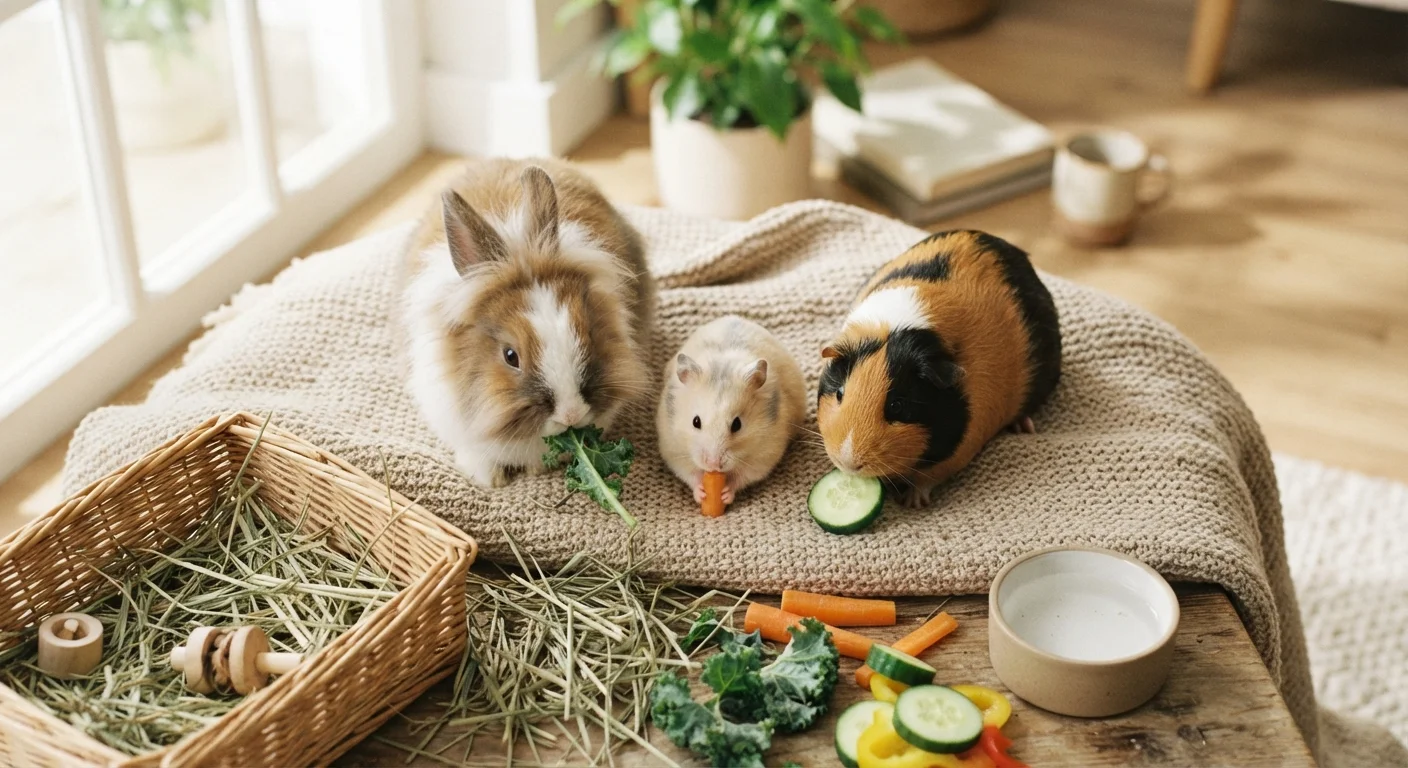
| Rabbit lifespan | 8-12 years (domesticated) (House Rabbit Society general guidance) |
| Guinea pig lifespan | 4-7 years (ASPCA general species information) |
| Hamster lifespan | 2-3 years (Syrian); some dwarf species slightly less (General veterinary consensus) |
| Rabbit primary diet | Unlimited grass hay, leafy greens, limited pellets |
| Guinea pig vitamin requirement | Daily vitamin C - cannot self-synthesize (ASPCA and exotic vet guidance) |
| Hamster social nature | Solitary - do not house Syrian hamsters together |
| Minimum guinea pig space (pair) | 7.5 sq ft of floor space (more is better) (Exotic animal vet consensus) |
| Recommended wheel size (Syrian hamster) | At least 8-10 inches in diameter |
Why a Quick-Reference Guide Matters for Small Pet Owners
Rabbits, guinea pigs, and hamsters are among the most commonly kept household pets in the United States - and also among the most misunderstood. Many owners discover after adoption that these animals have surprisingly specific housing, diet, and social needs that differ significantly from cats or dogs. This reference article gives you reliable, scannable facts so you can build confident care routines without wading through conflicting information online.
If you're just getting started, our guide to your first week with a new pet covers the immediate priorities that apply across species. For ongoing upkeep, the Pet Health & Wellness hub is a solid home base for evidence-backed guidance.
| Rabbit lifespan | 8-12 years (domesticated) (House Rabbit Society general guidance) |
| Guinea pig lifespan | 4-7 years (ASPCA general species information) |
| Hamster lifespan | 2-3 years (Syrian); some dwarf species slightly less (General veterinary consensus) |
| Rabbit primary diet | Unlimited grass hay, leafy greens, limited pellets |
| Guinea pig vitamin requirement | Daily vitamin C - cannot self-synthesize (ASPCA and exotic vet guidance) |
| Hamster social nature | Solitary - do not house Syrian hamsters together |
| Minimum guinea pig space (pair) | 7.5 sq ft of floor space (more is better) (Exotic animal vet consensus) |
| Recommended wheel size (Syrian hamster) | At least 8-10 inches in diameter |
Species-by-Species Care Essentials
Rabbits
Rabbits are social, intelligent animals with a lifespan of roughly 8-12 years when properly cared for. Their digestive systems depend heavily on unlimited grass hay (timothy or orchard grass are widely recommended by veterinarians), which should make up the majority of their daily diet. Fresh leafy greens supplement nutrition, while commercial pellets should be offered in limited amounts. Fruits and starchy treats should be rare due to sugar content.
Housing must allow a rabbit to stand fully upright and complete at least three full hops in any direction. Rabbits require daily exercise outside their enclosure and do best in pairs or groups, as isolation can cause stress-related health problems. They are not low-maintenance pets - dental disease, gastrointestinal stasis, and respiratory infections are common concerns that warrant routine veterinary care, including spay or neuter procedures to reduce cancer risk in females.
Guinea Pigs
Guinea pigs typically live 4-7 years and are vocal, herd-social animals - keeping at least two together is strongly advised by most exotic animal veterinarians. Like rabbits, their diet centers on unlimited timothy hay and leafy greens. A critical distinction: guinea pigs cannot synthesize their own vitamin C and must receive it daily through fresh foods (such as bell pepper and leafy greens) or supplementation as directed by a vet. Vitamin C deficiency, known as scurvy, is a common and preventable health problem in this species.
Enclosures should be spacious - many experts suggest a minimum of 7.5 square feet of floor space for two animals, with more being better. Wire-bottomed cages can injure their feet; solid flooring with appropriate bedding is preferred.
Hamsters
Hamsters are solitary by nature and will fight if housed together (Syrian hamsters in particular). Most species live 2-3 years. They are crepuscular and nocturnal, meaning they are most active at dawn, dusk, and overnight - a detail that matters for household placement. A well-sized wheel (at minimum 8-10 inches in diameter for Syrians to prevent spinal issues) and adequate burrowing depth in substrate are essential enrichment needs often underestimated by new owners.
Diet consists of a quality seed and grain mix supplemented with small amounts of fresh vegetables and occasional protein. Avoid citrus fruits. Common health concerns include dental problems, skin conditions, and wet tail - a bacterial illness in young hamsters that requires prompt veterinary attention.
Gastrointestinal stasis
A condition in rabbits (and sometimes guinea pigs) where the digestive system slows or stops moving. It is a medical emergency that requires prompt veterinary attention. High-hay diets and exercise help reduce the risk.
Crepuscular
Most active during twilight hours - dawn and dusk. Hamsters are crepuscular and nocturnal, meaning peak activity often occurs when households are winding down for the night.
Scurvy (in guinea pigs)
A disease caused by vitamin C deficiency. Guinea pigs cannot produce their own vitamin C, so it must be supplied daily through diet or supplementation recommended by a vet.
Exotic animal vet
A veterinarian with training and experience in non-traditional companion animals such as rabbits, guinea pigs, and hamsters. Standard dog-and-cat vets may not have this specialization, so it's worth confirming before booking.
Wet tail
A potentially fatal bacterial infection most common in young Syrian hamsters, characterized by diarrhea and a wet appearance around the tail. It requires immediate veterinary treatment.
This article provides general information for educational purposes only and is not a substitute for advice from a licensed veterinarian. Always consult a qualified exotic animal vet for guidance specific to your pet's health needs.
Shared Principles and Where to Learn More
Across all three species, a few principles hold steady: hay-based diets support digestive and dental health; enclosure size is almost always the area where owners underinvest; and routine veterinary checkups with an exotic animal vet catch problems early. Avoid common nutrition misconceptions - our article on pet nutrition myths is a helpful next read.
Keeping a basic first-aid reference on hand is also wise. The pet first-aid kit guide explains what to have ready at home and when a situation calls for an immediate vet visit rather than home care. And for a reality check on common small animal misconceptions, see our piece on pet health myths vets want debunked.
Find an Exotic Animal Vet Before You Need One
Rabbits, guinea pigs, and hamsters are classified as exotic animals in veterinary practice, meaning not every clinic is equipped to treat them. It's worth locating an experienced exotic vet in your area before a health issue arises. Ask the vet about their specific experience with your species at your first visit - this is a reasonable and important question.
Understanding the specific needs of your pet before bringing them home - rather than after - is the single most effective way to reduce unexpected veterinary costs and give your animal a genuinely good quality of life.