

Key Takeaways
- Price trackers automate the work of monitoring product costs so you don't have to check manually.
- Historical price charts reveal whether a 'sale' price is actually lower than typical.
- Alerts sent via email or browser notification let you act quickly when a price drops.
- Trackers are most valuable for high-ticket, non-urgent purchases where timing matters.
- Not all products or retailers are tracked equally - gaps in data can affect reliability.
- Price tracking is one layer of a broader smart-shopping approach, not a complete strategy on its own.
Price Tracking Tool
A price tracking tool is software - usually a browser extension, website, or app - that monitors the listed price of a specific product over time and notifies you when that price drops. Instead of manually checking a product page every few days, the tool does it automatically and stores a history of what prices have been. This helps you judge whether a posted sale is genuinely a good deal or just marketing.
Most tools query retailer APIs or scrape product pages at regular intervals (often every few hours), storing timestamped price data in a database to generate the historical chart users see.
What a Price Tracker Actually Does
At its core, a price tracking tool has one job: watch a product page so you don't have to. You point the tool at a specific item - usually by visiting the product page with a browser extension installed, or by pasting a URL into a tracking website - and the software begins logging the price at regular intervals.
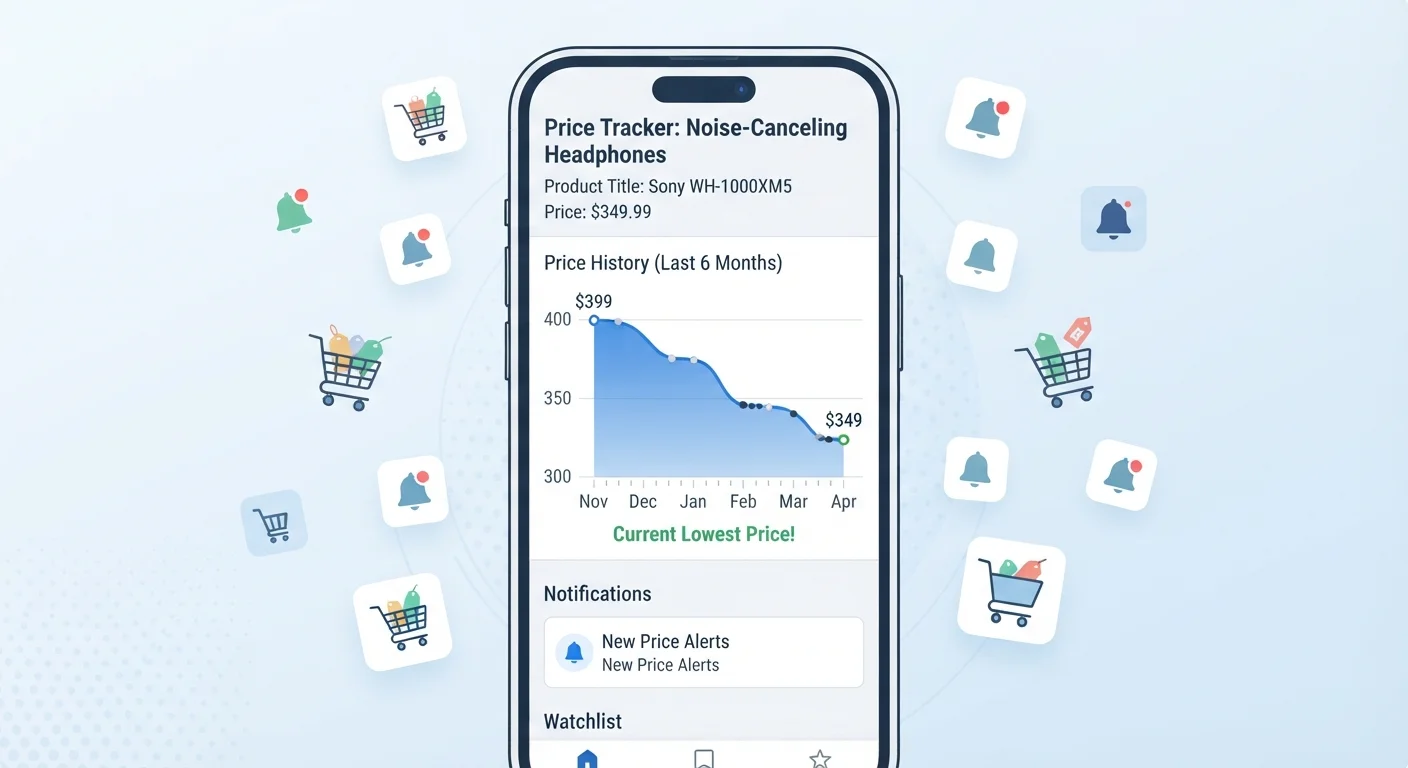
Over time, this creates a price history chart. That chart is the tool's most powerful feature. It lets you see whether the price you're looking at right now is genuinely low relative to what it's been in the past, or whether it's actually near its typical or even peak price. Retailers frequently mark items as "on sale" at prices they charge most of the time - price history makes that transparent.
Beyond charts, most tools let you set a target price. When the product hits that number, you get an alert - usually via email or a browser notification - so you can decide whether to buy. This removes the need to remember to check back and reduces the impulse-buying risk of browsing repeatedly.
To understand why prices fluctuate so much in the first place, it helps to know how retailers set them dynamically. How online pricing actually works walks through the algorithmic and competitive forces behind those shifts.
Up to 30%
Typical price swing on consumer electronics
Consumer research has consistently shown that electronics prices can fluctuate by 20-30% over a 90-day window, making timing a meaningful factor.
~60%
Shoppers who don't check price history before buying
Surveys on online shopping behavior suggest a majority of consumers make purchase decisions without consulting any historical pricing data.
Hours to days
How often retailer prices can change
Studies of major e-commerce platforms have documented price changes occurring multiple times per day on popular product listings.
When Price Tracking Delivers Real Value
Price trackers aren't equally useful for every purchase. Their value scales with three factors: the cost of the item, how flexible your timeline is, and how much price volatility the product experiences.
High-ticket items with flexible timing are where trackers shine. Electronics, appliances, furniture, and sporting equipment often swing significantly in price across weeks or months. If you can wait for a drop, a tracker ensures you'll notice it without constant manual effort.
Seasonal purchase windows are another ideal use case. Retailers follow fairly predictable markdown patterns tied to inventory cycles and retail calendar events. Setting a tracker before those windows gives you a baseline, so you can tell whether an advertised promotion is genuinely lower than the item's recent norm. Retail calendar basics explains how these markdown cycles typically work.
Evergreen products - items that don't change model year to year - also respond well to tracking because there's a longer price history to compare against. A new model launch often means the previous version drops; a tracker catches that automatically.
Trackers are less useful for perishables, fast-moving fashion with limited stock, or items where you genuinely need them immediately. In those cases, the best strategy is a one-time price comparison rather than ongoing monitoring.
Understanding the Limits of Price Data
Price tracking is a useful input, not a complete decision-making system. A few limitations are worth keeping in mind before you rely heavily on any tool's data.
Coverage gaps: Not every retailer is tracked equally. Smaller storefronts, regional chains, or newer online platforms may have limited or no price history. A tracker that only monitors one major retailer can give you an incomplete picture if the same product is sold elsewhere for less.
Data freshness: Tools query prices at intervals - often a few times per day, sometimes less. A flash sale that lasts only a few hours may not be captured. Conversely, the price you see in the chart may have changed since the last query.
Product variants: Many listings have multiple configurations - sizes, colors, storage options. Price history is usually tied to a specific variant's URL, and mixing up variants can make the chart look misleading. Always confirm you're tracking the exact variant you intend to buy.
Third-Party Seller Prices Can Distort Data
On marketplace platforms, the price history chart may blend data from the platform's own inventory and third-party sellers. A sudden price spike in the chart is sometimes caused by the primary seller going out of stock and a third-party seller briefly controlling the listing at a higher price. This can make a product's 'normal' price look higher than it actually is. Look for charts that distinguish between seller types when available.
Price tracking fits neatly alongside other expense-awareness habits. If you're already tracking your spending at the category level, knowing the historical price of a planned purchase helps you budget that item more accurately. It's one more way to stay informed rather than reactive when you shop.
For a broader view of how price tracking fits into a full deal-finding approach, see The Complete Shopper's Playbook.