

Key Takeaways
- Secondary airports sometimes offer lower fares, but ground transportation costs can erode most or all of those savings.
- Extra travel time to and from secondary airports is a real cost - especially for short trips or travelers with tight schedules.
- The math only works in your favor when you account for transport, parking, and time before booking.
- Some secondary airports serve identical catchment areas to major hubs, making them genuinely competitive options.
Lower fares on many routes
Carriers operating from secondary airports frequently price tickets below what major hubs charge for similar routes. The savings can range from modest to substantial depending on the market.
Less crowded terminals and faster security
Smaller passenger volumes typically mean shorter TSA lines and less gate congestion, reducing pre-flight stress and the risk of missing a connection.
Lower parking costs for drivers
Daily and weekly parking rates at secondary airports are often significantly lower than at primary hubs, which matters for travelers who drive themselves to the airport.
May be geographically closer to your destination
In some metro areas, the secondary airport is actually nearer to popular neighborhoods or suburbs than the main hub, cutting ground transport time rather than adding it.
Higher ground transport costs can erase savings
A secondary airport located 40+ miles from the city center can cost $50-$80 each way by rideshare, quickly wiping out any airfare discount - especially on round trips.
Added travel time on each end of the trip
Extra distance to or from a secondary airport adds hours to the total journey, a real cost for short trips or travelers with tight itineraries.
Fewer flight options and more connecting flights
Secondary airports typically have fewer nonstop routes, meaning travelers may need to connect through a hub anyway - adding time, cost, and the risk of delays.
Limited amenities and services
Smaller airports often have fewer dining and shopping options, limited lounges, and reduced support infrastructure if something goes wrong with your flight.
Rental car options may be scarcer
Secondary airports frequently have fewer rental car counters, and availability can be thin during peak travel periods, potentially limiting your flexibility on arrival.
Our Verdict
Flying into a secondary airport can be a legitimate money-saver, but only after you've done the full cost comparison - ticket price, ground transport, parking, and the value of your time. The savings are most real when the secondary airport is reasonably close to your destination and ground transport is affordable. For trips where the secondary airport adds 90 minutes or more of travel each way, the financial case often collapses.
Travelers with flexible schedules, a destination near the secondary airport, and the patience to run a complete cost comparison before booking.
What We Mean by Secondary Airports
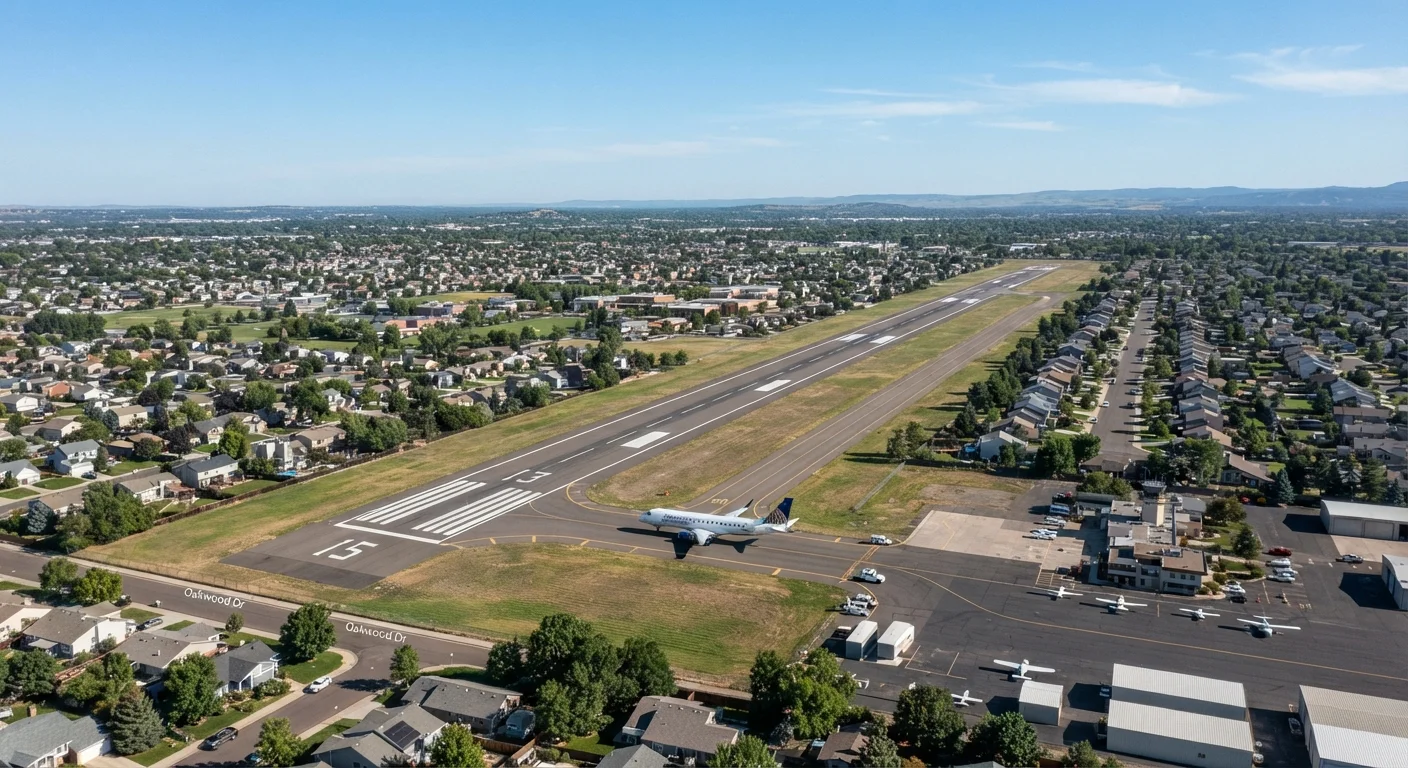
A secondary airport is any commercial airport that serves the same metro area as a larger, better-known hub but handles less traffic. Think Midway vs. O'Hare in Chicago, or Oakland vs. San Francisco. They're real, functioning airports - just smaller, often less congested, and frequently served by carriers that focus on lower operating costs.
The key distinction is geography: secondary airports serve the same general region, but may sit 20 to 60 miles from the city center or from your actual destination. That distance is exactly where the financial analysis gets complicated. Before assuming a cheaper fare means a cheaper trip, you need to map the full journey - not just the flight.
As budget travel myths go, 'the cheapest fare always wins' is one of the most persistent - and most misleading.
The Real Advantages of Flying Secondary
Lower fares on many routes
Carriers operating from secondary airports frequently price tickets below what major hubs charge for similar routes. The savings can range from modest to substantial depending on the market.
Less crowded terminals and faster security
Smaller passenger volumes typically mean shorter TSA lines and less gate congestion, reducing pre-flight stress and the risk of missing a connection.
Lower parking costs for drivers
Daily and weekly parking rates at secondary airports are often significantly lower than at primary hubs, which matters for travelers who drive themselves to the airport.
May be geographically closer to your destination
In some metro areas, the secondary airport is actually nearer to popular neighborhoods or suburbs than the main hub, cutting ground transport time rather than adding it.
Shorter security lines and less terminal congestion are consistently reported benefits at smaller airports. When a flight delay or missed connection could derail your plans, a calmer airport environment has genuine value beyond just comfort.
Parking costs at secondary airports are also often meaningfully lower than at major hubs - a gap that compounds quickly on longer trips. If you're driving yourself to the airport and paying for multi-day parking, this difference can add up to real money.
What You Actually Give Up
Higher ground transport costs can erase savings
A secondary airport located 40+ miles from the city center can cost $50-$80 each way by rideshare, quickly wiping out any airfare discount - especially on round trips.
Added travel time on each end of the trip
Extra distance to or from a secondary airport adds hours to the total journey, a real cost for short trips or travelers with tight itineraries.
Fewer flight options and more connecting flights
Secondary airports typically have fewer nonstop routes, meaning travelers may need to connect through a hub anyway - adding time, cost, and the risk of delays.
Limited amenities and services
Smaller airports often have fewer dining and shopping options, limited lounges, and reduced support infrastructure if something goes wrong with your flight.
Rental car options may be scarcer
Secondary airports frequently have fewer rental car counters, and availability can be thin during peak travel periods, potentially limiting your flexibility on arrival.
The hidden costs of secondary airports are most apparent when you map out the full ground journey. A $60 fare discount means very little if a rideshare to a distant secondary airport costs $55 each way. Run the numbers for your specific route - not the average.
Road trip cost breakdowns follow the same logic: the sticker price is only part of the picture. Time is a cost too, and secondary airports can add hours to a trip that otherwise might take a single direct flight.
40-60 mi
Typical extra distance to secondary airports
Many secondary airports serving major metro areas are located 40 to 60 miles from the city center, according to general geographic analysis of US airport pairs.
$50-$80
Estimated one-way rideshare cost to distant secondary airports
Rideshare pricing for trips in the 40-60 mile range generally falls in this band, though actual fares vary by market and demand.
How to Run the True-Cost Comparison
Before booking a ticket into a secondary airport, work through this framework:
- Calculate door-to-door transport cost for both airport options - include rideshare, rental car, train, or parking, and multiply by two for the round trip.
- Estimate the time difference between the two routes, including drive time, transit connections, and any layovers introduced by routing through the secondary airport.
- Assign a value to your time. There's no universal formula, but many travelers find it useful to use their rough hourly wage as a proxy. If you earn $30/hour and the secondary option adds four hours of travel, that's $120 in time - before any transport cost.
- Compare total trip cost, not just airfare.
This process only takes about 15 minutes and often reveals that a seemingly good deal is actually break-even - or worse. It also sometimes confirms that the secondary airport genuinely is the smarter option. Either way, common trip planning myths remind us that assumptions without math rarely hold up.
Don't Forget Baggage Fees in the Mix
Some carriers that operate heavily out of secondary airports charge for carry-on bags or checked luggage that legacy airlines include in base fares. When comparing ticket prices across airport options, check the full fare breakdown - including any bag fees - before calculating the true cost difference. A $40 fare gap can disappear quickly with a $35 checked bag fee each way.
When Secondary Airports Make the Most Sense
The secondary airport calculation tends to favor travelers in specific situations: when the secondary airport is actually closer to the destination than the major hub, when ground transport options are cheap and direct (a $12 train vs. a $70 rideshare), or when the fare difference is large enough to absorb extra transport costs and still come out ahead.
Timing also plays a role. Booking timing matters, and secondary airports sometimes show lower fares earlier in the booking window. If you're flexible on dates as well as airports, combining both variables in your search can surface the best overall options.
Finally, consider the purpose of your trip. A long vacation where you're spending a week or more at the destination makes a 90-minute transport difference feel minor. A two-night weekend trip where half of Friday and half of Sunday vanish to transit logistics is a different calculation entirely.