

Key Takeaways
- Time zone confusion is one of the most common causes of missed reservations and connections - plan around it deliberately.
- Local SIM cards or international data plans should be arranged before arrival, not scrambled for at the airport.
- Currency exchange rates vary significantly by location; knowing where to exchange matters as much as when.
- Medical prep - prescriptions, documentation, and destination health requirements - is routinely underestimated.
- Small logistical gaps compound quickly; a planning framework catches them before they become travel-day crises.
The Gaps That Derail Good Trips
Most trip stress doesn't come from big mistakes - missed flights, lost passports, wrong hotel cities. It comes from smaller oversights that were entirely preventable with a few extra minutes of planning. The traveler who lands without local data, realizes their prescription runs out on day four, or books a dinner reservation at the wrong time because they forgot the destination is two time zones ahead - that traveler planned plenty. They just planned the wrong things.
The core stages of trip planning cover the big structural moves well. What gets skipped is the logistical connective tissue - the details that don't appear on packing lists or booking confirmation emails but quietly determine whether the trip runs smoothly. The list below targets exactly those gaps.
Start With a Three-Week Lead Time
Most of the logistical details in this article require at least some lead time to resolve properly - especially medical prep, eSIM setup, and entry requirement verification. Building a habit of reviewing these categories three weeks before departure gives you enough runway to handle anything that requires a doctor's visit, a call to your bank, or ordering something online.
Seven Details Worth Getting Right
Account for time zones in every reservation
When you book a dinner reservation, a museum entry, or a transfer through an online platform based in the US, confirm whether the confirmation time reflects local destination time or your home time zone. Many booking systems display times in the user's local time without clearly labeling them. A quick check of the time difference - and a note in your calendar showing both - takes 30 seconds and prevents arriving an hour late to something that can't be rescheduled.
Confirmation emails often show your home time zone, not the destination's - always check.
Sort out mobile connectivity before you land
Arriving without data access creates an immediate cascade of problems: navigation fails, confirmations become inaccessible, ride-hailing apps stop working. Options include adding an international plan to your existing carrier, purchasing a local SIM at a pharmacy or telecom store in the destination city, or using an eSIM loaded before departure. Each option has trade-offs in cost and convenience. The point isn't which you choose - it's that you choose deliberately, not reactively at the arrivals terminal where options are limited and prices are higher.
Deciding on connectivity before departure gives you more options at lower cost.
Understand where and how to exchange currency
Airport exchange kiosks and hotel currency desks typically offer the least favorable rates available. ATMs connected to major bank networks generally provide rates closer to the mid-market rate, though your home bank may charge foreign transaction or withdrawal fees. Before leaving, check whether your bank account waives those fees, and identify ATM networks in your destination that align with your card. Carrying a small amount of local currency for the first few hours - enough for transport and a meal - reduces dependence on finding an ATM immediately upon arrival. The spending plan guidance for travelers covers this in more detail.
ATMs usually offer better currency rates than airport kiosks - but check your bank's fee structure first.
Prepare your prescriptions and medical documentation
If you take prescription medication, verify that your supply covers the full trip plus a few buffer days in case of delays. Some destinations require a doctor's letter for certain medications, particularly controlled substances, and customs rules around pharmaceuticals vary significantly by country. Keep medications in their original labeled containers when crossing borders. For any destination with specific vaccination or health entry requirements, check official government sources - both US and destination country - well in advance. Consult a healthcare professional or a travel medicine clinic if you're unsure about requirements or recommended precautions for your destination.
Medication documentation requirements at international borders are frequently stricter than travelers expect.
Confirm entry requirements independently
Visa requirements, passport validity rules, and health entry conditions change. A travel agent or booking platform may have outdated information. The US State Department's travel website and the official embassy or consulate of the destination country are the authoritative sources. Check both. Pay particular attention to passport validity requirements - many countries require six months of validity beyond your travel dates, and some airlines will deny boarding if this isn't met. This is a non-negotiable verification, not an optional one.
Always verify entry and visa rules directly with official government sources before traveling.
Map your first few hours with specificity
The most disorienting part of any trip is usually the first two hours after arrival - before you've found your bearings, while you're tired, and when decisions feel harder than they should. Decide in advance: How will you get from the airport to your accommodation? What's the address in the local language if you need to show a driver? Where's the nearest place to get local currency if the ATM queue is long? Writing these answers down (not just storing them in an app that requires data) removes improvisation from a moment when you're least equipped for it.
Planning arrival logistics in detail eliminates the most disorienting and costly hours of any trip.
Know your travel insurance coverage before you need it
If you carry travel insurance - through a standalone policy, a credit card benefit, or otherwise - read what it actually covers before departure, not after a problem occurs. Coverage varies significantly for trip cancellation, medical evacuation, delayed baggage, and pre-existing conditions. Note any documentation you'd need to file a claim (receipts, police reports, medical records) so you know to collect it in the moment. Understanding your coverage in advance determines whether it's actually useful when something goes wrong.
Reading your travel insurance policy before departure - not after - is what makes it useful.
Trip Length Changes the Risk Profile
Many of these details become more consequential the longer the trip. Running low on a prescription matters more on a three-week journey than a four-day weekend. If you're weighing trip formats, the comparison of short trips versus extended journeys outlines how planning demands shift with duration. Extended travel generally requires more thorough upfront logistics work - not more spontaneity.
Make It a System, Not a Memory Exercise
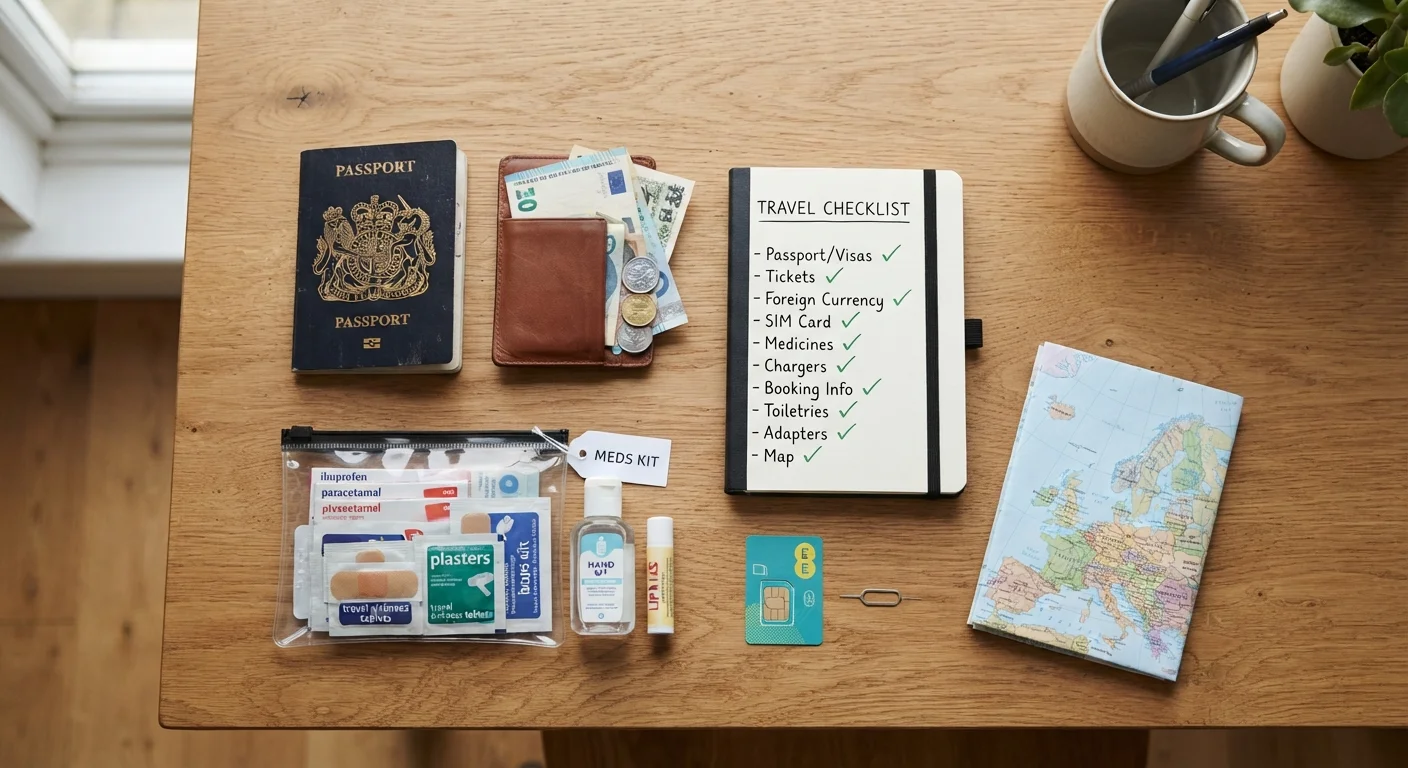
The most reliable way to handle these details isn't willpower or a better memory - it's a repeatable framework you apply to every trip regardless of destination. Build a personal pre-departure checklist that includes each category above: connectivity, currency, time zones, health documentation, and local entry requirements. Review it three weeks out and again 48 hours before departure. The pre-trip confirmation checklist is a useful starting point for structuring that review.
These details also connect directly to your budget. Roaming charges, airport currency kiosks, and last-minute pharmacy runs all cost more than their planned alternatives. If you're working through your travel finances, see how overlooked costs affect travel budgets - many of the same gaps appear there too.
This article is for general informational purposes only. Consult a qualified healthcare professional regarding any medical preparations before travel, and verify all entry, visa, and health requirements with official government and carrier sources before departure, as these can change without notice.