

Key Takeaways
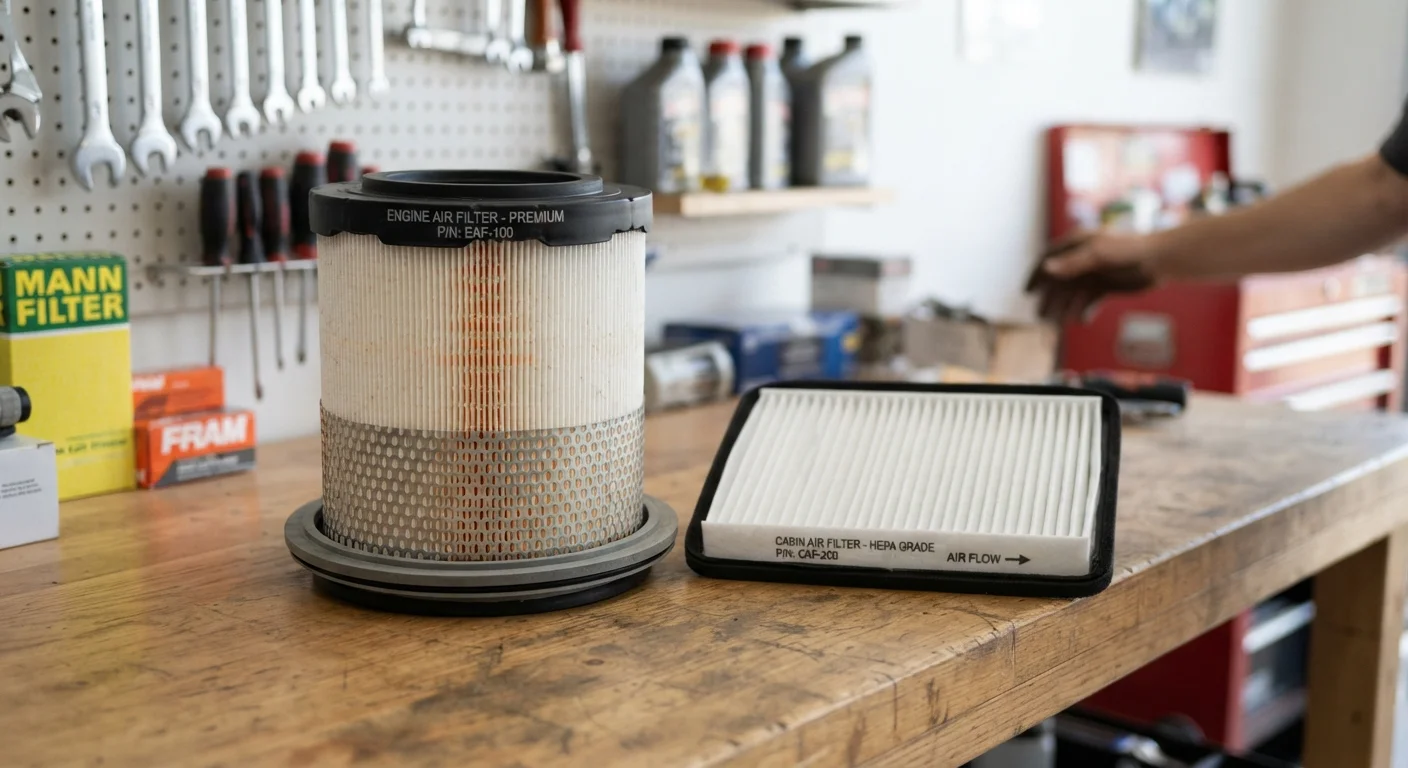
- The cabin air filter cleans air entering the passenger compartment; the engine air filter cleans air entering the engine.
- Neglecting the engine air filter can reduce fuel efficiency and cause long-term engine wear.
- A clogged cabin air filter leads to weak airflow from your vents and reduced HVAC performance.
- Both filters typically need replacing every 15,000 to 30,000 miles, but your owner's manual is the authoritative guide.
- Many drivers can replace both filters themselves with basic tools, potentially saving on labor costs.
Option A
Cabin Air Filter
The filter that protects what you breathe inside the car.
Best for: Drivers who want cleaner interior air and relief from allergens, dust, and exhaust fumes entering the passenger compartment.
Option B
Engine Air Filter
The filter that keeps your engine running efficiently.
Best for: Every driver who wants to protect engine longevity, maintain fuel economy, and prevent costly internal damage from debris.
If you or passengers suffer from allergies or sensitivity to dust and pollen
Cabin Air Filter
Replacing a dirty cabin air filter is the most direct step you can take to improve the air quality inside your vehicle's passenger compartment.
If your fuel economy has dropped noticeably or your engine seems sluggish
Engine Air Filter
A clogged engine air filter restricts airflow to the engine, which can reduce combustion efficiency and hurt performance - replacing it is a low-cost first check.
If you're doing a routine maintenance check and want the most impact per dollar
Engine Air Filter
The engine air filter directly affects performance and longevity, making it the higher-stakes of the two for overall vehicle health.
If your vents are blowing weakly or producing musty odors
Cabin Air Filter
Weak airflow and odors from the HVAC system are classic signs of a saturated cabin air filter that's overdue for replacement.
What Each Filter Actually Does
Despite sharing the word "air filter," these two components have nothing to do with each other in terms of function or location in your vehicle.
The engine air filter sits in the engine bay, typically inside a plastic housing connected to the intake system. Its job is to trap dirt, dust, insects, and debris before that air enters the engine's combustion chambers. Clean air is essential to proper combustion - too little airflow starves the engine of oxygen, hurting performance and efficiency.
The cabin air filter is usually located behind the glove box or under the dashboard, tucked into the HVAC (heating, ventilation, and air conditioning) system. It filters the air that flows through your vents into the passenger compartment. It catches pollen, mold spores, dust, and sometimes even exhaust particulates before they reach you and your passengers.
Think of it this way: the engine air filter keeps your engine healthy, while the cabin air filter keeps your lungs healthy inside the car.
| Criterion | Cabin Air Filter | Engine Air Filter |
|---|---|---|
| Primary function | Filters air entering passenger cabin | Filters air entering the engine |
| Location | Behind glove box or under dash | Engine bay intake housing |
| What it traps | Pollen, dust, mold, exhaust particles | Dirt, debris, insects, road dust |
| Typical replacement interval | 15,000-25,000 miles | 15,000-30,000 miles |
| Key symptom if clogged | Weak airflow, musty smell | Reduced fuel efficiency, sluggish engine |
| DIY difficulty | Generally easy | Generally easy |
How Often Each Filter Needs to Be Replaced
Replacement intervals vary by driving conditions and vehicle make, so always consult your owner's manual first. That said, general guidelines give a useful starting point.
15K-30K
Miles between engine air filter changes
The U.S. Department of Energy notes that a clogged air filter can affect engine performance, though modern fuel-injected engines manage fuel delivery adaptively.
15K-25K
Miles between cabin air filter changes
Many vehicle manufacturers recommend annual inspection of the cabin air filter, especially in high-pollen or dusty environments.
Engine air filters are commonly recommended for replacement every 15,000 to 30,000 miles. If you frequently drive on unpaved or dusty roads, you may need to replace yours more often. A visibly gray or clogged filter - rather than its original light tan or white color - is a reliable visual indicator.
Cabin air filters share a similar interval: roughly 15,000 to 25,000 miles, though some manufacturers suggest annual replacement regardless of mileage. Signs it's overdue include reduced airflow from vents, musty or stale smells when running the heat or AC, and increased dust buildup on the dashboard. Just as an HVAC filter in your home affects both air quality and system efficiency - as explored in our guide on HVAC filter schedules - your cabin air filter has a direct effect on how hard your car's blower motor works.
What Happens If You Ignore Them
Both filters degrade quietly over time, so drivers often don't notice problems until they become significant.
A neglected engine air filter restricts airflow to the engine. This forces the engine to work harder to draw in the air it needs, which can reduce fuel efficiency and, over time, contribute to increased wear. In severe cases, a completely blocked filter may cause rough idling or difficulty starting the vehicle.
A neglected cabin air filter becomes a dense mat of debris that chokes airflow through your vents. This reduces heating and cooling effectiveness and forces the blower motor to strain harder than designed - potentially shortening its lifespan. Mold and bacteria can also accumulate in a saturated filter, contributing to unpleasant odors inside the car.
The good news: both filters are among the more affordable and straightforward maintenance items on a modern vehicle. Many owners replace them at home using instructions in the owner's manual or a basic online walkthrough for their specific vehicle model, saving on labor costs. If you're uncertain or uncomfortable with DIY maintenance, a qualified mechanic can inspect and replace both during a routine service visit.