

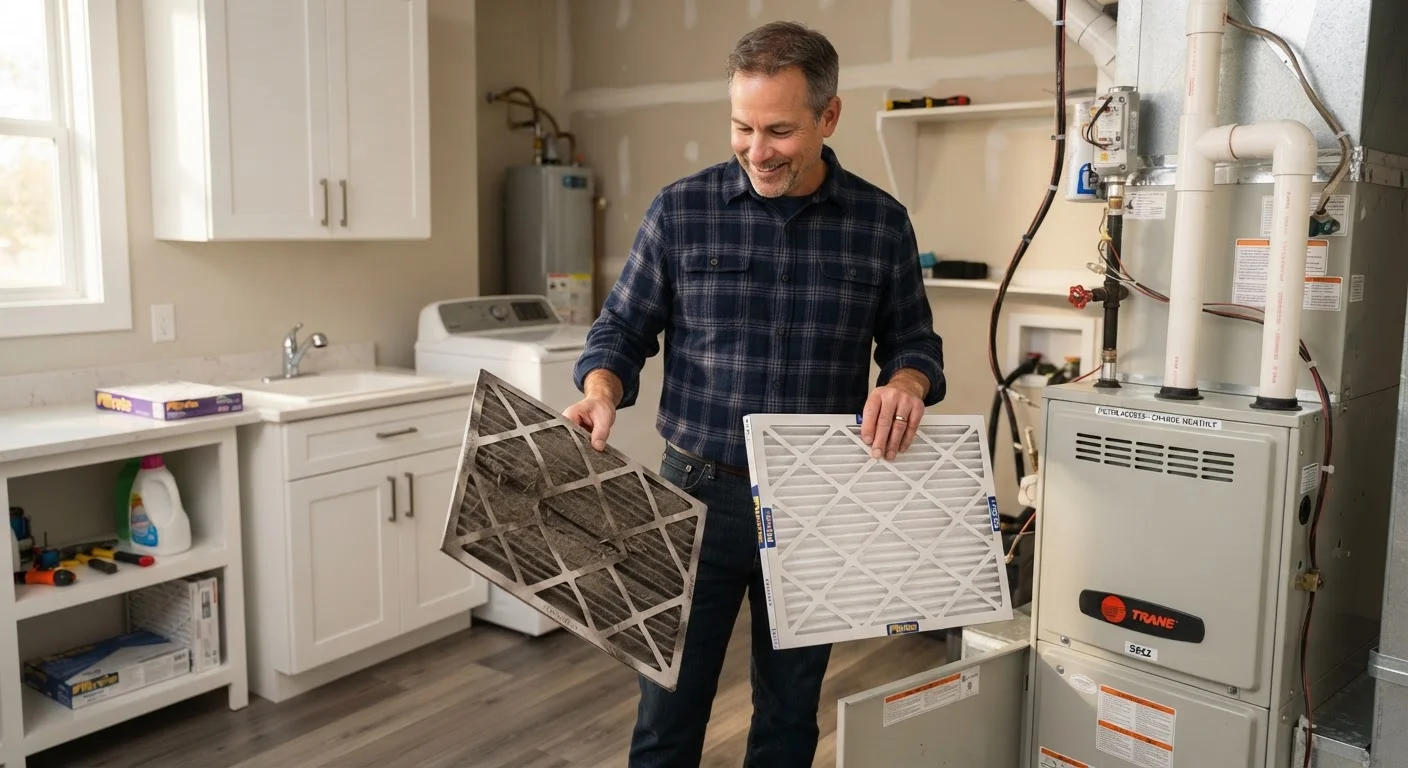
Key Takeaways
- Most standard 1-inch HVAC filters should be replaced every 30-90 days depending on household conditions.
- A clogged filter forces your HVAC system to work harder, increasing energy consumption and accelerating wear.
- Homes with pets, smokers, or allergy sufferers typically need more frequent filter changes.
- Thicker media filters (4-5 inches) can last up to 12 months but still need periodic inspection.
- Skipping filter changes is one of the leading causes of preventable HVAC breakdowns.
HVAC Filter Replacement Schedule
An HVAC filter replacement schedule is a regular maintenance interval that tells you how often to swap out the air filter in your heating, ventilation, and air conditioning system. The filter traps dust, pollen, pet dander, and other airborne particles before they circulate through your home or settle inside the equipment. Following a consistent schedule keeps air flowing freely, protects internal components, and maintains healthy indoor air quality.
Filter replacement frequency is typically expressed in days and is directly tied to a filter's MERV (Minimum Efficiency Reporting Value) rating - higher-MERV filters capture finer particles but restrict airflow more quickly, often requiring more frequent changes.
What Your HVAC Filter Actually Does
Your HVAC filter sits at the return-air intake - the point where your system draws air from your living spaces before heating or cooling it. As air passes through, the filter catches airborne particles: dust, pet dander, pollen, mold spores, and lint. This serves two distinct purposes.
First, it protects the mechanical components inside your HVAC unit - particularly the blower motor, evaporator coil, and heat exchanger - from accumulating a layer of debris that reduces efficiency and causes premature wear. Second, it contributes to cleaner indoor air by removing particulates before they recirculate through your home.
These two functions are inseparable. A filter that is never replaced eventually becomes so loaded with debris that it shifts from being a protector to a liability - blocking airflow and letting contaminants pile up on internal parts. Think of it the way deferred maintenance works in other systems: just as skipping routine maintenance creates compounding costs in a vehicle, ignoring your HVAC filter leads to bigger, more expensive problems down the line.
How Often Should You Actually Replace It?
Filter replacement intervals are not one-size-fits-all. The right schedule depends on filter thickness, your home's environment, and how heavily your system runs.
5-15%
Potential HVAC energy waste from dirty filters
The U.S. Department of Energy estimates that a clogged HVAC filter can increase system energy use by approximately 5-15% compared to a clean filter under the same conditions.
$10-$30
Typical cost of a standard residential HVAC filter
Standard 1-inch pleated filters for residential use generally range from roughly $10 to $30 depending on size and MERV rating, making regular replacement one of the most affordable home maintenance tasks available.
30 days
Recommended interval for high-pet or allergy households
HVAC manufacturers and industry maintenance guides commonly recommend a 30-day replacement cycle for homes with multiple pets or residents with asthma or allergies.
- 1-inch disposable filters: Every 30-60 days in homes with pets or allergy sufferers; every 60-90 days in average households; up to 90 days in vacation homes with minimal occupancy.
- 4- to 5-inch media filters: Generally every 6-12 months, though monthly visual inspection is still recommended.
- Washable filters: Clean every 30 days; allow to fully dry before reinstalling to prevent mold growth.
Environmental factors that shorten the interval include multiple pets, residents with respiratory conditions, recent renovation work (which generates significant dust), and homes in arid or high-pollen regions. If you've recently had drywall work or flooring installed, inspect your filter within two weeks - construction dust loads a filter rapidly.
Set a Calendar Reminder - Not a Guess
The most reliable way to stay on schedule is to set a recurring reminder on your phone or calendar the moment you install a fresh filter. Write the installation date on the filter's cardboard frame with a marker so you can confirm at a glance how old it is. Pairing this with another monthly task - like checking smoke detector batteries - helps the habit stick.
For a broader picture of how seasonal factors affect your home's systems, a season-by-season maintenance approach can help you time filter checks alongside other home upkeep tasks.
What a Neglected Filter Costs You
The consequences of an overdue filter change are gradual but real. When airflow is restricted, the blower motor compensates by running longer and working harder to push the same volume of air. This increases electricity consumption and adds wear to motor components that are expensive to replace.
On cooling systems specifically, restricted airflow can cause the evaporator coil to drop below freezing - a condition called coil freeze-up - which shuts the system down entirely and can force refrigerant to back up into the compressor, one of the costliest components in any HVAC unit. On heating systems, a blocked filter can cause the heat exchanger to overheat and crack - a failure that not only requires an expensive repair but can also become a safety hazard.
Regular filter replacement is, by most measures, the single highest-value preventive maintenance action available to a homeowner for their HVAC system. Similar reasoning applies to other overlooked appliances: water heater maintenance follows the same logic - small, consistent attention prevents large, avoidable failures.
Choosing the Right Filter for Your System
Not every filter rated for your system's size slot is the right choice for your equipment. The MERV scale - Minimum Efficiency Reporting Value - rates a filter's ability to capture particles. Higher MERV values capture finer particles, but they also restrict airflow more aggressively.
Most residential HVAC systems are designed for filters in the MERV 8-11 range. Filters rated MERV 13 and above - common in hospital settings - can reduce airflow enough to strain residential systems not engineered for that resistance. Before upgrading to a high-MERV filter, check your system's documentation or ask a licensed HVAC technician whether your equipment can handle the additional static pressure. Using the wrong filter can negate the very benefits you're trying to achieve.
It's worth noting that the principle of matching the right component to the right job applies broadly. Cabin and engine air filters in vehicles serve completely different functions despite sharing a name - the same nuance applies when selecting between filter types for your home HVAC system.
This article provides general home maintenance information only. Always consult a licensed HVAC professional for system-specific guidance, especially before making changes to equipment, refrigerant systems, or electrical components.