

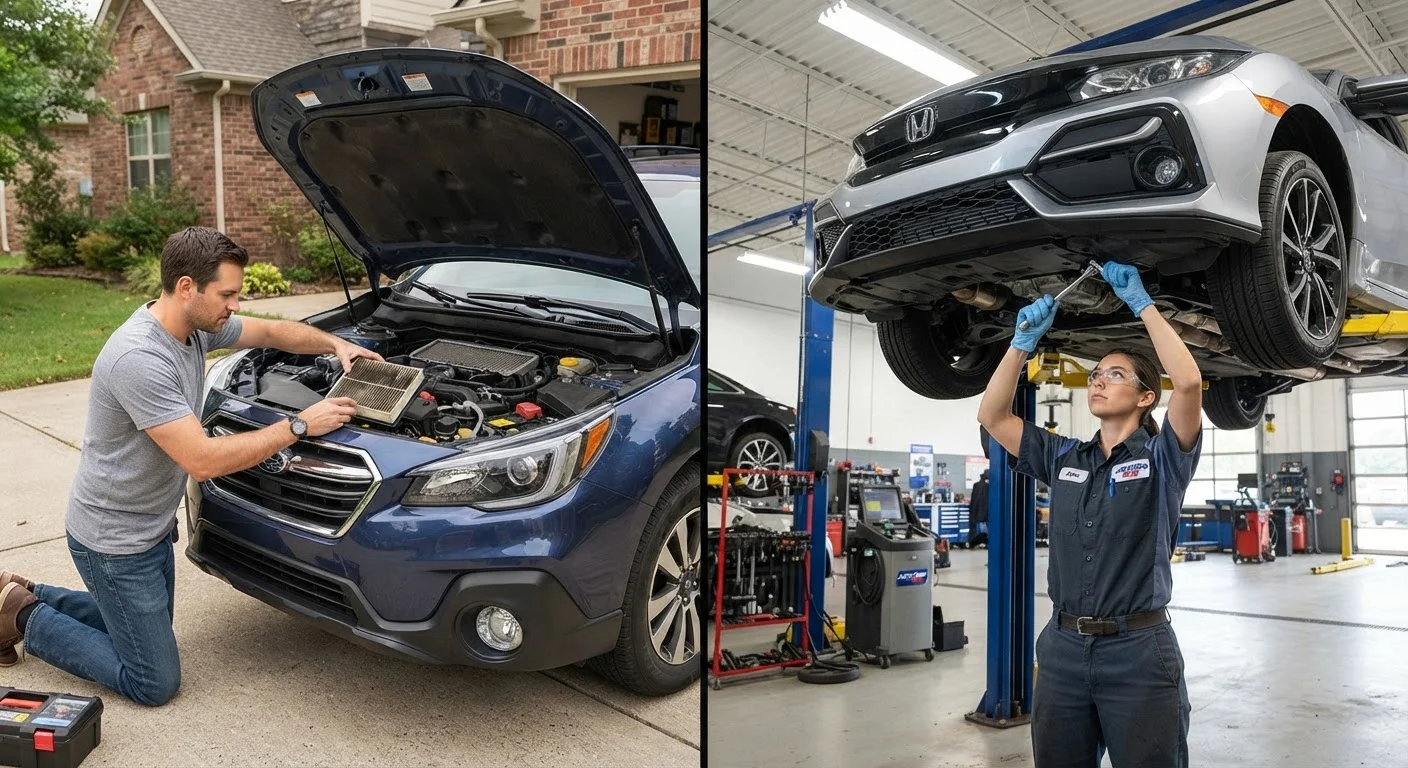
Key Takeaways
- Air filters, wiper blades, and cabin filters are safe, straightforward DIY tasks for most drivers.
- Brake system work, suspension repairs, and airbag-adjacent jobs carry real injury risk and belong at a shop.
- Your skill level, available tools, and vehicle warranty status all affect whether DIY makes sense.
- A wrong repair can cost more to fix than the original shop visit would have.
Our Verdict
DIY car maintenance makes sense for simple, low-risk tasks that require basic tools and carry no safety consequences if done imperfectly. For anything involving braking, steering, suspension, or safety systems, professional service is the more reliable and safer choice. Knowing where that line sits protects both your vehicle and your wellbeing.
| Best for | Recommended |
|---|---|
| Drivers comfortable with basic tools doing routine upkeep | DIY |
| Safety-critical repairs or jobs requiring specialized equipment | Shop |
| Vehicles still under manufacturer or extended warranty | Shop |
| Drivers who want to save money on simple, repeatable tasks | DIY |
Why the DIY vs. Shop Question Matters
For everyday drivers, the decision to tackle a maintenance task at home or hand it off to a professional isn't just about saving money - it's about making a safe, informed call. Done right, DIY maintenance can cut annual car costs noticeably. Done wrong, it can create new problems that cost more to fix than the original shop visit would have.
The key is learning to sort tasks by risk, complexity, and required equipment rather than by confidence alone. This framework applies to car ownership the same way it applies to home upkeep - a concept explored further in our guide on honest DIY trade-offs.
Tasks That Are Generally Safe to DIY
The following jobs are widely considered approachable for home mechanics with basic tools and a vehicle owner's manual in hand:
- Engine air filter replacement: Usually accessible under the hood with no tools or a simple screwdriver. A dirty filter can reduce fuel efficiency, making this a high-value, low-risk swap.
- Cabin air filter replacement: Typically located behind the glove box or under the dashboard. Instructions vary by model, but most replacements take under 15 minutes.
- Windshield wiper blades: Straightforward clip-and-lock mechanisms on most vehicles. Consult your owner's manual for the correct blade size.
- Tire pressure checks and inflation: A tire pressure gauge costs a few dollars. Maintaining correct pressure improves fuel economy and extends tire life.
- Checking and topping off fluids: Windshield washer fluid, coolant reservoir levels, and power steering fluid (on older vehicles) are generally safe to check and top off. Oil checks fall here too, though oil changes require slightly more setup.
- Battery terminal cleaning: If you notice white or blue corrosion on battery terminals, cleaning them with a wire brush and a baking soda solution is a manageable task - but always disconnect the negative terminal first and consult your manual.
Always Start With Your Owner's Manual
Your vehicle's owner's manual is the most accurate source for maintenance intervals, fluid specifications, and part numbers specific to your car. Procedures that look identical across models often have important differences. Keeping the manual in your glove box - or bookmarking a digital version - takes seconds and can prevent costly mistakes.
Even for DIY-friendly tasks, always cross-reference your vehicle's owner's manual. Part numbers, fluid specifications, and procedures vary significantly between makes and models.
Tasks That Belong at a Professional Shop
Certain jobs carry consequences - vehicle damage, voided warranties, or genuine physical injury - that make professional service the responsible choice for most drivers:
- Brake system work: Replacing brake pads may seem straightforward, but the brake system involves hydraulic pressure, rotor condition, and precise torque specifications. An error here directly affects stopping distance. See our companion piece on maintenance tasks worth paying a mechanic for for a fuller breakdown.
- Suspension and steering components: Ball joints, tie rods, and control arms require proper alignment after replacement. Incorrect installation affects handling and tire wear in ways that may not be immediately obvious.
- Timing belt or timing chain service: Requires engine disassembly and precise reassembly. A mistake can cause catastrophic engine damage.
- Airbag and SRS system components: Supplemental restraint systems can deploy unexpectedly during servicing, causing serious injury. This work requires factory-specific scan tools.
- Transmission service beyond fluid checks: Internal transmission components are precision-fitted and sensitive to contamination.
DIY Work May Affect Your Warranty
If your vehicle is under a manufacturer's warranty or a certified pre-owned warranty, performing unauthorized repairs or modifications - even minor ones - may void coverage. Check your warranty documentation or contact your dealer before proceeding with any DIY work beyond the simplest fluid checks.
If your vehicle is under a manufacturer's warranty or a certified pre-owned warranty, performing unauthorized repairs or modifications - even minor ones - may void coverage. Check your warranty documentation or contact your dealer before proceeding with any DIY work beyond the simplest fluid checks.
How to Make the Call: A Practical Framework
Before picking up a wrench, run through these four questions:
- What's the consequence of an error? If a mistake could affect braking, steering, or occupant safety, the job belongs at a shop. If the consequence is a mild inconvenience - like a wiper that doesn't clear perfectly - DIY is reasonable.
- Do I have the right tools? Many jobs require torque wrenches, specialty sockets, or diagnostic scan tools that aren't standard in a home toolbox. Renting tools is an option for some tasks, but factor in that time and cost.
- Does the job require a lift? Any task that requires safely raising the vehicle and working underneath it (exhaust components, undercarriage inspections, oil changes if you're unfamiliar with jack stands) carries fall risk if not done correctly.
- Am I working from a reliable source? Use your vehicle's factory service manual or a reputable vehicle-specific resource - not generic online tutorials that may not match your exact year, make, and model.
This same reasoning helps homeowners evaluate repair decisions, as outlined in our framework for DIY home repairs vs. hiring a pro.
Comparing DIY and Shop: The Full Picture
Neither approach is universally better. The table below compares DIY and shop service across the factors that matter most to everyday drivers.
| DIY | Professional Shop | |
|---|---|---|
| Upfront cost | Lower (parts only) | Higher (labor + parts) |
| Safety for brake/suspension jobs | High risk if inexperienced | Performed by trained technicians |
| Tools required | Basic to specialized | Full professional toolkit available |
| Warranty protection | May void warranty if unauthorized | Typically warranty-safe |
| Best for routine fluid/filter tasks | Yes - straightforward and cost-effective | Yes, but adds unnecessary cost |
| Diagnostic capability | Limited without scan tools | Full diagnostic equipment available |
| Time investment | Variable; includes learning curve | Predictable, professionally managed |
Understanding these trade-offs helps you allocate your maintenance budget strategically - handling low-risk tasks yourself while reserving professional service for jobs where expertise genuinely protects your safety and your vehicle's long-term reliability.