

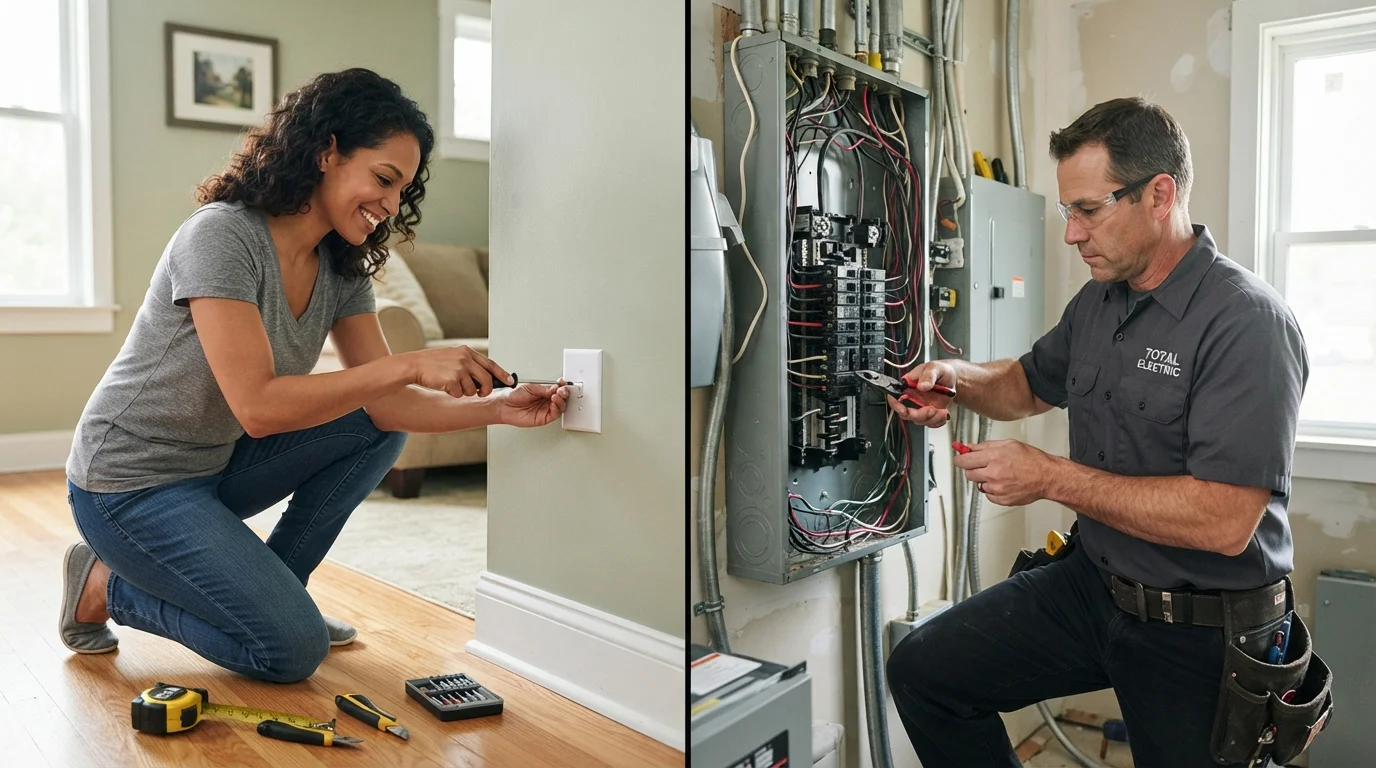
Key Takeaways
- DIY is generally appropriate for cosmetic, low-risk tasks that don't require permits or specialized tools.
- Electrical, gas, structural, and plumbing-into-mains work typically requires a licensed professional and often a permit.
- Misjudging your skill level on high-stakes repairs can cost far more than hiring a pro from the start.
- Your home's resale value and insurance coverage can both be affected by unpermitted or improperly completed work.
- A clear decision framework - based on safety, skill, cost, and code - helps you choose confidently every time.
Our Verdict
Neither DIY nor hiring a professional is universally better - the right choice depends on the specific task, your verified skill set, local code requirements, and the consequences of an error. Routine cosmetic and maintenance tasks are well-suited to confident homeowners; work involving safety systems, structural elements, or permits almost always warrants licensed help.
| Best for | Recommended |
|---|---|
| Confident homeowners with basic tools and time | DIY |
| Electrical, gas, structural, or permitted work | Hire a Pro |
| Tasks where an error would be costly or dangerous | Hire a Pro |
| Routine maintenance and cosmetic improvements | DIY |
The Core Question: What's Actually at Stake?
Every DIY-or-pro decision ultimately comes down to one question: what happens if something goes wrong? For low-stakes tasks - patching drywall, replacing a faucet aerator, repainting a room - a mistake is annoying and fixable. For high-stakes work involving electricity, gas lines, load-bearing walls, or waterproofing, an error can threaten personal safety, trigger significant structural damage, or void your homeowner's insurance.
Before picking up a tool or calling a contractor, run through these four filters:
- Safety risk: Could a mistake injure you, your family, or future occupants?
- Code and permit requirements: Does local regulation require licensed work or an inspection?
- Skill and tool match: Do you genuinely have the skills and equipment this job demands?
- Cost of failure: If it goes wrong, is the remediation cost dramatically higher than a professional would have charged?
If any answer flags serious concern, that's a strong signal to hire a licensed professional. See our guide to understanding your home's systems to build the foundational knowledge that makes these calls easier.
Tasks Well-Suited to Confident DIYers
A wide range of routine maintenance and cosmetic tasks are genuinely manageable for homeowners with basic tools and a willingness to follow instructions carefully. These jobs share a common profile: low safety risk, no permit required, and forgiving margins for error.
- Painting interior walls and trim - minimal risk, widely documented technique
- Caulking windows, tubs, and exterior gaps - inexpensive materials, high-impact results
- Replacing light switch covers, outlet covers, and cabinet hardware - no live wiring involved
- Patching small drywall holes - cosmetic repair with a short learning curve
- Unclogging drains with a hand snake or plunger - no pipe connections disturbed
- Installing weatherstripping and door sweeps - simple fastening, measurable energy savings
- Replacing a toilet flapper or fill valve - no soldering, water shut-off valve isolates the work
These are also the category of tasks where staying ahead of problems pays dividends. Our low-cost maintenance task guide covers dozens of similarly accessible jobs that prevent expensive damage down the road.
Start Small to Build Confidence
If you're new to home repair, pick the lowest-stakes version of a task to develop your skills before tackling larger projects. Successfully replacing a faucet aerator builds the confidence and familiarity with shut-off valves that makes a toilet fill valve replacement feel straightforward next time. Document what you learn - a simple notes app entry describing what you did and what you'd do differently is surprisingly useful months later.
When to Call a Licensed Professional
Certain categories of work carry consequences serious enough that professional expertise isn't just helpful - it's often legally required. In most U.S. jurisdictions, the following typically require permits, licensed contractors, or both:
- Electrical panel work, new circuits, and rewiring - improper wiring is a leading cause of house fires
- Gas line installation, repair, or appliance hookups - leaks are life-threatening
- Structural modifications - removing or altering load-bearing walls without engineering review risks collapse
- Roof replacement - mistakes cause water intrusion that is extremely expensive to remediate
- Main plumbing stack connections and sewer line work - improper connections risk sewage backup and health hazards
- HVAC installation and refrigerant handling - federal law restricts refrigerant work to certified technicians
Beyond safety, unpermitted work can complicate a home sale, raise insurance claim disputes, and expose you to liability if a future occupant is harmed. Always verify local permit requirements through your municipality before starting any significant project. For a deeper look at evaluating contractors once you've decided to hire, see our contractor vetting checklist.
Don't Let YouTube Confidence Outpace Real Skill
Video tutorials make complex repairs look deceptively simple. Professionals often make their work look easy precisely because of years of hands-on experience - not because the task itself is easy. Before attempting any repair you've only ever seen done on screen, honestly assess whether you have the tools, physical access, and troubleshooting ability to handle complications that the video may not have shown.
Comparing DIY vs. Hiring a Pro Across Key Factors
Use this comparison as a reference when evaluating a specific repair. Keep in mind that cost estimates vary significantly by region, project scope, and local labor market - always get written bids before committing.
| Factor | DIY | Hire a Pro | |
|---|---|---|---|
| Upfront cost | Lower - materials only | Higher - includes labor | |
| Risk if done incorrectly | Low on simple tasks; high on complex ones | Mitigated by expertise and licensing | |
| Permit compliance | Homeowner's responsibility to verify | Typically managed by contractor | |
| Time investment | Significant, especially for first attempts | Faster; professional efficiency | |
| Insurance implications | Unpermitted work may void claims | Licensed work generally insurable | |
| Quality assurance | Depends on skill and research | Backed by warranty and experience |
For a more nuanced exploration of when DIY creates unexpected costs or complications, the honest trade-offs of DIY article provides a balanced counterpoint worth reading alongside this framework.