
Synthetic vs. Conventional Motor Oil: What the Difference Actually Costs You

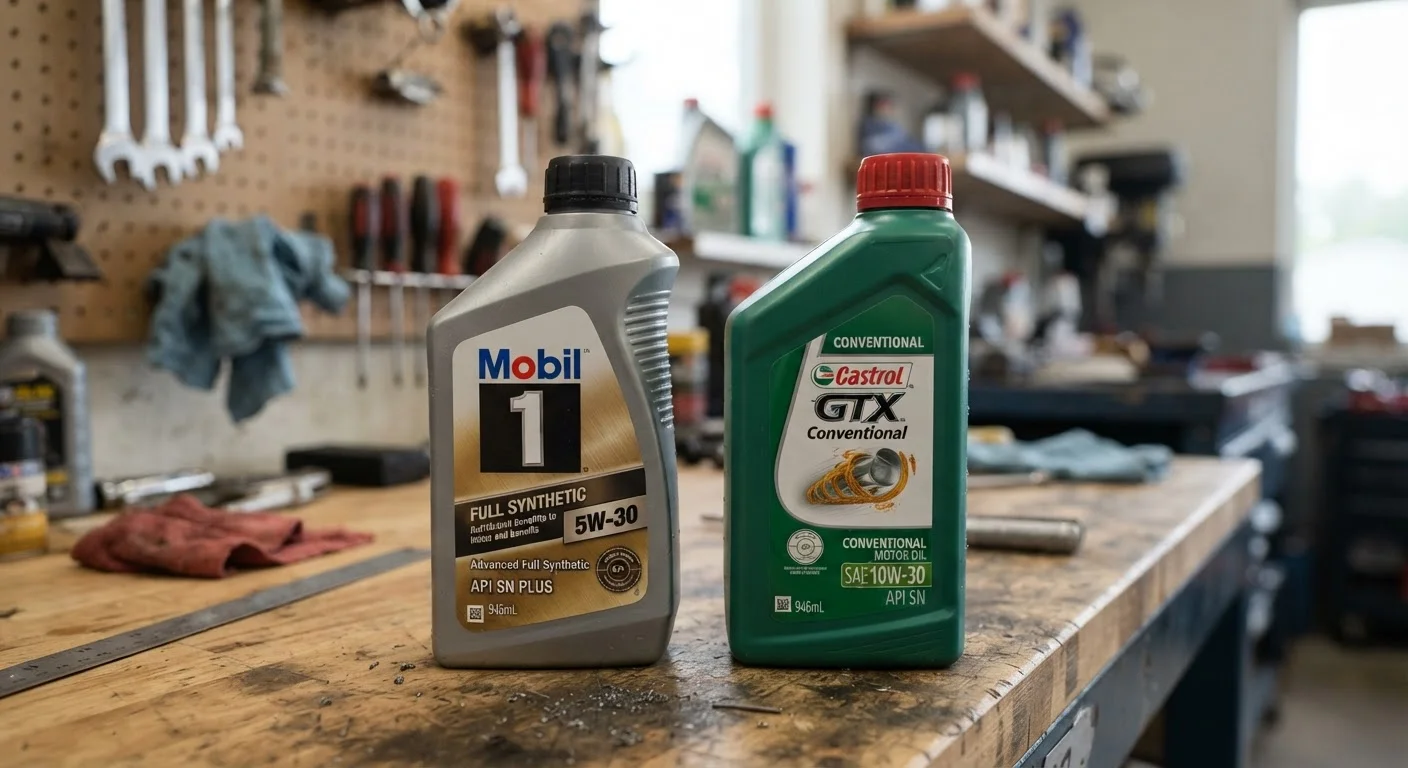
Key Takeaways
- Synthetic oil costs more per quart but lasts significantly longer between changes, which can offset the price difference.
- Conventional oil works adequately for many older or simpler engines but degrades faster under heat and stress.
- Your vehicle's owner's manual is the authoritative guide for which oil type and viscosity your engine requires.
- Turbocharged engines and vehicles in extreme climates benefit most from synthetic oil's added stability.
- Switching from conventional to synthetic is generally safe, but consult a qualified mechanic if your vehicle has high mileage or known leaks.
Option A
Synthetic Motor Oil
The engineered, longer-lasting option for modern engines.
Best for: Drivers who want extended oil change intervals, operate in extreme temperatures, or own turbocharged or high-performance vehicles.
Option B
Conventional Motor Oil
The traditional, widely available choice for routine driving.
Best for: Owners of older vehicles with simpler engines who drive mostly in moderate conditions and change oil on a regular short-interval schedule.
If you drive a modern vehicle with a turbocharged engine
Synthetic Motor Oil
Turbochargers generate intense heat that breaks down conventional oil quickly. Synthetic oil holds up far better under those conditions, protecting critical engine components.
If you own an older vehicle with a simple naturally aspirated engine and moderate mileage
Conventional Motor Oil
Many older engines were designed around conventional oil specifications. If your owner's manual permits it and the engine is in good health, conventional oil can serve reliably at a lower upfront cost.
If you want to minimize total annual oil maintenance spending
Synthetic Motor Oil
Fewer oil changes per year mean lower cumulative labor and filter costs, often making synthetic more economical over a 12-month period despite a higher per-quart price.
If you drive in extreme climates - very hot summers or very cold winters
Synthetic Motor Oil
Synthetic oil flows more reliably at low temperatures and resists thermal breakdown in high heat, providing more consistent engine protection across seasonal extremes.
If you have a high-mileage engine with known seal wear
Conventional Motor Oil
Some older engines with worn seals can experience increased oil consumption when switching to a thinner synthetic. A qualified mechanic can advise whether a high-mileage conventional formula is the safer choice.
What Makes These Two Oils Different
Motor oil's primary job is to lubricate moving metal parts inside your engine, reduce friction, carry away heat, and suspend contaminants until the next oil change. Both synthetic and conventional oil do this - but they do it differently, and for different lengths of time.
Conventional motor oil is refined directly from crude petroleum. The refining process removes many impurities, but the resulting product still contains molecular irregularities that cause it to break down more quickly under heat and mechanical stress. Most manufacturers specify a change interval of roughly 3,000-5,000 miles for conventional oil, though modern engines and driving conditions can sometimes allow longer intervals - always defer to your owner's manual.
Synthetic motor oil is either fully synthesized from chemical compounds or is a heavily processed and purified petroleum base (called a synthetic blend when mixed). The molecules are more uniform in size and structure, which means the oil resists breakdown longer, flows better at cold startup, and provides a more stable lubrication film when temperatures spike. Full-synthetic oil is commonly rated for 7,500-15,000-mile intervals depending on the vehicle and oil formulation.
Understanding these differences is foundational to evaluating your true cost of ownership, because oil choice affects both maintenance frequency and engine longevity.
| Criterion | Synthetic Motor Oil | Conventional Motor Oil |
|---|---|---|
| Typical cost per oil change (DIY) | $35-$60+ | $20-$30 |
| Typical change interval | 7,500-15,000 miles | 3,000-5,000 miles |
| Changes needed per 15,000 miles | 1-2 | 3-5 |
| Cold-weather startup performance | Superior flow at low temps | Thickens more in cold |
| Heat and stress resistance | High - resists breakdown | Moderate - degrades faster |
| Best engine types | Modern, turbo, high-performance | Older, simpler engines |
| Molecular uniformity | Engineered, consistent | Refined, some irregularities |
The Real Cost Comparison Over Time
The sticker price gap is real: a five-quart jug of conventional oil typically runs $20-$30, while full synthetic can run $35-$60 or more for the same quantity. That difference feels significant at the auto parts store. But it's the wrong unit of measurement.
The more useful calculation is annual cost per mile protected. A driver covering 15,000 miles per year on conventional oil at a 5,000-mile interval needs three oil changes. At a 10,000-mile synthetic interval, they need only one to two. When you factor in labor costs at a shop - often $40-$100 per visit beyond the oil itself - fewer changes per year can make synthetic the cheaper option over a 12-month period, even before accounting for the engine wear that degraded oil accelerates.
3x
Longer interval vs. conventional oil
Full-synthetic oils are commonly rated for up to 15,000-mile intervals, compared to 5,000-mile intervals typical for conventional oil.
~$120-$300
Estimated annual shop oil-change cost (conventional, 3 changes)
Based on typical shop labor and oil costs for three conventional oil changes per year at 15,000 miles annually - actual costs vary widely by region and vehicle.
40%+
Engine wear occurs at cold startup
Industry engineering guidance has long noted that a significant share of engine wear occurs in the first moments after startup, when oil must flow quickly - an area where synthetics have a measurable advantage.
Of course, this math changes if you change your own oil, drive fewer miles annually, or own a vehicle whose manufacturer explicitly specifies conventional oil. The hidden costs of deferred maintenance - including accelerated engine wear from running degraded oil - are easy to underestimate until a repair bill arrives.
For a fuller picture of how maintenance choices fold into vehicle ownership expenses, the real cost of owning a car beyond the monthly payment is worth reading alongside this comparison.
Which Oil Is Right for Your Engine
The most reliable answer comes from your vehicle's owner's manual - not marketing on the oil bottle. Automakers specify viscosity grades (such as 5W-30 or 0W-20) and often indicate whether synthetic is required, recommended, or simply permitted. Turbocharged engines, direct-injection engines, and many vehicles built after roughly 2010 are frequently engineered around synthetic oil's properties.
A few practical guidelines:
- Check the manual first. If your manufacturer requires a specific oil type or API service category, that requirement takes precedence over cost considerations.
- Consider your climate. Cold-weather drivers benefit from synthetic's better cold-start flow; hot-climate drivers benefit from its heat resistance.
- High-mileage vehicles need extra thought. Some older engines with worn seals may experience oil consumption changes when switching formulations. A qualified mechanic's input is valuable here.
- Synthetic blends are a middle option. They cost less than full synthetic and last longer than conventional - a reasonable middle ground for some drivers and vehicles.
This article is for general informational purposes only. Always follow your vehicle manufacturer's specifications and consult a qualified mechanic before making changes to your maintenance routine.