

Key Takeaways
- Car batteries lose significant cranking power below freezing, making a voltage test essential before winter.
- Tire pressure drops roughly one PSI for every 10°F drop in temperature - check monthly through winter.
- Coolant antifreeze ratio and windshield washer fluid freeze point should both be verified before cold hits.
- Worn wiper blades and dim headlights are inexpensive fixes that dramatically improve winter driving safety.
- A pre-winter inspection costs far less than an emergency roadside service call or a weather-related breakdown.
Why a Pre-Winter Inspection Is Worth the Effort
Cold weather doesn't create car problems - it reveals them. A battery that's been slowly weakening, brake pads that are thin but passable, or wiper blades that smear just enough - these marginal conditions become genuine hazards the moment temperatures drop and roads turn slick. A pre-winter inspection is the practical tool for catching those issues before they strand you on a dark highway in freezing rain.
Beyond safety, there's a real financial case. Emergency towing, after-hours repairs, and last-minute tire purchases all carry a premium. Addressing the same issues in a scheduled inspection - before the first hard freeze - typically costs far less. For a broader look at seasonal readiness, see our seasonal car care guide, which covers what to check as each season shifts.
~50%
Battery capacity loss at 0°F vs. 80°F
Cold temperatures can reduce a lead-acid battery's cranking power by roughly half compared to its warm-weather performance, according to battery industry technical data.
1 PSI
Tire pressure drop per 10°F temperature decrease
This is a commonly cited rule of thumb from the US Tire Manufacturers Association, making monthly pressure checks essential throughout winter.
3-4 years
Average car battery service life
Many battery manufacturers and automotive organizations recommend testing or replacing batteries that are approaching this age, particularly before winter.
Battery and Electrical System
The battery is the single item most likely to fail in cold weather. Cold temperatures slow the chemical reactions inside a battery, reducing its available cranking power - the energy needed to start the engine. A battery that starts the car fine in September may not do the same job at 10°F in January.
A battery load test (available at most auto parts stores and service shops) checks whether the battery can deliver sufficient current under real starting conditions - not just whether it holds a surface charge. If your battery is more than three to four years old, a test is especially worthwhile. Also inspect the battery terminals for corrosion (a white or blue powdery buildup) and check that cables are snug and undamaged.
When testing your battery, ask for a load test rather than a simple voltage check. A battery can read 12.6 volts at rest but still fail under the real current draw of engine startup.
A resting voltage test misses batteries that have degraded capacity - the load test simulates actual starting conditions and is far more diagnostic.
Check tire pressure first thing in the morning before driving - tires heat up during use and pressure rises, which can mask an under-inflation problem.
Tire pressure measured on a 'cold' tire (driven less than one mile) is the accurate baseline that matches the vehicle's placard specification.
Tires: Tread, Pressure, and Winter Readiness
Tires are your only point of contact with icy or wet pavement, so their condition directly controls your ability to stop and steer. Two things to verify: tread depth and inflation pressure.
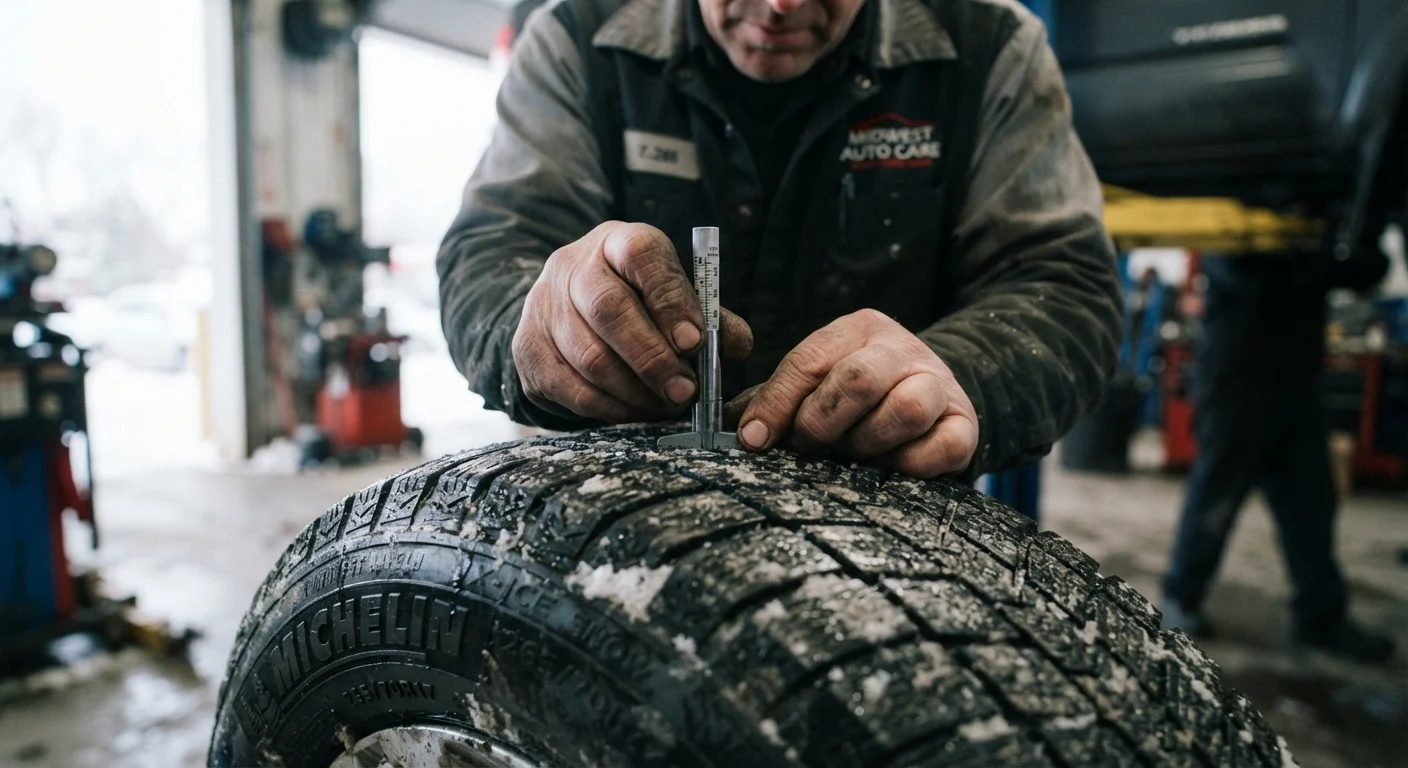
Tread depth: The legal minimum in most US states is 2/32 of an inch, but traction on snow and wet roads degrades noticeably before that point. A quick check: insert a quarter into the tread groove with Washington's head facing down. If you can see the top of his head, tread is getting low. For snow-covered regions, consider replacing tires earlier than you would in a warm climate.
Tire pressure: For every 10°F drop in ambient temperature, tire pressure falls approximately one PSI (pound per square inch). Under-inflated tires wear unevenly and handle poorly. Check pressure against the placard on your driver's door jamb - not the maximum number printed on the tire sidewall - and plan to recheck monthly through winter.
Drivers in areas with regular snowfall should also consider whether their all-season tires are genuinely adequate for local conditions. Dedicated winter tires use a different rubber compound that stays pliable in deep cold, improving grip substantially. See our driving and safety hub for more on safe winter driving practices.
Fluids That Cold Weather Attacks
Several vehicle fluids either change viscosity or lose effectiveness in cold temperatures. Check these before the freeze arrives:
- Engine coolant (antifreeze): Coolant prevents the water in your cooling system from freezing and cracking the engine block. The mixture ratio of coolant to water matters - a 50/50 mix typically protects to around -34°F. An inexpensive coolant tester strip or float-style tester can verify this. If your coolant is more than two years old, consider having the system flushed and refilled per your vehicle's service schedule.
- Engine oil: Cold temperatures thicken oil, making it harder to circulate at startup - the moment when most engine wear occurs. Check your owner's manual for the recommended viscosity grade for your climate. Some drivers switch to a lower-viscosity oil (e.g., 0W-20 vs. 5W-30) in winter; your manual is the right guide here.
- Windshield washer fluid: Standard summer washer fluid freezes in the nozzles and lines. Use a winter-rated fluid rated to at least -20°F, and top off the reservoir fully before cold weather sets in.
- Brake fluid: Brake fluid absorbs moisture over time, which lowers its boiling point and can make it more susceptible to performance issues. If it hasn't been replaced in two years or more, have it tested.
Brakes, Lights, and Visibility Systems
Winter driving demands shorter stopping distances and better visibility - which means your brakes and lighting need to be in solid shape, not just borderline acceptable.
Brakes: Have a qualified mechanic inspect pad thickness, rotor condition, and brake lines. Thin pads that might last another three months in dry summer conditions may not provide adequate stopping power on wet or icy roads. Listen for squealing or grinding sounds during normal driving - both are signals to have brakes checked promptly.
Lights: Days are shorter in winter and weather reduces visibility further. Walk around your vehicle and confirm all headlights (low and high beam), taillights, brake lights, turn signals, and reverse lights are functioning. Replace any dim or burned-out bulbs before the season begins - this is an inexpensive fix that's easy to overlook.
Wiper blades and defroster: Test your front wipers on a wet windshield and look for streaking or skipping, which indicate worn blades. Rear wiper blades (if equipped) are frequently forgotten - check those too. Test your front and rear defrosters to confirm they clear the glass fully. A failed defroster grid is a safety issue, not a comfort issue.
Make Defroster Testing a Habit
Turn on both front and rear defrosters on the first cold morning of fall and watch whether the glass clears fully within a few minutes. Rear defrost grids are thin conductive lines printed on the glass - they can break invisibly. If a section of your rear window stays foggy, the grid likely has a break that can be repaired inexpensively with a defroster repair kit or by a shop.
Heating System and Cabin Comfort
Your cabin heating system does more than keep passengers comfortable - it also keeps the driver alert and the windshield clear. Turn on the heater and verify that it reaches full temperature within a few minutes of driving and that airflow reaches all vents, including defrost modes. A heater that blows only lukewarm air may indicate a low coolant level, a stuck thermostat, or a partially blocked heater core.
Also check your cabin air filter. A clogged cabin filter restricts airflow through the heating and ventilation system, which makes defrosting slower and reduces overall comfort. Many cabin air filters are accessible without tools and can be inspected in minutes - your owner's manual shows the location.
What to Do After the Inspection
Once you've completed (or had a shop complete) the inspection, keep a simple written record of what was checked, what was replaced, and the current status of anything that was borderline. This record helps you track wear progression across seasons and gives a mechanic useful context at future service visits.
If you're preparing for winter travel in addition to routine driving, pair this vehicle checklist with a broader readiness plan. The pre-trip planning checklist covers the non-vehicle elements - documents, reservations, and logistics - so nothing falls through the cracks before a winter trip.
Finally, keep a basic winter emergency kit in the trunk: a ice scraper, a small shovel, jumper cables or a portable jump starter, a flashlight, and a blanket. No inspection guarantees a trouble-free winter, but preparation significantly reduces both the likelihood of a problem and the severity of one if it occurs.
This article is intended for general informational purposes. For diagnosis or repair of specific vehicle issues, consult a qualified, licensed mechanic.