

Key Takeaways
- Seasonal checks catch minor issues before they become expensive repairs or safety hazards.
- Tires, battery, and fluids are the three systems most affected by temperature swings.
- Most seasonal checks can be completed in under an hour with basic tools.
- Your owner's manual is the authoritative source for fluid specs and service intervals.
- Some tasks - like brake inspection or coolant flushes - should be handled by a qualified mechanic.
Summary
22 items · 30-60 minutes
Why Seasonal Checks Pay Off
Every time the season changes, your car faces a different set of demands. Summer heat accelerates fluid breakdown and stresses cooling systems. Winter cold reduces battery capacity and hardens rubber. Spring and fall bring moisture, road debris, and fluctuating temperatures that can mask developing problems.
Running a targeted inspection at each seasonal transition - roughly four times a year - helps you catch small issues before they strand you on the side of the road or balloon into costly repairs. Think of it as a brief audit that protects both your safety and your wallet.
For guidance on your vehicle's broader service milestones, see Your Car's Maintenance Schedule, Explained. If you're specifically preparing for cold weather, What a Pre-Winter Car Inspection Should Actually Cover goes deeper on freeze-specific concerns.
Tires & Wheels
Battery & Electrical
Fluids
Visibility & Safety Systems
Under the Hood & Belts
Tools You'll Need
Most seasonal checks require only basic supplies available at any auto parts store. Having them on hand before you start saves time and lets you address minor issues on the spot.
Tire pressure gauge
Measures PSI in each tire so you can inflate or deflate to the recommended level.
Tread-depth gauge
Gives a precise measurement of remaining tread depth across the tire's surface.
Battery tester or load tester
Checks whether your battery can hold a charge under real-world starting conditions.
Flashlight or work light
Illuminates the engine bay, undercarriage, and tire sidewalls during inspection.
Funnel and fluid top-off supplies
Allows you to safely add washer fluid, coolant, or oil without spills.
Battery terminal cleaning brush
Removes corrosion from battery posts and cable connectors to maintain a clean electrical connection.
Key Areas to Watch Each Season
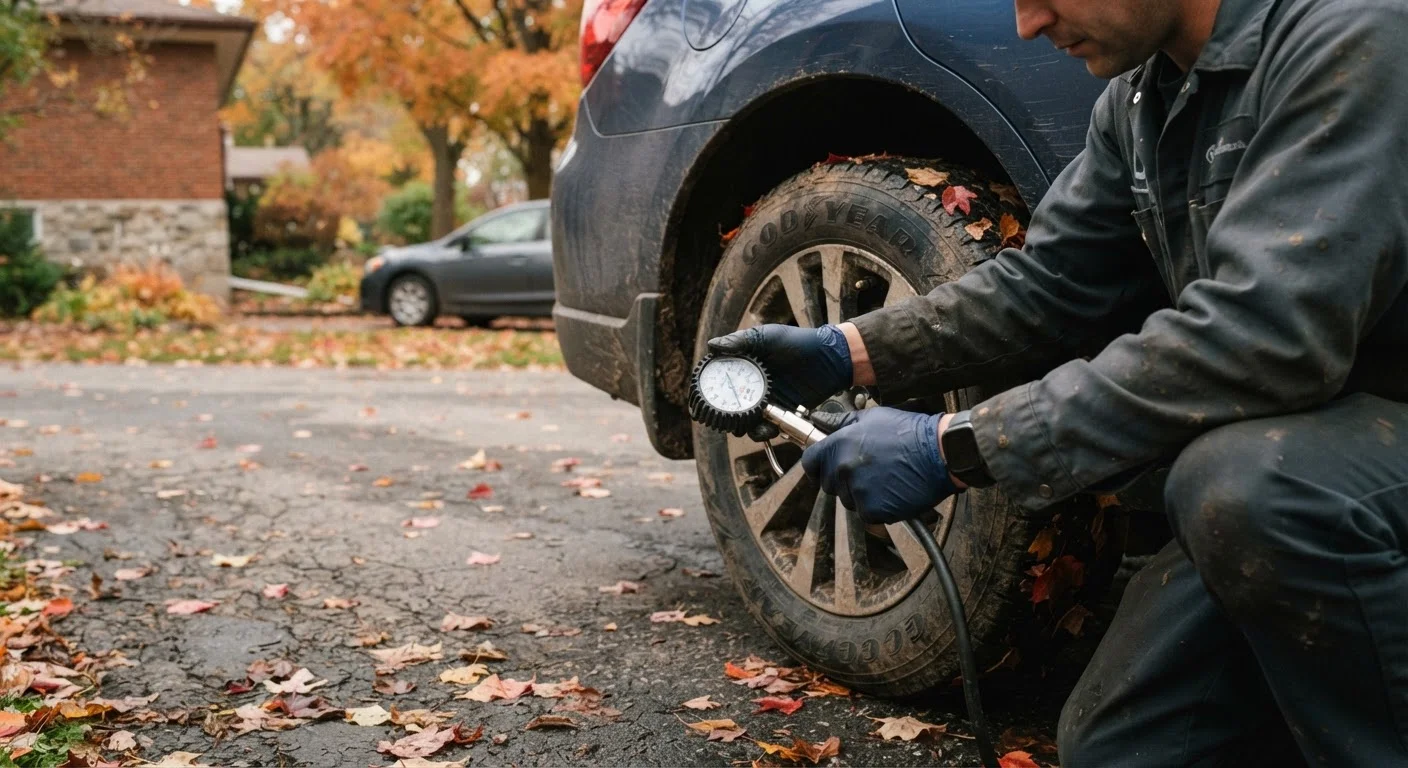
Tires are the single most season-sensitive component on your vehicle. Cold air causes tire pressure to drop roughly one PSI for every 10°F decrease in temperature - meaning a properly inflated tire in October may be noticeably underinflated by December. Check pressure when tires are cold, and compare against the placard on your driver's door jamb, not the number molded into the tire sidewall.
Tread depth matters just as much as pressure. A quick way to gauge it: insert a quarter upside down into the tread groove. If you can see the top of the head, tread is at or below 2/32 of an inch and replacement is overdue.
Battery performance drops sharply in cold weather. A battery that starts your car without issue in September may fail in January when temperatures dip. Most auto parts stores will test your battery for free. If your battery is more than three years old, make a habit of testing it each fall.
For a plain-language breakdown of what each fluid under the hood does and how to spot trouble, see Car Fluids Every Driver Should Be Able to Identify.
Brakes deserve attention heading into wet or icy conditions. If you hear squealing, grinding, or notice a longer stopping distance, have a qualified mechanic inspect the pads and rotors before winter arrives. See Getting More Life Out of Your Brakes for habits that extend brake life year-round.
Don't DIY Brake or Coolant System Work Without Experience
Brake fluid and coolant systems are safety-critical and, in some cases, pressurized. Incorrect handling can cause injury or lead to brake failure. If you're not confident inspecting these components yourself, have a qualified mechanic do it - especially before winter or summer driving seasons when these systems face peak stress.
Visibility and lighting round out the seasonal checklist. Wiper blades typically last six to twelve months; streaking or skipping is a clear sign they need replacement. Check that all exterior lights - headlights, taillights, turn signals, and brake lights - are functioning. A helper makes the brake light check easy, or you can back up close to a reflective surface.
For a condensed walk-around you can run anytime, the Pre-Trip Vehicle Check Every Driver Should Run is a useful companion to this seasonal routine.
Your Owner's Manual Overrides General Advice
Every vehicle has specific fluid types, capacities, and service intervals set by its manufacturer. Recommendations in this checklist are general starting points. Always consult your owner's manual for the correct specifications for your make, model, and year - using the wrong fluid type or interval can void warranties or cause mechanical damage.