

Key Takeaways
- Federal safety standards set the floor for car seat design, but proper installation is equally critical.
- Children should remain rear-facing until they reach the seat's maximum rear-facing weight or height limit.
- Studies consistently find that a large share of car seats are installed incorrectly in some way.
- LATCH and seat belt installation are both valid methods - neither is universally safer than the other.
- Free certified inspection stations exist nationwide where technicians will check your installation at no charge.
Start here
Why Car Seat Standards Exist
Next
The Four Stages of Car Seat Use
Then
How Installation Actually Works
Watch out for
Common Installation Errors to Avoid
Final step
Getting Your Installation Checked
Why Car Seat Standards Exist
Car crashes are a leading cause of injury among children in the United States. Car seat regulations exist because a correctly used, federally compliant seat dramatically reduces the forces transmitted to a child's body during a collision. The federal agency responsible for vehicle safety standards - the National Highway Traffic Safety Administration (NHTSA) - establishes minimum performance requirements that every car seat sold in the US must meet before it can be marketed.
These standards cover things like how a seat must perform in frontal and side-impact crash simulations, how the harness must function, and how the seat must behave in rollover conditions. Passing these tests is the legal baseline. It does not mean every seat performs the same way - but it does mean that any seat you buy in a US store has cleared a federally defined safety floor.
What the standards cannot control is how a seat is installed or used once it leaves the store. That responsibility falls entirely on the caregiver.
LATCH System
A standardized set of anchor points built into vehicles and car seats that allows the seat to attach directly to the vehicle frame without routing through the seat belt.
Five-Point Harness
A restraint system with five attachment points - two at the shoulders, two at the hips, and one at the crotch - that distributes crash forces across the strongest parts of the child's body.
Top Tether
A strap that connects the top of a forward-facing car seat to an anchor point in the vehicle, reducing how far a child's head moves forward in a frontal crash.
Belt Path
The specific channel or guide on a car seat through which the vehicle seat belt must be routed to correctly secure the seat.
CPST
Child Passenger Safety Technician - a person trained and nationally certified to inspect car seat installation and educate caregivers on correct use.
Convertible Seat
A car seat designed to be used rear-facing for infants and young toddlers, then converted to forward-facing as the child grows, extending the seat's usable lifespan.
The Four Stages of Car Seat Use
Car seat guidance is structured around a child's physical development, not simply their birthday. There are four generally recognized stages:
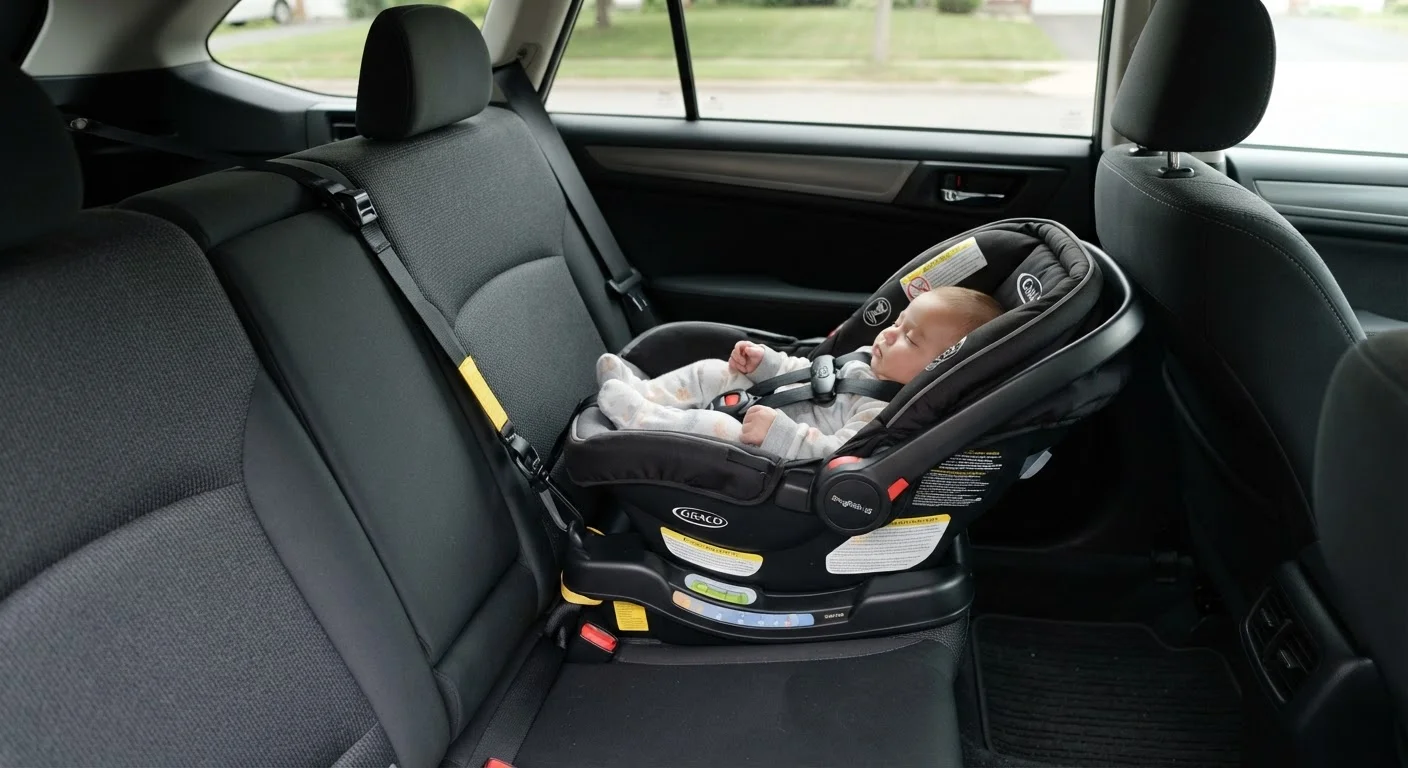
- Rear-facing infant or convertible seat: Appropriate from birth. Children should remain rear-facing until they reach their seat's maximum rear-facing weight or height limit - not a specific age. Rear-facing spreads crash forces across the head, neck, and spine, which is especially important for young children whose neck muscles are not fully developed.
- Forward-facing seat with harness: Once a child outgrows the rear-facing limit, they move to a forward-facing seat with a five-point harness. They should stay in this configuration until they reach that seat's maximum harness weight or height.
- Belt-positioning booster seat: When a child has outgrown the harness limits, a booster positions the vehicle's seat belt correctly across their body. Children typically use a booster until the seat belt fits properly without one - usually when they are around 4 feet 9 inches tall.
- Seat belt only: A seat belt fits correctly when the lap belt lies across the upper thighs (not the stomach) and the shoulder belt crosses the chest and shoulder (not the neck). Most children do not reach this stage until somewhere between ages 8 and 12.
As children grow into older teenagers and begin driving themselves, understanding the rules around licensing matters just as much. See our guide to graduated licensing for what parents often overlook.
How Installation Actually Works
Every car seat can be secured using one of two methods: the LATCH system or the vehicle's seat belt. Both are federally required and both, when used correctly, are equally capable of holding a seat securely in a crash.
LATCH uses two lower anchor points built into the vehicle seat's crease, plus an upper tether anchor located behind or above the seat. Lower anchors connect the seat to the vehicle frame; the top tether further reduces forward head movement in a crash for forward-facing seats.
Seat belt installation routes the vehicle's lap and shoulder belt through specific guides on the car seat. This method is often required for heavier children because most vehicles have a LATCH weight limit of 65 pounds combined (child plus seat).
Use the Inch Test After Every Install
Once you've secured the seat, grip it at the belt path and try to move it side to side and front to back. If it shifts more than one inch in any direction, tighten the connection. Doing this quick check every time - not just after the initial install - helps catch loosening that can happen from normal use.
Regardless of method, the installed seat should not move more than one inch side to side or front to back when tested at the belt path. The harness on the child must be snug - you should not be able to pinch slack webbing at the shoulder - and the chest clip should sit at armpit level.
Common Installation Errors to Avoid
Research involving large samples of observed car seat installations has consistently found that a substantial proportion contain at least one meaningful error. The most frequently documented problems include:
- Too much seat movement: The seat was not tightened enough at the belt path, allowing more than one inch of movement.
- Incorrect recline angle: Rear-facing seats must recline at the angle specified in the manual - too upright and a young infant's airway can be compromised; too reclined and crash protection is reduced.
- Harness straps routed incorrectly: On rear-facing seats, harness straps should come from at or below the child's shoulders. On forward-facing seats, they should come from at or above the shoulders.
- Chest clip positioned too low: The chest clip is a positioning device, not a load-bearing restraint. Placed too low (over the abdomen), it can cause internal injury in a crash.
- Aftermarket accessories: Seat inserts, head supports, or strap covers not included with the original seat have not been tested with that seat. Using them may void certification and alter performance.
Never Add Unapproved Accessories
Products like aftermarket head supports, strap covers, or seat inserts that did not come in the box with your car seat have not been crash-tested with that seat. Using them may interfere with the harness, alter the seat's angle, or void its federal certification. If padding or support is needed, look for seats that include those features by design.
Getting Your Installation Checked
NHTSA maintains a searchable database of certified Child Passenger Safety Technician (CPST) inspection stations across the country. Inspections are free. A certified technician will check whether the seat is appropriate for your child's size, verify correct installation, and walk you through the steps so you can replicate them on your own.
Fire stations, hospitals, and community health organizations frequently host inspection events. You can also contact your local health department or hospital maternity ward - many have on-staff technicians or can direct you to one nearby.
Even if you feel confident in your installation, a professional check is worthwhile. Many parents who believed their seat was installed correctly have discovered significant errors during an inspection. Getting checked periodically - especially after switching vehicles or moving the seat - is a straightforward precaution with no downside.
This article is for general informational purposes only and does not constitute professional safety or legal advice. Always refer to your car seat's owner manual and your vehicle's owner manual, and consult a certified Child Passenger Safety Technician for guidance specific to your situation.