

Key Takeaways
- Graduated licensing rules differ significantly from state to state - check your specific state's requirements.
- Many parents underestimate how long the learner's permit phase must last before a teen can advance.
- Nighttime and passenger restrictions during the intermediate stage are legally enforceable, not just suggestions.
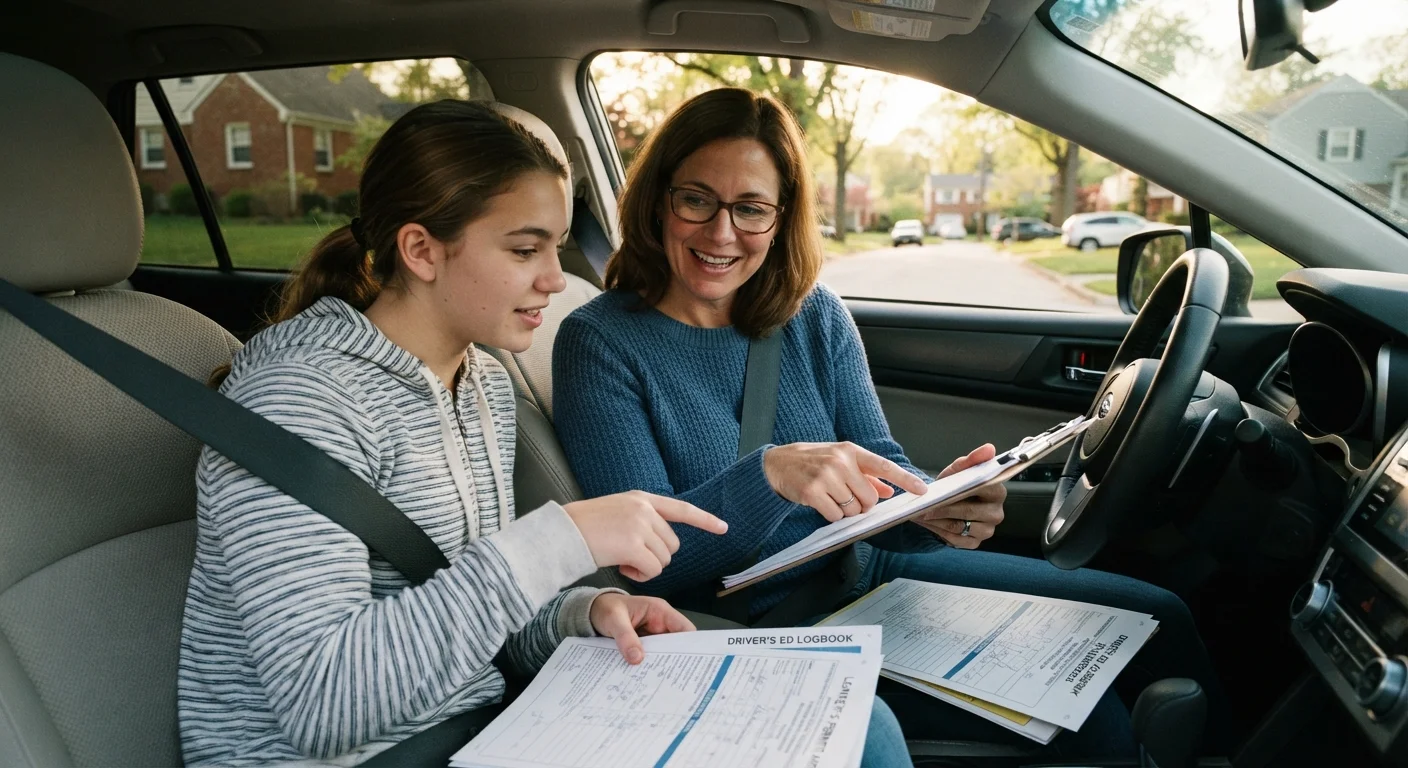
- Supervised driving hours must be logged accurately - falsifying them creates legal and safety risks.
- A full license does not mean unrestricted driving; some restrictions linger until age 18 or beyond.
Why Graduated Licensing Gets Misunderstood
Graduated Driver Licensing (GDL) programs exist in every U.S. state, but no two programs are identical. The core structure - a learner's permit phase, a provisional license phase, and then a full license - is consistent, but the specific rules around minimum ages, required supervised hours, curfews, and passenger limits vary considerably from state to state.
That variation is exactly where parents run into trouble. Many rely on what they remember from their own teen years, or what another parent mentioned, rather than checking current state law. GDL rules have also changed over the past two decades as states have updated them based on crash data, so even parents who went through the process with an older child may be working from outdated information.
Understanding the actual rules - and the reasoning behind them - is the most practical thing a parent can do before a teen starts driving. The full lifecycle of driving safety puts the new-driver stage in context, but the specifics of GDL deserve their own attention.
Common Mistakes Parents Make - and How to Correct Them
The mistakes below are not the result of carelessness. Most stem from reasonable but incorrect assumptions about how graduated licensing works. Recognizing them is the first step toward handling the licensing process accurately.
Assuming the rules in your state match what a friend or family member described from another state.
Why it happens: Graduated Driver Licensing (GDL) programs are set at the state level, and no two states have identical rules. Parents often rely on secondhand information without realizing how much variation exists.
Treating the minimum supervised driving hours as a finish line rather than a floor.
Why it happens: Parents often focus on the number required by law - commonly 40 to 65 hours depending on the state - and stop there, believing the legal threshold equals readiness.
Ignoring or relaxing nighttime and passenger restrictions during the intermediate (provisional) license stage.
Why it happens: These restrictions can feel inconvenient, especially when a teen seems responsible. Parents may make informal exceptions without realizing these are enforceable laws.
Logging supervised driving hours inaccurately or estimating them rather than tracking in real time.
Why it happens: Parents intend to record hours later and forget, or round up to meet a threshold more quickly. Some assume no one will verify the log.
Believing that a full, unrestricted license means all GDL-related rules have expired.
Why it happens: Parents and teens often assume the licensing process ends at the full license stage, but some states maintain age-based restrictions (such as zero-tolerance blood alcohol laws) that apply until age 21.
Skipping practice on genuinely challenging driving scenarios, such as highway merging or slippery surfaces.
Why it happens: Supervised practice often gravitates toward comfortable, familiar routes. Parents may avoid high-stress scenarios to keep lessons calm.
For a broader look at what new drivers need to know beyond licensing paperwork - including basic vehicle upkeep - see our maintenance primer for new drivers.
Restrictions Are the Law, Not Parental Preference
Graduated licensing restrictions - such as nighttime driving curfews and passenger limits - are state law, not optional guidelines. A teen cited for violating these rules may face fines, license suspension, or a reset of their licensing timeline. Parents who allow violations can also face legal consequences in some states. Always verify the enforceable rules in your state before granting additional driving privileges.
Building Real Readiness Beyond the Minimum Requirements
Completing the legal steps of graduated licensing is necessary but not sufficient. The goal is a teen who can handle genuine road conditions independently, not just one who has logged the minimum hours on familiar routes.
Think of supervised driving practice as a curriculum. Cover different times of day, different weather conditions, different road types - residential streets, rural roads, and highway driving each present distinct challenges. If a scenario feels uncomfortable to practice, that discomfort is a signal the teen needs more exposure to it, not less.
~3x
Higher crash risk for teens vs. experienced drivers
The CDC reports that teen drivers ages 16-19 are nearly three times more likely to be involved in a fatal crash per mile driven than drivers aged 20 and older.
40-65 hrs
Typical supervised driving hours required by states
Most states require between 40 and 65 hours of supervised practice before a teen can advance to a provisional license, though exact requirements vary.
16%
Share of teen crashes occurring at night
According to the AAA Foundation for Traffic Safety, a disproportionate share of teen driver fatal crashes occur during nighttime hours, underlining why curfew restrictions exist.
Teens who approach licensing with an accurate understanding of why each restriction exists - not just that it exists - are better positioned to make sound decisions when they're driving independently. That means parents need to understand the rules clearly enough to explain them, not just enforce them.