

Key Takeaways
- Defensive driving is a proactive mindset, not just cautious speed management.
- Maintaining a 3-second following distance is a core principle that gives you reaction time.
- Scanning 12-15 seconds ahead of your vehicle allows earlier hazard identification.
- Eliminating distractions and managing emotions are as important as mechanical skill.
- Defensive habits can reduce your collision risk and may lower insurance premiums over time.
Defensive Driving
Defensive driving is a set of skills and habits that help you anticipate and respond to potential road hazards before they become emergencies. Rather than simply reacting to what other drivers do, a defensive driver actively scans the environment, maintains safe distances, and plans escape routes. The goal is to reduce risk even when other road users make mistakes.
Defensive driving is codified in the National Safety Council's guidelines and forms the basis of driver improvement courses recognized by many state DMVs and insurance carriers.
What Defensive Driving Actually Means
Most drivers think of themselves as reasonably careful - they signal lane changes, stop at red lights, and avoid obvious risks. But defensive driving goes further than rule-following. It's a continuous mental process of reading the road, anticipating what could go wrong, and positioning yourself to handle it before it does.
The core idea is that you cannot control other drivers, pedestrians, or weather - but you can control your own space, speed, and attention. A defensive driver treats every intersection, merge, and blind curve as a potential hazard worth a second look.
This mindset is especially relevant given that driver error contributes to the overwhelming majority of crashes in the United States. Understanding how attention and reaction interact is part of the picture - see our research on distracted driving for more on how cognitive load affects reaction time.
The Four Pillars of a Defensive Mindset
Defensive driving rests on four repeatable habits that work together:
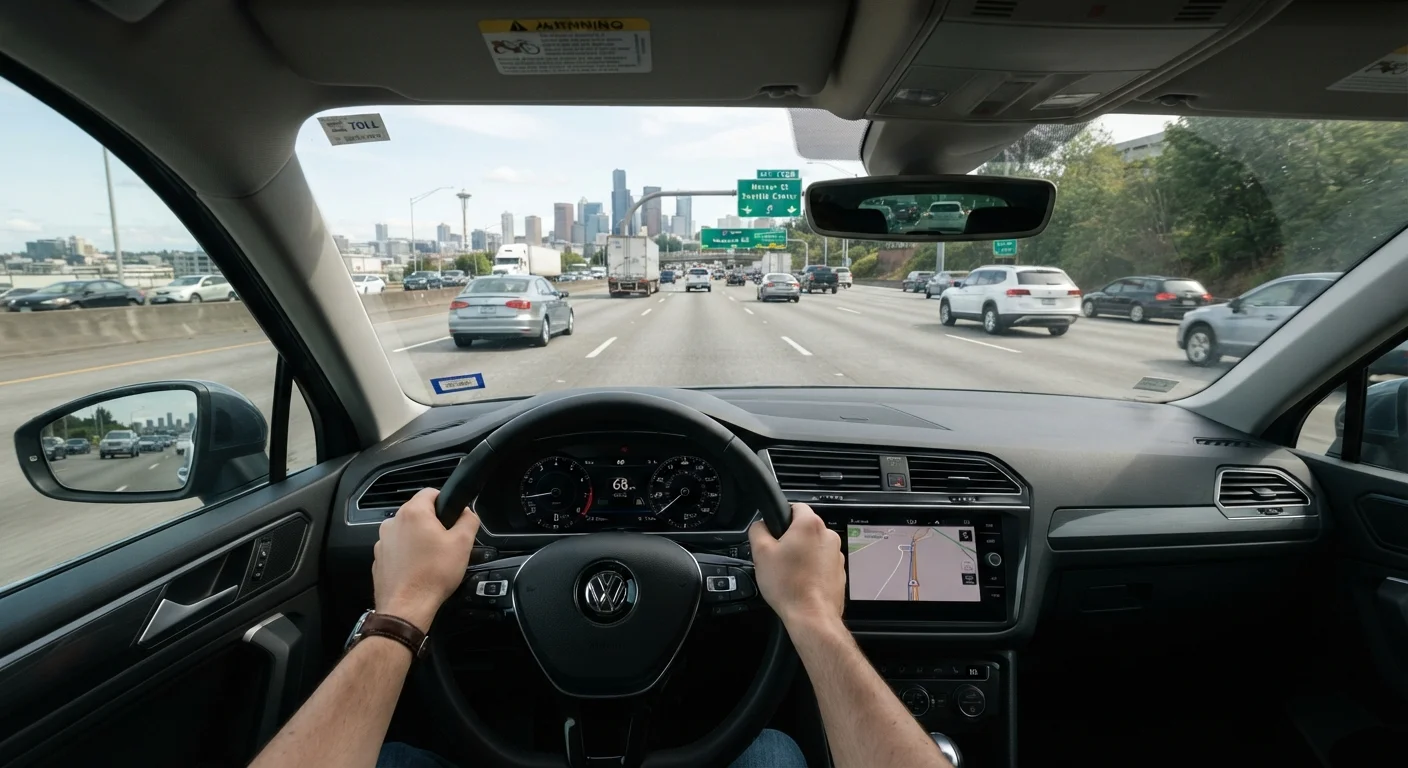
- Scan far ahead. Train yourself to look 12-15 seconds down the road - roughly a block in city traffic or a quarter mile on the highway. This gives you time to identify hazards before they demand sudden action.
- Maintain a space cushion. Keep adequate following distance on all sides of your vehicle. The standard benchmark is at least three seconds behind the car in front; increase this on wet or icy surfaces. For guidance on how surface conditions change your stopping distance, see our article on hazardous driving surfaces.
- Expect the unexpected. Assume that pedestrians might step into the street, that merging vehicles might not see you, and that the car ahead might brake suddenly. Pre-planning a response costs nothing but a few seconds of thought.
- Control your emotional state. Frustration and impatience are real driving hazards. Road rage is a documented safety risk - understanding why it occurs helps you recognize and defuse it in yourself before it influences your decisions behind the wheel.
“The goal of defensive driving is not to be a timid driver - it's to be a thinking driver. Anticipation is the skill that separates drivers who avoid crashes from those who simply react to them.”
— National Safety Council, Leading U.S. nonprofit organization focused on eliminating preventable deaths
Applying Defensive Driving in Real Situations
Abstract principles only matter if you can apply them on your actual commute. Here are the moments where defensive habits pay off most clearly:
Intersections
Most urban crashes happen at intersections. Before entering on a green light, pause a beat and check cross-traffic in both directions - a driver running a red may still be coming through.
Highway Merging and Lane Changes
Highway driving creates high-speed, close-proximity scenarios where a small error has large consequences. Understanding right-of-way and early traffic reading - covered in depth in our guide on merging and lane changes - is a direct application of defensive principles.
Following in Traffic
Tailgating is one of the most common and preventable crash causes. If the driver ahead brakes suddenly and you need more than three seconds to stop, you are too close regardless of your speed.
Check Your Following Distance Right Now
On your next drive, practice the 3-second rule deliberately for ten minutes. Pick a fixed object ahead, watch the car in front pass it, and count. If you reach that object in less than three seconds, ease back. Most drivers discover they follow much too closely without realizing it.
Defensive driving skills also evolve with age and experience. The risks you face as a new driver differ from those later in life - our broader guide on driving safety across a lifetime covers how to adapt your habits at every stage.
Why Defensive Driving Also Makes Financial Sense
Beyond personal safety, avoiding collisions has a direct impact on your wallet. At-fault accidents typically raise insurance premiums for several years, and even minor fender-benders carry costs in deductibles, time, and vehicle depreciation. Keeping your vehicle in reliable condition through regular upkeep - explored in our car maintenance hub - complements defensive driving by ensuring your vehicle responds when you need it to.
Many insurance companies offer discounts to drivers who complete an approved defensive driving course. It's worth contacting your carrier directly to ask whether a specific program qualifies and how much the discount might be.
~94%
Crashes linked to human choice or error
The National Highway Traffic Safety Administration (NHTSA) has attributed the critical reason in approximately 94% of serious crashes to human factors rather than vehicle failure or environment alone.
3 seconds
Minimum recommended following distance
Traffic safety educators widely recommend at least a 3-second following gap as the baseline for adequate reaction time under normal conditions.
12-15 sec
How far ahead to scan the road
The National Safety Council recommends scanning 12-15 seconds ahead, giving drivers time to identify and respond to emerging hazards before they require emergency action.
The bottom line is straightforward: the best accident is the one that never happens. A defensive mindset protects your safety, your passengers, and the investment you've made in your vehicle.