

Key Takeaways
- Traction varies significantly between wet pavement, black ice, and loose gravel - one-size-fits-all technique puts you at risk.
- Smooth, gradual inputs on steering, braking, and acceleration are the foundation of hazardous-surface control.
- Black ice is nearly invisible; knowing where and when it forms is critical for winter driving safety.
- Your tires' condition directly determines how well any technique works - worn tread undermines everything.
- Increasing following distance is the single quickest adjustment you can make on any low-traction surface.
Why Road Surface Matters More Than Most Drivers Realize
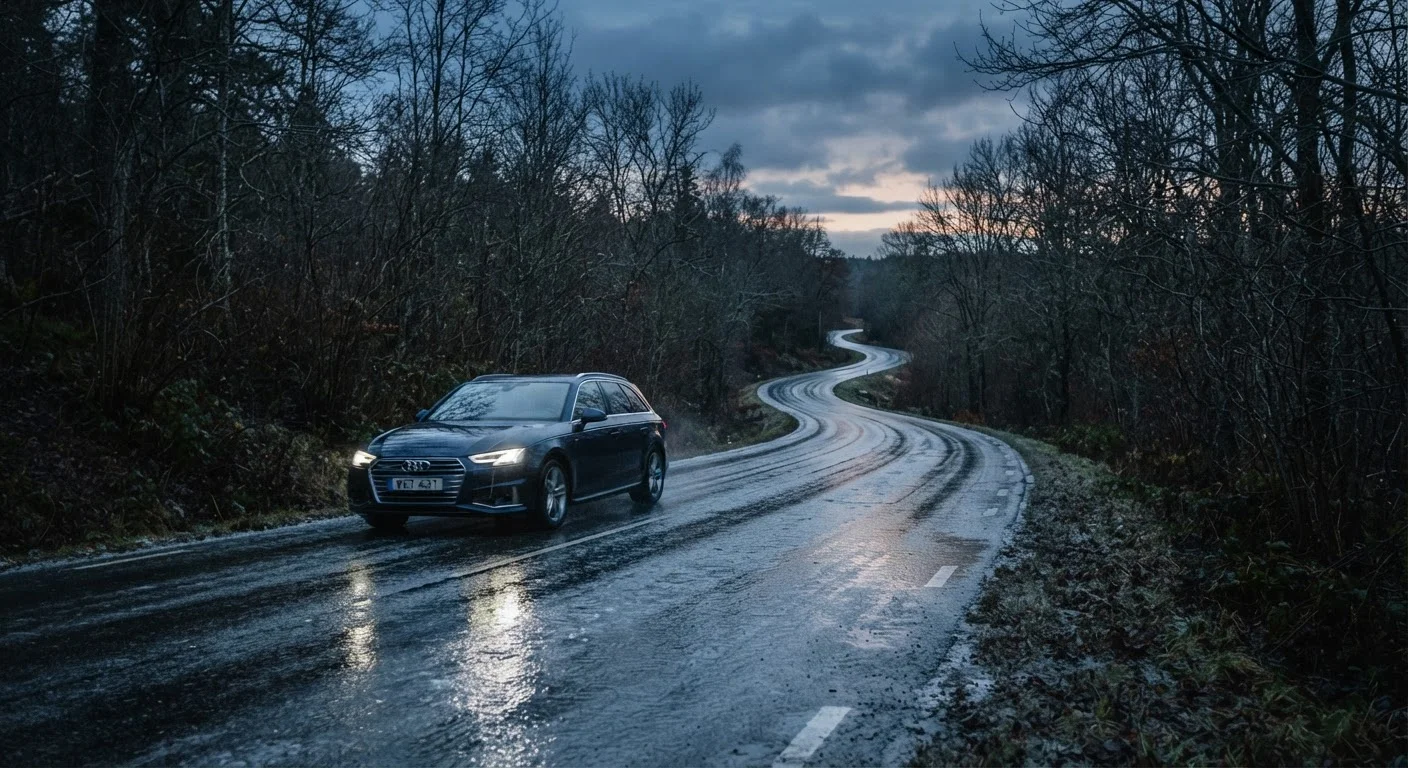
Most drivers learned on dry pavement, and dry pavement becomes the default mental model. But traction - the friction between your tires and the road that allows you to steer, accelerate, and stop - changes dramatically with the surface beneath you. Wet asphalt can cut stopping distances by 30-40% compared to dry conditions. Black ice can reduce traction to near zero. Loose gravel shifts unpredictably under braking and cornering forces.
Understanding how each surface behaves gives you time to adapt before a situation becomes an emergency. This is the core idea behind defensive driving: anticipating hazards, not just reacting to them.
Your tires and brakes are the mechanical link between your intentions and the road. Tire wear patterns and tread depth affect every technique discussed here - a well-maintained tire performs significantly better across all surface types.
~21%
US crashes linked to wet pavement annually
According to Federal Highway Administration data, wet pavement accounts for roughly 21% of all weather-related vehicle crashes in the United States each year.
3-5x
Increased stopping distance on ice vs. dry pavement
Transportation safety researchers have documented that stopping distances on icy roads can be three to five times longer than on dry asphalt at the same speed.
Wet Roads: Slicker Than They Look
Rain doesn't just reduce visibility - it creates a thin film of water between your tires and the road. At low speeds this isn't critical, but as speed increases, tires can begin to ride on top of that film rather than through it. This is called hydroplaning, and when it happens, steering and braking input have almost no effect.
The risk is highest in the first 10-15 minutes of rain, when road oils rise to the surface and mix with water, creating an especially slippery layer. Highways and heavily trafficked roads tend to be worse at this stage.
Reduce speed before entering wet road sections, not during them
Braking on already-wet pavement requires more distance and risks locking up your tires. Slowing down proactively - while you still have good traction - keeps you in control throughout the maneuver.
Avoid sudden braking - use slow, progressive pressure on the pedal
Modern vehicles with ABS (anti-lock braking systems) are designed to handle threshold braking, but they still depend on available traction. Slow, steady pressure gives ABS time to do its job without sending the car sideways.
Check your tire tread depth before driving in wet conditions
Tires with worn tread cannot channel water away from the contact patch effectively, dramatically raising hydroplaning risk. The legal minimum tread depth in most US states is 2/32 of an inch, but safety experts generally suggest replacing tires at 4/32 for wet-weather driving.
Turn off cruise control in wet or slippery conditions
Cruise control maintains a set speed automatically, which can cause the system to accelerate at the wrong moment if traction breaks. Maintaining manual throttle control lets you respond immediately to surface changes.
For a deeper look at how rain and snow conditions compare technically, see how your approach should differ.
Black Ice: The Hazard You Can't See
Black ice is a thin, nearly transparent layer of ice that forms directly on the road surface, making it look like ordinary wet pavement. It typically appears when temperatures hover around or just below freezing, especially on bridges, overpasses, shaded stretches, and low-lying sections of road where cold air pools.
Because there's no visual warning, recognizing conditions that produce black ice - rather than the ice itself - is essential. Early morning hours after a cold night, and any time temperatures are near 32°F with recent precipitation, should put you on alert.
Where Black Ice Hides Most Often
Bridges and overpasses freeze before road surfaces because cold air circulates beneath them, cooling the pavement from both sides. Shaded curves and valley dips are also common black ice zones. When temperatures are near freezing, slow down well before these locations rather than trusting what the road looks like.
If your car suddenly feels extremely light and unresponsive, you may be on black ice. The instinct to brake hard is counterproductive - it will cause skidding. Instead, ease off the accelerator, hold the wheel steady, and allow the car to slow gradually. If you begin to skid, steer gently in the direction you want the front of the car to go.
Gravel and Loose Surfaces: Controlled Movement Is Everything
Gravel roads, unpaved shoulders, and construction zones present a different challenge: the surface itself moves. Loose stone doesn't grip your tires the way pavement does - it shifts, rolls, and scatters. Braking distances increase significantly, and sudden steering inputs can cause a vehicle to slide sideways or spin.
The transition onto gravel from pavement is itself a risk point. Your brain expects the traction level you just left, and your foot or hands may react accordingly. Ease your speed before you hit the gravel, not after.
If you drive rural routes regularly or spend time on unpaved roads, proper car maintenance - particularly tire pressure and tread depth - has an outsized effect on loose-surface stability. Keeping tires properly inflated helps them conform to irregular surfaces and maintain contact.
Building Habits That Transfer Across All Surfaces
The best hazardous-surface drivers aren't just reactive - they've built habits that automatically adapt to conditions. A few key principles apply universally, no matter what's under your tires.
Smooth inputs above all else. Abrupt braking, sharp steering, or sudden acceleration disrupts the balance of your vehicle and can cause a slide on any low-traction surface. Think of every input as something you'd want to do gradually - start gently, finish gently.
Increase your following distance. On dry pavement, a three-second gap behind the vehicle ahead is a general guideline. On wet roads, double it. On ice or packed snow, triple it or more. This gives you time to respond without emergency braking.
Look further ahead. Scanning the road well beyond the car in front of you lets you identify surface changes, brake lights, and curves earlier - buying you the seconds you need to adjust speed smoothly.
Hazardous surfaces also become more dangerous after dark. The same roads that are manageable in daylight become significantly more challenging when visibility drops - see night driving risks for what changes and how to adapt.
This article provides general driver education information. Road conditions vary by location and circumstance. Always adapt your driving to actual conditions, and consult your vehicle's owner manual for guidance specific to your car's capabilities.