

Key Takeaways
- Roughly 20% of most people's daily fluid intake comes from food, not beverages.
- Fruits and vegetables typically contain 80-96% water by weight, making them powerful hydration sources.
- Soups, smoothies, and dairy foods also contribute meaningfully to fluid balance.
- Eating a variety of whole foods can meaningfully support your hydration alongside drinking water.
- Individual hydration needs vary; consult a healthcare provider if you have concerns about your fluid intake.
Food-Based Hydration
Food-based hydration refers to the water your body absorbs from the foods you eat, not just the beverages you drink. Many fruits, vegetables, and other whole foods contain significant amounts of water that count toward your daily fluid needs. This dietary water is absorbed and used by your body just like the water you sip from a glass.
Metabolic water - produced internally when the body breaks down carbohydrates, fats, and proteins - also contributes a small amount of fluid, though food moisture content is the larger dietary source.
The Hidden Water in Your Plate
When most people think about staying hydrated, they picture a water bottle - not a bowl of watermelon or a plate of salad. Yet a meaningful share of the fluid your body uses every day arrives through food, not beverages. Understanding this can help you make smarter eating choices that support your overall wellbeing, especially on days when you're too busy to track every glass of water.
The National Academies of Sciences, Engineering, and Medicine has noted that roughly 20% of daily water intake for most adults comes from food. That fraction rises considerably for people who eat plenty of fresh produce, soups, and dairy - and falls for those whose diets lean toward packaged, shelf-stable, or highly processed foods, which are generally much lower in moisture.
~20%
Of daily fluid intake from food
The National Academies of Sciences, Engineering, and Medicine estimates that food typically contributes about 20% of total daily water intake for most adults.
96%
Water content in cucumbers by weight
Cucumbers are among the highest-water-content foods available, making them one of the most efficient hydrating snacks you can eat.
88-92%
Water content in watermelon and strawberries
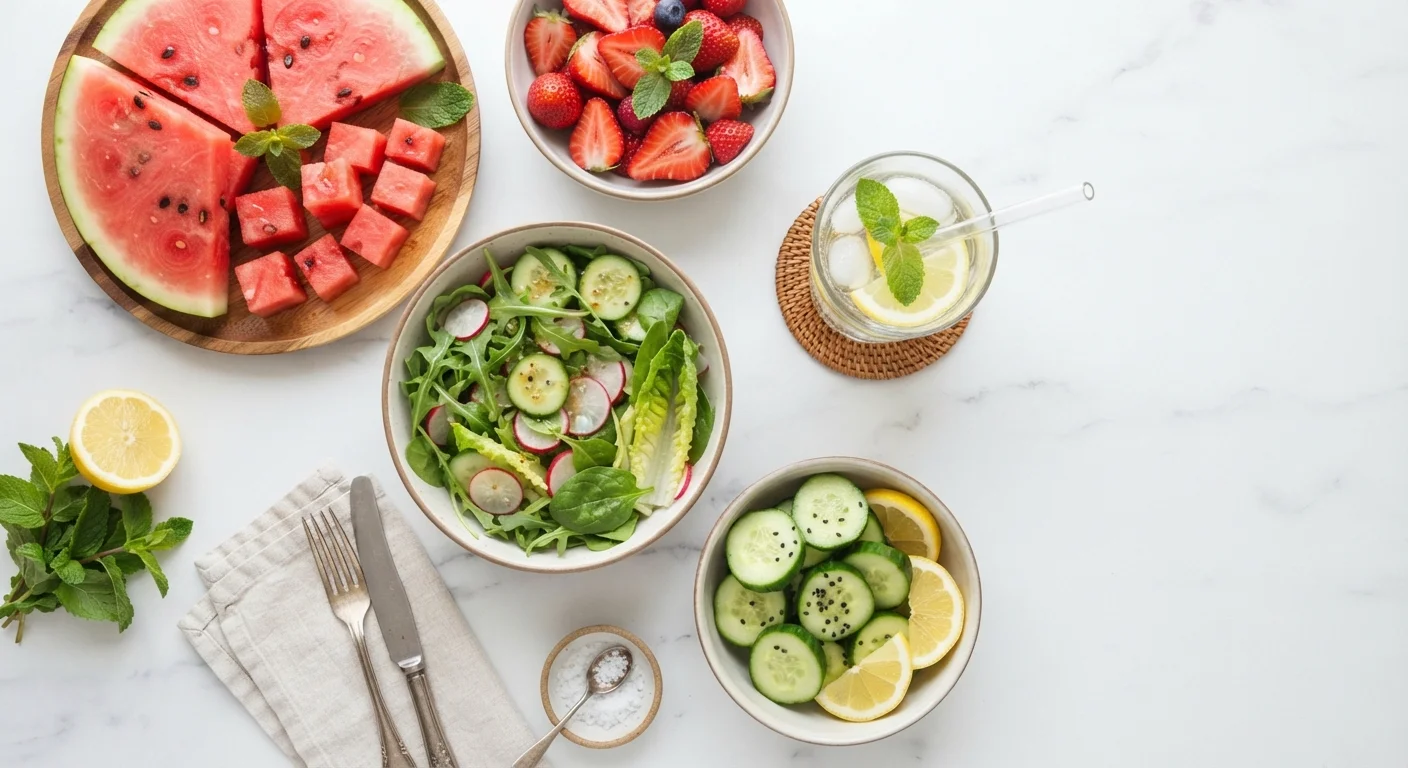
Common summer fruits like watermelon and strawberries are composed almost entirely of water, contributing significant fluid with every serving.
Which Foods Deliver the Most Water?
Not all foods are created equal when it comes to their water content. Here's how common food categories stack up:
- Raw fruits and vegetables lead the list. Cucumbers, lettuce, celery, and radishes are composed of 95-96% water by weight. Watermelon, strawberries, cantaloupe, and peaches fall between 88-92%. These foods make hydration nearly effortless when eaten regularly.
- Cooked vegetables and legumes still contribute, though some water is lost during cooking. Zucchini, spinach, and broccoli retain high moisture content even after steaming.
- Soups, stews, and broths are among the most water-dense items you can eat. A bowl of vegetable soup or miso broth can provide several ounces of fluid in a single serving.
- Dairy and dairy alternatives - including yogurt, milk, and kefir - contain roughly 85-90% water and also supply protein and electrolytes that support fluid balance.
- Grains cooked in water (oatmeal, rice, barley) absorb liquid during preparation and deliver meaningful moisture, unlike their dry counterparts.
Why Food-Based Hydration Matters for Busy Americans
For many people juggling work, family, and packed schedules, consistently drinking the recommended amount of fluids can feel like one more task to manage. Recognizing that food contributes to hydration shifts some of that burden to your meals - which you're eating anyway.
A diet built around whole foods naturally supports fluid balance. Adding sliced cucumber to lunch, swapping chips for melon as a snack, or starting dinner with a broth-based soup are straightforward ways to boost daily water intake without carrying an extra bottle everywhere.
That said, food cannot and should not be treated as a substitute for drinking water. Even diets very rich in produce will typically not fully meet adult fluid needs on their own. The goal is to let food and beverages work together.
Simple Ways to Boost Food-Based Hydration
Try starting one meal a day with a broth-based soup, adding sliced raw vegetables to your plate, or choosing whole fruit over dried fruit as a snack. These small swaps naturally increase the water content of your diet without requiring major changes to your routine.
If you're looking to structure your eating patterns more intentionally, a day-by-day nutritional framework can help you audit whether your weekly meals cover the key bases - including hydration-supporting foods.
Putting It All Together
Hydration is more than a number on a water bottle. Your total daily fluid intake is a combination of what you drink and what you eat. Prioritizing fresh fruits, vegetables, soups, and dairy products gives your body a consistent trickle of water throughout the day, complementing the beverages you consume.
Pay attention to signs your body gives you - urine color, energy levels, and thirst - as general indicators of how well your fluid needs are being met. Everyone's needs differ based on body size, activity level, climate, and health status, so these are signals rather than guarantees.
When in doubt about your personal hydration or nutrition needs, a registered dietitian or healthcare provider is the right resource for guidance tailored to your situation.
This article is for general informational and educational purposes only and is not a substitute for professional medical or dietary advice. Always consult a qualified healthcare provider with questions about your health or nutrition.