

Key Takeaways
- Not every lawn needs annual aeration - compaction and thatch buildup are the key triggers.
- Cool-season grasses benefit most from fall aeration; warm-season grasses respond better to late spring.
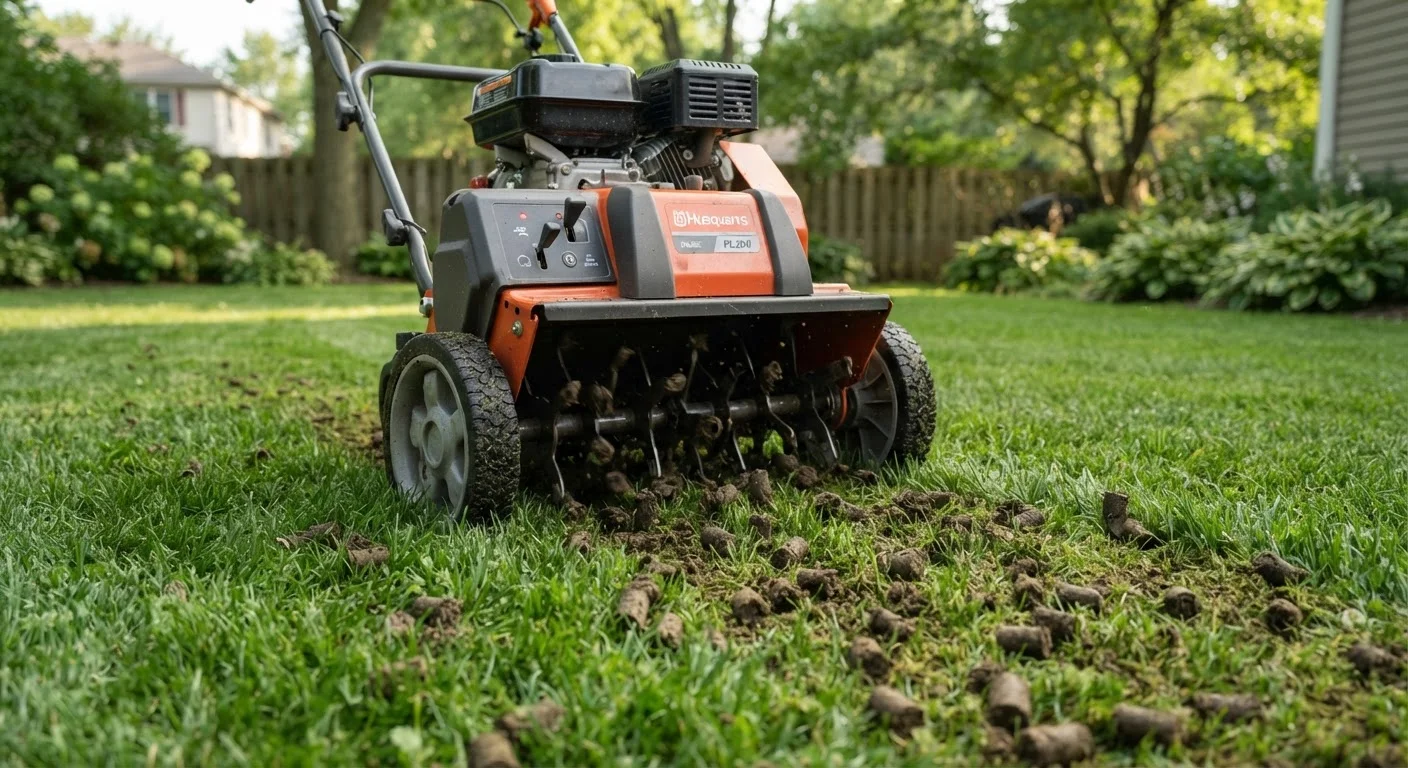
- Core aeration (hollow tines) outperforms spike aeration for genuinely compacted soil.
- After aerating, leave soil plugs on the lawn to break down naturally - they return nutrients to the surface.
- Pair aeration with overseeding for significantly better seed-to-soil contact and germination rates.
What you will need
Does Your Lawn Actually Need Aeration?
Aeration is one of those lawn care tasks that gets recommended broadly but applied indiscriminately. The honest answer is that not every lawn benefits from annual aeration - and aerating unnecessarily wastes time and stresses healthy turf unnecessarily. The practice is most valuable when soil compaction is genuinely limiting root growth.
Compaction is most common in lawns with clay-heavy soils, heavy foot traffic from children or pets, or a history of construction activity nearby. It is also prevalent in lawns that were installed over poorly prepared subsoil. Symptoms include water pooling after rain rather than soaking in, grass that feels spongy or looks thin despite adequate fertilization, and difficulty pushing a screwdriver more than two inches into the ground.
A thick thatch layer - the mat of dead and living organic material sitting between the grass blades and the soil - is a related but distinct problem. Thatch over half an inch thick can become hydrophobic, repelling water rather than letting it through to the roots. Aeration helps manage moderate thatch; heavy thatch may require mechanical dethatching first.
If your lawn passes the screwdriver test easily and has no thatch problem, annual aeration is unlikely to deliver meaningful improvement. Every two to three years is a reasonable default for healthy lawns in normal residential use. Consult our spring lawn prep checklist to see how aeration fits alongside other seasonal tasks.
Core (hollow-tine) aerator
Pulls cylindrical plugs of soil out of the ground to relieve compaction - the most effective aerating method for heavily compacted lawns.
Spike aerator
Pokes holes without removing soil; suitable only for mildly compacted lawns and light maintenance aeration.
Garden hose or irrigation system
Used to pre-water the lawn 24-48 hours before aerating to achieve the correct soil moisture level.
Lawn mower
Mow the lawn slightly shorter than usual before aerating so the aerator tines penetrate more easily.
Flags or marking paint
Mark the locations of irrigation heads, utility lines, and invisible fence wire before running the aerator.
Broadcast or drop spreader
Distributes grass seed and topdressing compost evenly after aeration if overseeding.
How Core Aeration Works and What to Do Afterward
Core aeration - using a hollow-tine machine to physically remove small plugs of soil - is the most effective form of aeration for compacted lawns. The hollow tines create open channels that allow air, water, and nutrients to penetrate directly to the root zone. This is meaningfully different from spike aeration, which simply presses soil aside and can actually increase localized compaction around each hole.
The depth and spacing of the holes matter. A quality core aerator should pull plugs 2-3 inches deep and space them roughly 3-4 inches apart. Machines that only penetrate an inch or two provide limited benefit in heavily compacted soil.
Combine Aeration With Overseeding and Topdressing
The holes left by core aeration are perfect seedbeds. Broadcasting grass seed immediately after aerating - and applying a thin layer of compost as topdressing - dramatically improves germination rates. This combination is one of the most cost-effective ways to thicken a thin lawn. See our guide to composting at home for producing your own topdressing amendment.
After completing the steps above, consistent follow-up irrigation is what separates a successful aeration from a wasted effort. The open channels will close again if the lawn is allowed to dry out before roots can spread into the loosened zones. Soil pH also plays a role in how well nutrients reach roots - if your lawn has been struggling despite good maintenance, testing pH is worth the small investment. Our article on soil pH and plant health explains how to test and adjust it.
Mark Utilities Before You Aerate
Before running any aerator across your lawn, call 811 (the national dig-safe hotline) to have underground utilities marked. Aerator tines penetrate several inches into the soil and can damage irrigation lines, invisible fence wiring, or shallow utility cables. This step is non-negotiable and free to homeowners.
Most healthy lawns that receive annual aeration will show visible improvement - denser turf, better color, and improved drought tolerance - within one full growing season. Managing expectations is important: aeration is a foundation-level practice, not a quick fix.
Avoid Aerating Drought-Stressed or Waterlogged Soil
Aerating bone-dry, hard soil tears grass roots rather than relieving them. Conversely, aerating waterlogged soil compacts surrounding areas further as equipment sinks in. Aim for soil that is moist but not saturated - roughly 24 to 48 hours after a moderate rainfall or irrigation is ideal.