

Key Takeaways
- Soil pH controls whether nutrients are chemically available to plant roots, regardless of how much fertilizer you apply.
- Most vegetables and lawn grasses thrive between pH 6.0 and 7.0; acid-loving plants like blueberries prefer 4.5-5.5.
- An inexpensive soil test - available through cooperative extension offices - is the most reliable way to know your pH.
- Lime raises pH in acidic soil; elemental sulfur or acidifying fertilizers lower pH in alkaline soil.
- pH shifts happen slowly, so amend in stages and retest after several months rather than overcorrecting at once.
Soil pH
Soil pH is a measure of how acidic or alkaline your soil is, expressed on a scale from 0 to 14. A reading of 7 is neutral; anything below 7 is acidic and anything above 7 is alkaline (also called basic). Most garden plants grow best in a range between 6.0 and 7.0, where essential nutrients are most readily available to plant roots.
pH stands for 'potential of hydrogen' and reflects the concentration of hydrogen ions in the soil solution; small numerical shifts represent large chemical changes because the scale is logarithmic.
Why pH Matters More Than Most Gardeners Realize
You can have fertile soil and water diligently, yet still watch plants underperform. In many cases, the culprit isn't what you're adding - it's soil pH preventing plants from absorbing what's already there. Nutrients like nitrogen, phosphorus, iron, and manganese don't exist in isolation; their availability is directly tied to soil chemistry. Outside the right pH window, these nutrients form compounds that plant roots simply cannot take up.
Phosphorus, for example, becomes largely inaccessible in highly alkaline soils. Iron deficiency - recognizable as yellowing between leaf veins - is frequently a pH problem rather than a lack of iron in the soil. This is why fertilizing without knowing your pH is a bit like filling a car with fuel when the fuel line is blocked: the inputs are there, but the system can't use them.
6.0-7.0
Optimal pH range for most vegetables and grasses
This range is widely cited by university cooperative extension programs as the sweet spot where the broadest range of nutrients remain plant-available.
10×
Difference between each unit on the pH scale
Because the pH scale is logarithmic, a soil at pH 5.0 is ten times more acidic than one at pH 6.0 - a chemistry difference that significantly affects nutrient availability.
4-12 months
Typical time for lime or sulfur to shift pH
Extension soil science resources note that pH amendments work gradually, with measurable change generally occurring over several months depending on soil type and moisture.
Reading the pH Scale for Garden Planning
The pH scale runs from 0 to 14, with 7 being neutral. Because the scale is logarithmic, a soil with a pH of 5 is ten times more acidic than one at pH 6 - a meaningful difference for plant chemistry, even though it sounds small.
Different plants have evolved to thrive under different conditions. Here's a practical reference:
- pH 4.5-5.5: Blueberries, azaleas, rhododendrons, and camellias
- pH 5.5-6.5: Potatoes, strawberries, most conifers
- pH 6.0-7.0: Most vegetables, grasses, and flowering annuals
- pH 7.0-7.5: Asparagus, lavender, and certain ornamental shrubs
Mismatching a plant to your soil's pH is one of the most common - and fixable - reasons established plants fail to thrive. If you're planning a raised bed, this is also worth factoring into your growing medium from the start. See our guide to raised beds vs. in-ground planting for how starting pH compares between the two methods.
How to Test Your Soil pH
The most reliable approach is a lab analysis through your local cooperative extension service. Many university extension programs offer this for a low fee - typically under $20 - and provide region-specific amendment recommendations along with the results. You collect a small sample from multiple spots in your garden, mix them together, and mail or drop off the composite sample.
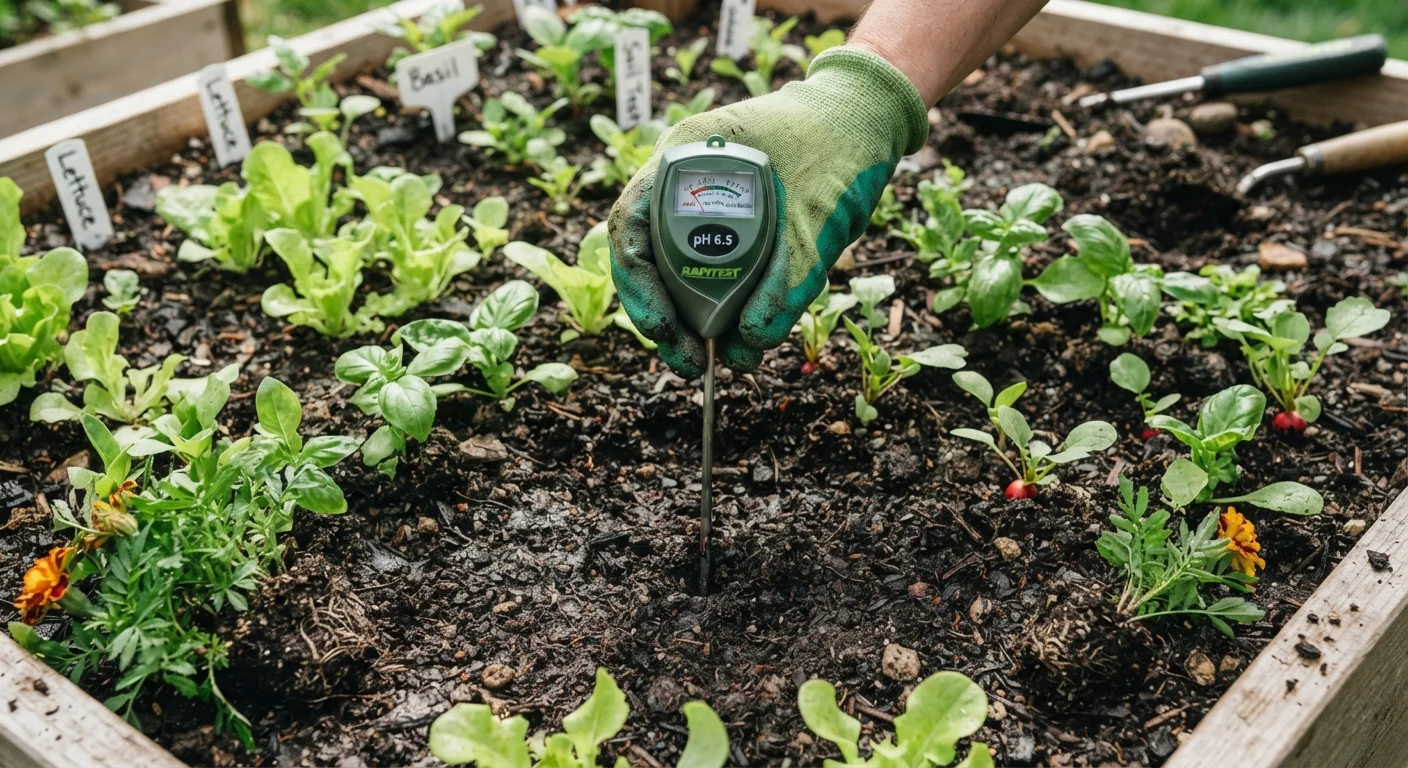
For routine monitoring, consumer digital pH meters and color-indicator test kits are practical and reasonably accurate. Meters need periodic calibration using buffer solution to stay reliable. Test kits are single-use but quick. Neither replaces a lab test for major decision-making, but both work well for tracking pH trends between full analyses.
Test in Multiple Spots, Not Just One
Soil pH can vary significantly across a single yard - especially near concrete foundations (which leach lime and raise pH) or where wood chip mulch has broken down (which can lower pH). Collect samples from five to ten locations across your planting area and combine them for a more representative composite reading.
Whichever method you use, collect soil from several locations across your bed and at root depth (roughly 4-6 inches), not just the surface. Surface readings can be misleading because the top layer weathers and dries differently than the zone where roots actually feed.
Adjusting pH: Raising and Lowering
Once you know your pH, correcting it is straightforward - just not fast. Two primary amendments cover most situations:
- To raise pH (make less acidic): Apply ground agricultural limestone (calcitic or dolomitic lime). Dolomitic lime also supplies magnesium, which is beneficial in magnesium-deficient soils. Work it into the top several inches of soil and water in well.
- To lower pH (make more acidic): Elemental sulfur is the most common choice. Soil bacteria convert it to sulfuric acid over weeks to months. Aluminum sulfate works faster but should be used carefully, as excessive amounts can harm soil organisms.
Application rates depend on your current pH, your target pH, and your soil texture - clay soils require more amendment than sandy soils to shift the same number of pH points. Your extension service test results typically include specific rate recommendations for your soil type.
Regular additions of compost also help buffer pH over time and improve overall soil structure. Our article on how composting builds better soil explains why organic matter is a foundational tool alongside targeted pH management. And keep in mind that your fertilizer choice can influence pH drift over time - organic vs. synthetic fertilizers affect soil chemistry differently with repeated use.
Common pH Mistakes - and How to Avoid Them
The most frequent error is over-applying amendments in hopes of a faster result. Dumping extra lime or sulfur doesn't accelerate the process - it risks overshooting your target pH, which then needs correcting in the opposite direction. Apply conservatively, retest in six to twelve months, and make incremental adjustments.
A second mistake is testing only once and assuming pH stays fixed. Soil chemistry shifts over time due to rainfall, irrigation water, plant uptake, and organic matter decomposition. Gardeners in high-rainfall areas often see soil acidify gradually as calcium and magnesium leach out. Retesting every two to three years keeps you ahead of slow drift.
Finally, pH is one variable among several. If you've corrected pH and plants still struggle, consider factors like drainage, compaction, and watering practices. Our piece on common watering myths covers how overwatering and poor timing can undermine even well-prepared soil.