

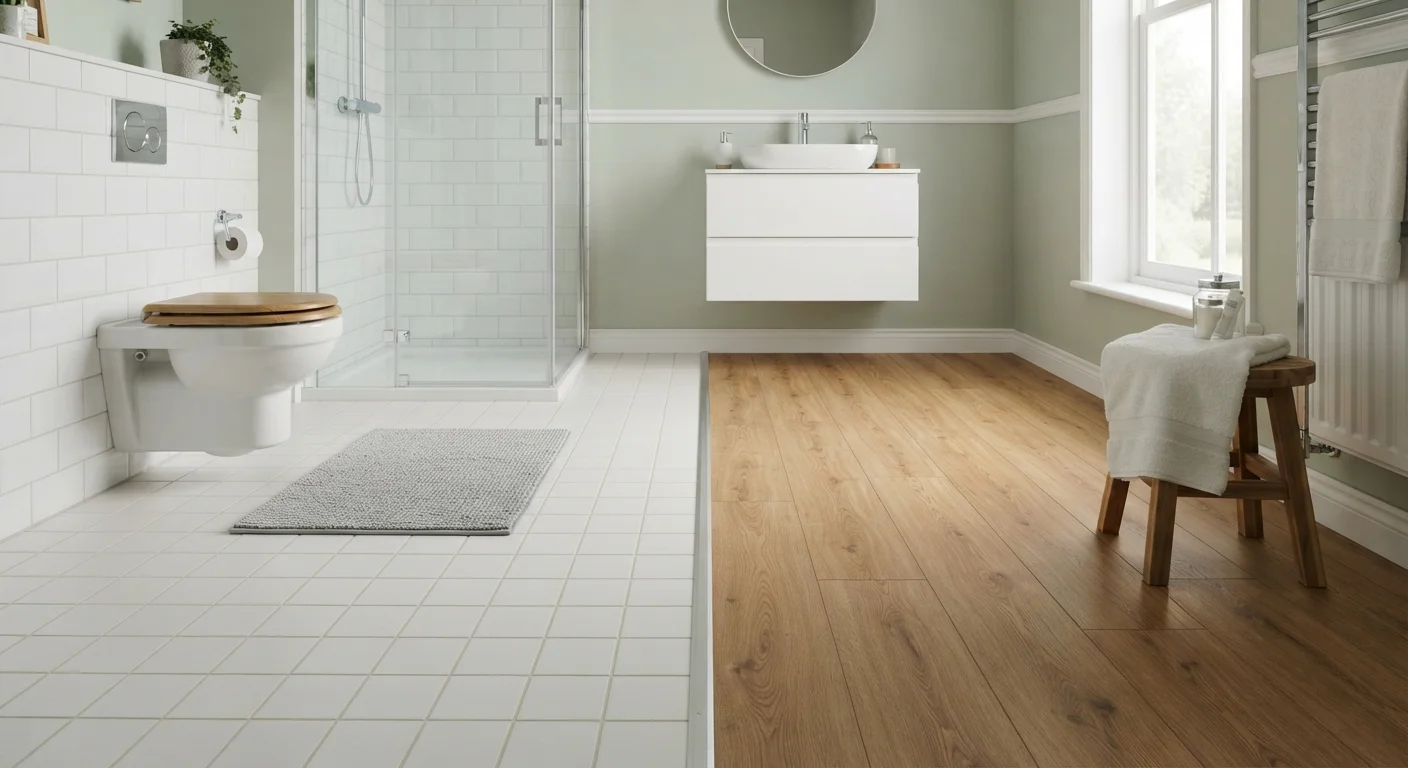
Key Takeaways
- Tile is fully waterproof at the surface, but grout lines require sealing and ongoing maintenance to prevent moisture infiltration.
- LVP is water-resistant to highly water-resistant but can allow moisture under the planks if seams or edges aren't properly sealed.
- Tile installation typically costs more in labor and takes longer, while LVP is often feasible as a DIY weekend project.
- Tile can last 50+ years with proper grout care; quality LVP generally lasts 15-25 years under normal residential use.
- LVP is warmer and softer underfoot than tile, which matters in bathrooms used early in the morning or late at night.
Option A
Ceramic or Porcelain Tile
The time-tested, fully waterproof standard for wet spaces.
Best for: Homeowners who want a permanent, moisture-proof floor and don't mind a more involved installation process.
Option B
Luxury Vinyl Plank (LVP)
The DIY-friendly, budget-conscious alternative with genuine water resistance.
Best for: Homeowners looking for a faster install, warmer underfoot feel, and lower upfront material costs.
If you want a floor that handles standing water without any worry
Ceramic or Porcelain Tile
Tile itself is impervious to water. As long as grout is sealed regularly, it's the most moisture-proof surface you can install in a wet area.
If you want to handle the installation yourself and save on labor
Luxury Vinyl Plank (LVP)
Most LVP systems use a click-lock floating installation that doesn't require adhesive, special tools, or professional-level skill to complete.
If long-term resale value and permanence are the priority
Ceramic or Porcelain Tile
Tile is widely viewed as a premium, durable finish in bathrooms and kitchens, and can outlast multiple rounds of other renovations.
If comfort underfoot and warmth matter in your daily routine
Luxury Vinyl Plank (LVP)
LVP has a slight give and retains warmth better than ceramic tile, making it noticeably more comfortable on bare feet in cool weather.
If you're working with a tighter renovation budget
Luxury Vinyl Plank (LVP)
LVP materials generally run lower per square foot than tile, and skipping professional installation can cut total project cost significantly.
How Each Material Actually Handles Moisture
Understanding what "waterproof" really means for each material is the most important starting point for wet-area flooring decisions.
Tile - whether ceramic or porcelain - is inherently impervious to water at the surface. The tile body itself will not absorb moisture or warp. However, the system has a vulnerability: grout. Standard grout is porous and, without proper sealing (typically once every one to three years), will absorb water, harbor mold, and eventually crack. Epoxy grout is a more moisture-resistant alternative but costs more and is harder to work with. The subfloor beneath tile also matters - if moisture reaches it through cracked grout or a failed seam at the tub surround, you may not notice until damage is significant.
Luxury Vinyl Plank is often marketed as waterproof, and the plank material itself generally is - it won't swell or rot from surface spills. The real risk with LVP is the seams and edges. A floating click-lock installation leaves microscopic gaps between planks. In a bathroom with frequent water on the floor - a shower door that doesn't seal perfectly, splashing kids - water can work its way under the floor over time. Once moisture sits below LVP on a wood subfloor, mold and subfloor damage can develop without visible warning signs. Proper installation with sealed edges near tub and toilet bases is essential.
| Criterion | Ceramic / Porcelain Tile | Luxury Vinyl Plank (LVP) |
|---|---|---|
| Waterproofness | Surface fully waterproof; grout is porous | Plank is waterproof; seams can allow infiltration |
| Typical installed cost | $10-$25 per sq. ft. | $6-$14 per sq. ft. |
| DIY-friendliness | Moderate-high skill required | Accessible for DIYers |
| Expected lifespan | 50+ years with grout care | 15-25 years residential |
| Comfort underfoot | Hard and cold | Warmer, slight give |
| Ongoing maintenance | Grout sealing every 1-3 years | Minimal; standard cleaning |
| Resale perception | Premium finish in wet areas | Well-accepted, practical upgrade |
Installation Complexity and Real Costs
Installation is where the two options diverge most sharply in terms of time, skill required, and total project cost.
Tile installation involves several stages: ensuring a flat, solid subfloor (often requiring a cement backer board layer), mixing and spreading thinset mortar, placing and spacing tiles, allowing a cure period, then applying and sealing grout. Cuts around toilets, vanities, and doorways require a tile saw. Mistakes in layout or leveling are difficult and expensive to correct. Professional tile installation in a bathroom typically runs between $5 and $14 per square foot in labor alone, though this varies considerably by region and project complexity. Total installed cost - materials plus labor - often lands between $10 and $25 per square foot depending on tile selection.
LVP, by contrast, is designed for accessible installation. Most products use a click-lock floating system that rests on top of the subfloor with no adhesive required. A moderately experienced DIYer can complete a bathroom or kitchen floor in a weekend using a basic saw, a rubber mallet, and a tape measure. If you hire out the work, LVP labor costs are generally lower than tile. Total installed costs (professional) commonly range from $6 to $14 per square foot.
For those weighing the full scope of a bathroom renovation, our Complete Homeowner's Guide to Bathroom Renovations walks through budgeting and sequencing these decisions from start to finish.
$10-$25
Typical installed tile cost per square foot
Reflects combined material and professional labor costs; varies by region, tile type, and subfloor condition.
12 mil+
Recommended LVP wear layer for wet areas
Wear layer thickness is the primary indicator of durability; thicker layers resist scuffs, dents, and daily traffic better.
1-3 years
Recommended grout sealing frequency
High-traffic wet areas like shower floors and bathroom floors generally benefit from more frequent sealing toward the shorter end of this range.
Longevity, Maintenance, and Long-Term Value
Durability timelines between the two materials are genuinely different, and that gap matters when you're weighing upfront cost against replacement cycles.
Well-installed tile - with properly maintained grout - can last 50 years or more. The tile itself doesn't wear out under normal foot traffic. Grout does require periodic re-sealing and, over decades, may need re-grouting in high-wear areas. Individual cracked tiles can be replaced if you keep spares, though matching older tile can be difficult.
Quality LVP carries warranties that commonly range from 15 to 25 years for residential use, with wear layer thickness (measured in mils) being the primary durability indicator - 12 mil and above is generally recommended for wet areas and heavier-traffic rooms. LVP can fade slightly over time in sun-exposed areas and is more susceptible to gouging from sharp objects or heavy furniture legs than tile.
From a resale perspective, tile in bathrooms and kitchens is generally viewed favorably by buyers and appraisers. LVP has gained considerable acceptance and is widely recognized as a practical upgrade over old vinyl sheet or worn carpet. That said, tile in a master bath still tends to signal a higher-end finish. For a more detailed look at how flooring choices translate to home value, our piece on renovation ROI puts common assumptions about resale payback into context.
Subfloor Condition Matters for Both Options
Neither tile nor LVP performs well over a subfloor that flexes, has low spots, or has existing moisture damage. Tile installed over a bouncy subfloor will crack grout and eventually the tiles themselves. LVP over an uneven surface will develop stress on the click-lock joints over time. Before committing to either material, inspect and address the subfloor - this step is often overlooked in budget planning but can be the deciding factor in long-term performance.