

Key Takeaways
- Envelope budgeting uses physical cash to create hard spending limits that prevent overspending by category.
- Digital tracking apps offer automation, real-time alerts, and multi-account visibility without handling cash.
- Your spending habits, tech comfort level, and lifestyle largely determine which method works better for you.
- Both approaches can be combined - many people use app tracking for fixed bills and envelopes for variable spending.
- Neither method guarantees results; consistency and honest monthly review drive long-term success.
Our Verdict
Envelope budgeting excels for people who overspend on variable categories and benefit from the psychological friction of handling physical cash. Digital tracking apps suit those with multiple accounts, irregular income sources, or a preference for automated oversight. The most effective budgeting system is ultimately the one you'll actually use consistently month after month.
| Best for | Recommended |
|---|---|
| Those who struggle with impulse or variable spending | Envelope Budgeting |
| People managing multiple accounts or complex finances | Digital Tracking Apps |
| Those new to budgeting who need tactile reinforcement | Envelope Budgeting |
| Dual-income households or frequent online shoppers | Digital Tracking Apps |
How Each Method Actually Works
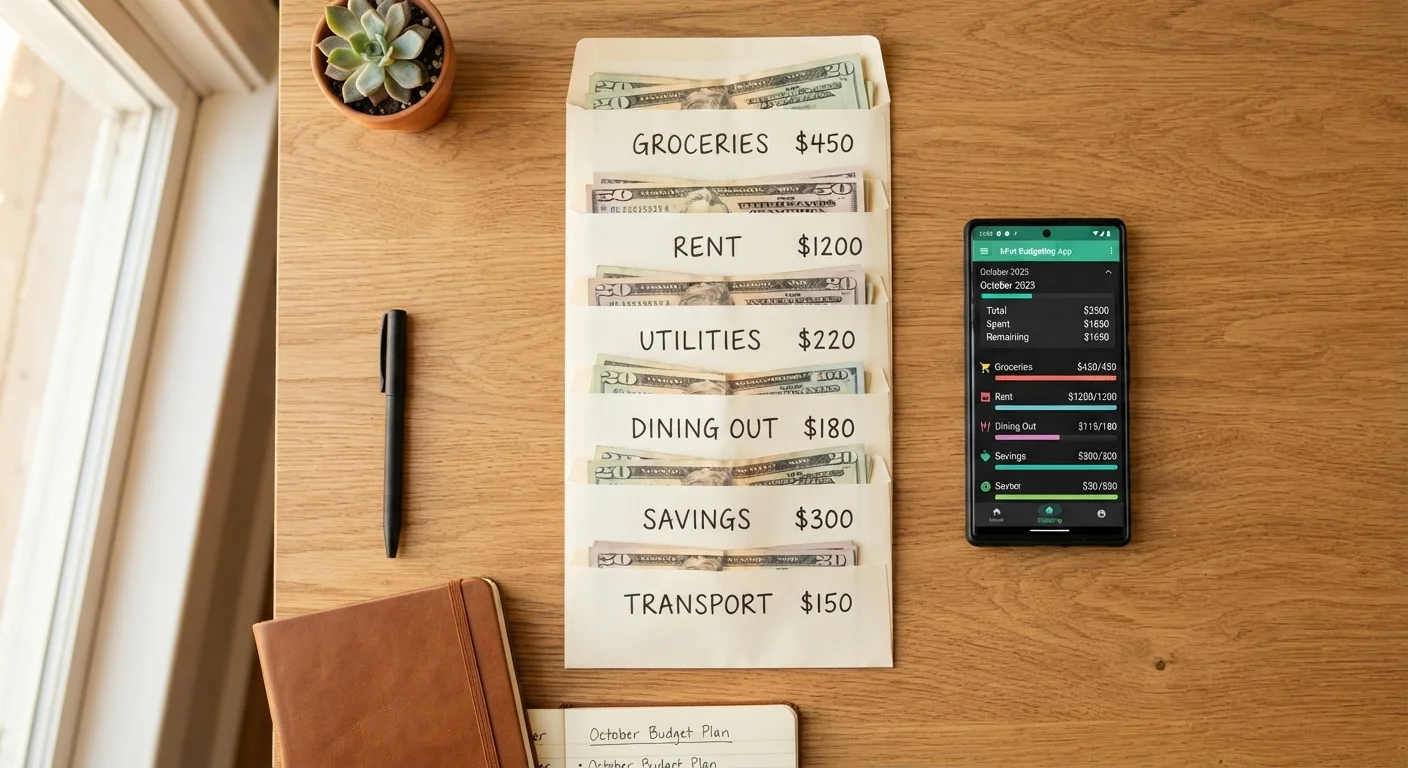
Envelope budgeting is a cash-based system in which you divide your take-home pay into labeled envelopes - one for groceries, one for gas, one for dining out, and so on. When an envelope is empty, spending in that category stops until the next pay period. There is no workaround: the physical constraint does the enforcing.
Digital tracking apps connect to your bank accounts and credit cards, automatically categorizing transactions as they occur. You set spending targets per category, and the app alerts you as you approach or exceed those limits. Examples of the general type include apps that sync transactions, generate spending reports, and project upcoming bill dates - all without requiring you to touch cash.
Both methods share the same underlying logic: assign every dollar a purpose before you spend it. Where they diverge is in execution, friction, and the type of discipline they demand. For a broader look at how these ideas fit into wider budgeting philosophies, see our comparison of 50/30/20 vs. zero-based budgeting.
Side-by-Side Comparison
The table below breaks down the two approaches across the criteria that matter most for everyday budgeters.
| Criterion | Envelope Budgeting | Digital Tracking Apps | |
|---|---|---|---|
| Setup effort | Envelope Budgeting | Moderate - requires cash withdrawal and labeling | Low - links to accounts automatically |
| Ongoing maintenance | Envelope Budgeting | High - manual cash management each pay period | Low - transactions categorized automatically |
| Works for online purchases | Envelope Budgeting | No - cash-only by design | Yes - tracks all card and bank activity |
| Privacy / data sharing | Envelope Budgeting | Fully private, no accounts linked | Requires sharing bank credentials with app |
| Psychological spending friction | Envelope Budgeting | High - physically handing over cash | Low - card swipes feel abstract |
| Multi-account visibility | Envelope Budgeting | None - cash only | Full - consolidates all accounts |
| Cost | Envelope Budgeting | Free (just envelopes) | Free to paid subscription tiers |
| Best for | Envelope Budgeting | Variable, discretionary overspending | Complex finances, multiple accounts |
The Case for Envelope Budgeting
Research in behavioral economics consistently finds that people spend less when using cash versus cards - a phenomenon sometimes called the "pain of paying." Physically handing over money activates a stronger psychological response than an invisible card swipe, which can reduce impulse purchases in discretionary categories like dining and entertainment.
Envelope budgeting is also offline, private, and requires zero subscription fees. For anyone without reliable smartphone access, uncomfortable sharing financial data with third-party apps, or simply struggling with overspending in a few specific categories, envelopes provide a clear, low-tech guardrail.
Stretch Envelope Budgeting Into the Digital World
If you prefer the discipline of envelopes but shop online frequently, try a simple workaround: withdraw your envelope cash at the start of the month, but move the equivalent amount into a dedicated checking account or debit card for each spending category. Label a notes app or spreadsheet column with the same category names. This preserves the hard-limit logic of envelope budgeting while accommodating card-based purchases.
The method's main limitations are practical: it doesn't work well for online purchases, subscriptions, or bill autopayments. Carrying large amounts of cash can also raise safety concerns. Some people adapt by using a debit card for fixed bills while keeping envelopes only for variable spending categories.
The Case for Digital Tracking Apps
Digital apps remove the manual work of recording every purchase. Once linked to your accounts, they categorize spending automatically and surface patterns you might not notice otherwise - like how small recurring charges accumulate into a meaningful monthly drain.
For households with two incomes, multiple credit cards, or a mix of subscriptions and irregular expenses, apps provide a consolidated view that envelopes simply cannot replicate. Many apps also generate month-over-month trend reports, which make the monthly budget audit process significantly faster.
The trade-off is that automation can create distance from spending decisions. When purchases happen invisibly and the app does the categorizing, it's easier to stay passive. App users need to commit to regularly reviewing their dashboards - otherwise the tool becomes a record-keeper rather than a behavior-changer. For strategies that reduce that reliance on willpower, see building a spending system that doesn't require constant willpower.
Choosing the Right Fit - or Combining Both
Start by identifying where your spending problems actually occur. If you consistently overspend on groceries, restaurants, or entertainment, envelope budgeting for those specific categories may provide the friction you need. If your challenge is losing track of subscriptions, forgetting bill due dates, or reconciling two incomes, a digital app likely addresses the root issue more directly.
A hybrid approach works well for many people: use an app to track fixed expenses and savings transfers automatically, while keeping physical envelopes for two or three discretionary categories that tend to run over budget. This preserves the behavioral benefit of cash without the impracticality of going fully cash-based in a digital economy.
Whichever method you choose, the mechanism matters less than the habit of reviewing. Consistent monitoring - even just 15 minutes at month's end - is what separates budgets that work from ones that quietly drift. You can explore what that review process looks like in practice with our guide to tracking spending without obsessing over receipts.
This article is for general informational and educational purposes only and does not constitute personalized financial advice. Consider consulting a qualified financial professional for guidance tailored to your specific situation.