

Key Takeaways
- Individually small charges can collectively drain hundreds of dollars from a budget each month.
- Recurring subscriptions, convenience fees, and forgotten trials are among the most common culprits.
- Reviewing bank and card statements line by line is the most reliable way to surface hidden spending.
- Canceling or renegotiating even two or three services can free up meaningful monthly cash flow.
- Awareness alone rarely fixes leaks - the fix requires a deliberate audit and follow-through.
Why Small Costs Do Disproportionate Damage
A $15 charge here, a $9.99 charge there - none of it sounds alarming. But when these small, recurring costs pile up across a month, they can easily account for $100-$300 or more in spending that was never consciously approved. The behavioral pattern behind this is well-documented in consumer research: people systematically underestimate the cost of small, frequent purchases while overestimating how much large, infrequent purchases hurt them.
This is partly why many households feel like their money disappears without explanation. The fixed bills are obvious; the leaks are invisible. If you've ever felt that your spending doesn't match your income, quiet spending leaks are often the reason. Below are the most common culprits, along with practical steps to plug them.
Start With Your Bank Statement
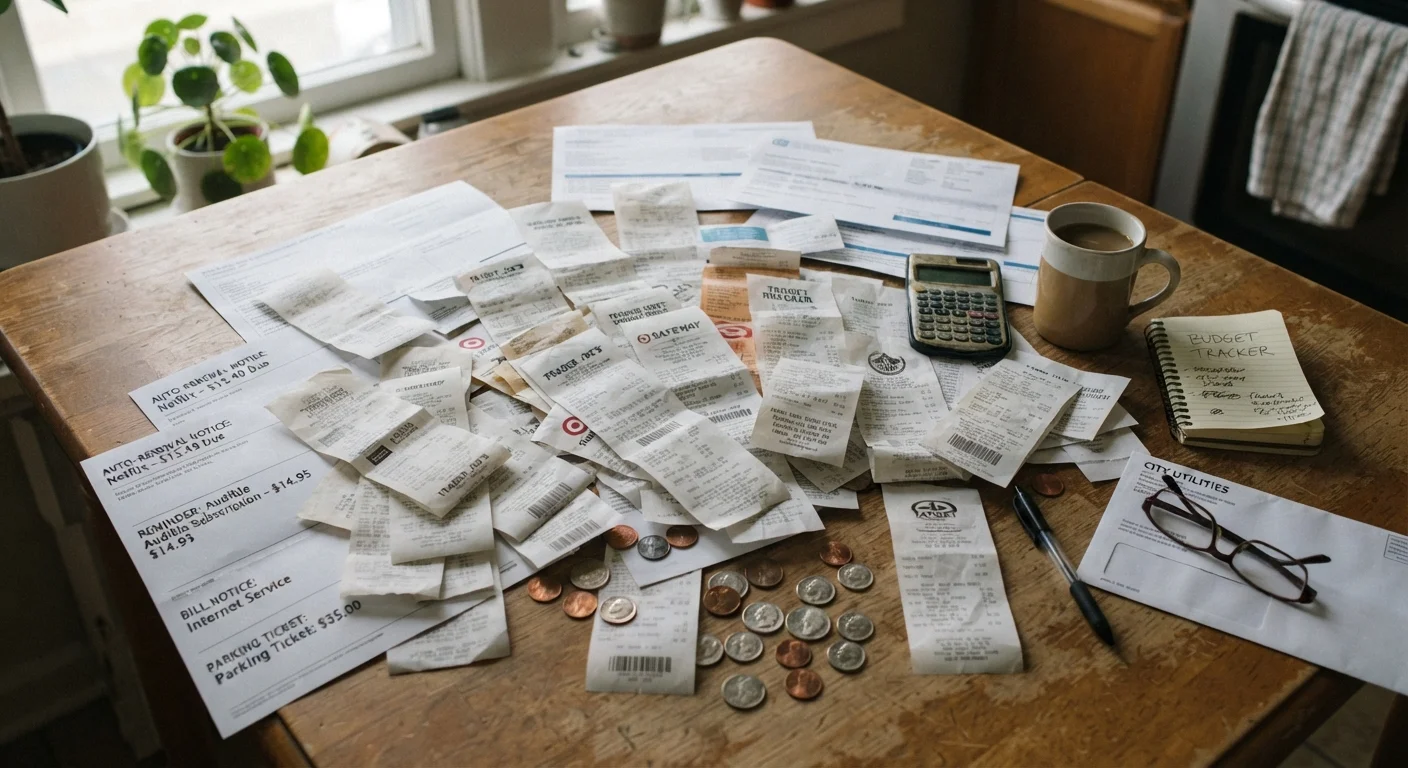
The simplest way to find spending leaks is to download 60-90 days of bank and credit card transactions and sort them by merchant. Recurring charges will cluster together, making them easy to spot. Flag any charge you don't immediately recognize or can't justify - then investigate before the next billing cycle.
The Most Common Budget Leaks - and How to Address Them
Forgotten or overlapping subscriptions
Streaming services, fitness apps, news paywalls, cloud storage tiers - the average household carries more active subscriptions than it realizes. Free trials that convert to paid plans, duplicate services across family members, or platforms used once and abandoned are classic examples. A common approach is to pull up three months of bank and credit card statements and highlight every recurring charge. Cancel any service you haven't actively used in the past 30 days.
Many households pay for subscriptions they haven't actively used in months.
Convenience and transaction fees
ATM fees from out-of-network machines, food delivery platform surcharges, payment processing fees, and "service charges" on event tickets all fall into this category. Individually they're small; monthly they can add up to $30-$60. Using in-network ATMs, ordering directly from restaurant websites when possible, and paying by ACH transfer rather than credit card for bill payments can reduce this category significantly.
Convenience fees look trivial per transaction but can total $30-$60 or more monthly.
Automatic price increases on existing plans
Many subscription and service providers raise prices annually - sometimes with a brief email notice, sometimes with none at all. Internet, cable, phone, insurance premiums, and software subscriptions are common offenders. Setting a calendar reminder to review the cost of each major recurring service annually - and calling to negotiate or switch tiers when rates have crept up - is a straightforward countermeasure. Providers often have retention discounts available to customers who ask.
Annual price creep on existing plans often goes unnoticed because the charge already feels routine.
Impulse add-ons at checkout
Extended warranties on low-cost items, "protection plans" for electronics that rarely pay out, upsells at fast food counters, or premium packaging at the point of sale - each of these is designed to capture a small incremental purchase in a moment of low resistance. A useful rule of thumb: decline any add-on offer that you didn't budget for before you arrived at checkout and take time to research it separately if you're genuinely interested.
Checkout add-ons exploit low-resistance moments - most offer poor value relative to their cost.
Spoilage and over-purchasing consumables
Food spoilage is a real budget drain. The USDA estimates that households discard a significant share of the food they purchase, meaning a portion of the grocery budget produces no value. Over-buying produce, bulk items that go stale, or multiples of pantry staples before the current supply is exhausted are common patterns. Meal planning for the week before shopping - and maintaining a "use first" shelf in the refrigerator for items approaching their limit - reduces this category meaningfully.
Food spoilage means part of every grocery budget delivers zero nutritional or financial return.
Idle memberships and pay-per-use services billed monthly
Gym memberships used infrequently, co-working space access never redeemed, or premium tiers of apps that provide features never touched are textbook examples of paying for potential rather than actual use. Auditing which memberships you've used in the past 60 days and calculating their effective cost-per-use is a clarifying exercise. A gym membership that costs $40 per month but generates two visits is costing $20 per visit - a fact that's easy to overlook when the charge is automatic.
Calculating cost-per-use on memberships quickly reveals which ones no longer earn their keep.
Budget Drift Is Normal - But Fixable
Most people don't accumulate spending leaks through carelessness; they accumulate them gradually as life changes and old subscriptions or habits persist. If your budget felt aligned six months ago but feels off now, that drift is common. Reviewing your setup periodically - rather than once at year-end - makes leaks easier to catch before they compound. For a deeper look at why budgets lose traction over time, see why budgets often fail in month two.
Turning Awareness Into Action
Identifying leaks is the first step, but it only matters if you act on what you find. A structured monthly budget audit can formalize this process - setting aside 20-30 minutes at the end of each month to compare what you planned to spend against what you actually spent, category by category.
Spending leaks are also closely connected to broader habits that unintentionally undermine savings progress. Fixing them isn't about deprivation; it's about making sure every dollar in your budget is working for a purpose you've chosen. Even eliminating two or three unnecessary recurring charges each month can compound into hundreds of dollars in freed-up cash over a year - money that can be redirected toward savings, debt repayment, or a financial goal that actually matters to you.
This article is for general informational and educational purposes only and does not constitute personalised financial advice. Consult a qualified financial professional for guidance specific to your situation.