

Key Takeaways
- Forgotten subscriptions and auto-renewing memberships are among the most common sources of unnoticed monthly spending.
- Convenience fees - for delivery, expedited processing, and premium tiers - add up far faster than most households estimate.
- Price creep on recurring bills often goes unnoticed because charges change gradually rather than all at once.
- A periodic audit of bank and credit card statements is one of the most effective tools for finding spending leaks.
- Small changes in purchasing habits can recover meaningful budget room without sacrificing everyday comfort.
Why Spending Leaks Are So Hard to See
Most household budgets don't collapse because of one large, reckless purchase. They erode slowly - $9.99 here, a $4 service fee there - in amounts small enough to feel trivial in isolation but significant when tallied across a month or a year. These are spending leaks: recurring costs that flow out of a budget without deliberate decision-making attached to them.
The challenge is psychological as much as financial. Once a charge becomes automatic, it stops registering as a real spending choice. Behavioral economists call this payment decoupling - the mental disconnection between a cost and its impact when payment is automated or spread out. The result is that millions of households are effectively paying for things they no longer use, no longer notice, or never consciously agreed to keep.
Identifying these leaks doesn't require a dramatic lifestyle overhaul. It requires deliberate attention - and a clear-eyed look at where money is actually going, not where you assume it is. The budgeting basics that underpin any solid financial plan include exactly this kind of routine review.
Paying for subscriptions that are no longer actively used.
Why it happens: Free trials convert to paid plans automatically, and services that once felt essential get replaced by habits or alternatives - but the charge keeps appearing.
Ignoring small convenience and delivery fees as negligible.
Why it happens: A $3.99 delivery fee feels inconsequential compared to a $45 grocery order, so it rarely registers as a real spending decision - even when it occurs multiple times a week.
Letting insurance and utility bills auto-renew without reviewing rates.
Why it happens: Once a bill is set to autopay, most people stop examining it. Providers may raise rates gradually - often by small enough amounts to avoid triggering immediate concern.
Buying premium or jumbo package sizes that exceed actual household use.
Why it happens: Bulk or multi-pack pricing appears to offer savings per unit, but if the product is perishable or sparingly used, spoilage or waste offsets the discount entirely.
Overlooking price creep on streaming and software tiers.
Why it happens: Annual price increases on streaming, cloud storage, and software subscriptions are typically communicated in emails that get skimmed or deleted, so the new rate quietly becomes the new normal.
Using credit card or financing offers that include deferred interest.
Why it happens: Promotional 'no interest if paid in full' offers are easy to misread as 0% interest, when in fact unpaid balances at the end of the term trigger backdated interest charges on the original purchase amount.
How to Find and Fix the Leaks in Your Budget
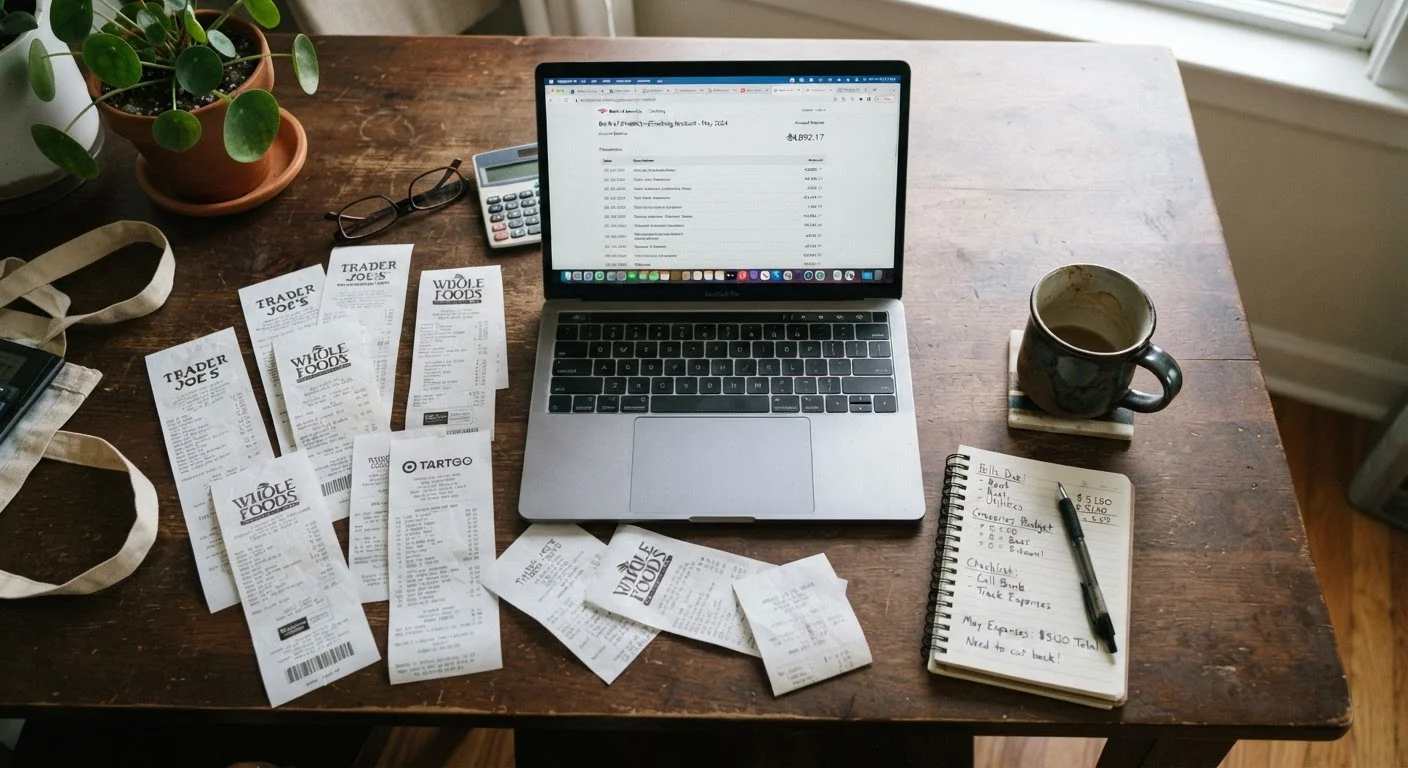
The most reliable method for uncovering spending leaks is a line-by-line review of at least three months of bank and credit card statements. Three months catches quarterly charges that a single month's review would miss entirely. As you scan, flag every recurring charge and ask two questions: Do I still use this? and Do I still actively want to pay for it?
$329/yr
Average spent on unused subscriptions per household
According to a West Monroe survey, the average American household spends over $300 annually on subscriptions they no longer actively use.
42%
Consumers who underestimate their monthly subscriptions
Research from C+R Research found that 42% of consumers significantly underestimate how much they spend on subscription services each month.
For subscription services specifically, consider using a spreadsheet or a notes app to list every active subscription alongside its monthly cost and renewal date. Seeing them aggregated - rather than buried individually across different billing dates - often makes the total feel more concrete and motivating to trim.
On recurring bills like insurance, internet, or phone plans, the strategy is different: contact the provider and ask directly whether a lower-cost tier or a loyalty discount is available. Many companies offer rate reductions to customers who ask, particularly those with a long account history. This approach is worth revisiting annually, since introductory pricing and promotional periods expire quietly. For a deeper look at how minor recurring costs collectively undermine a budget, small spending leaks that quietly wreck a monthly budget walks through the mechanics in detail.
Finally, be aware of convenience spending - a category that feels discretionary in the moment but accumulates into a predictable monthly cost. Delivery fees, platform surcharges, and expedited processing fees are each small, but households that rely on these services regularly may find they're spending hundreds of dollars annually on access and logistics rather than on the underlying goods or experiences themselves. The real cost of convenience offers a useful framework for deciding when that trade-off is genuinely worth it.
Consistent tracking doesn't need to consume hours each week. Tracking your spending without obsessing over every receipt describes practical methods that fit different habits and schedules - making it easier to stay aware without creating a new source of stress.
This article is for general informational and educational purposes only. It does not constitute personalized financial advice. Readers are encouraged to consult a qualified financial professional regarding their individual circumstances.