

Key Takeaways
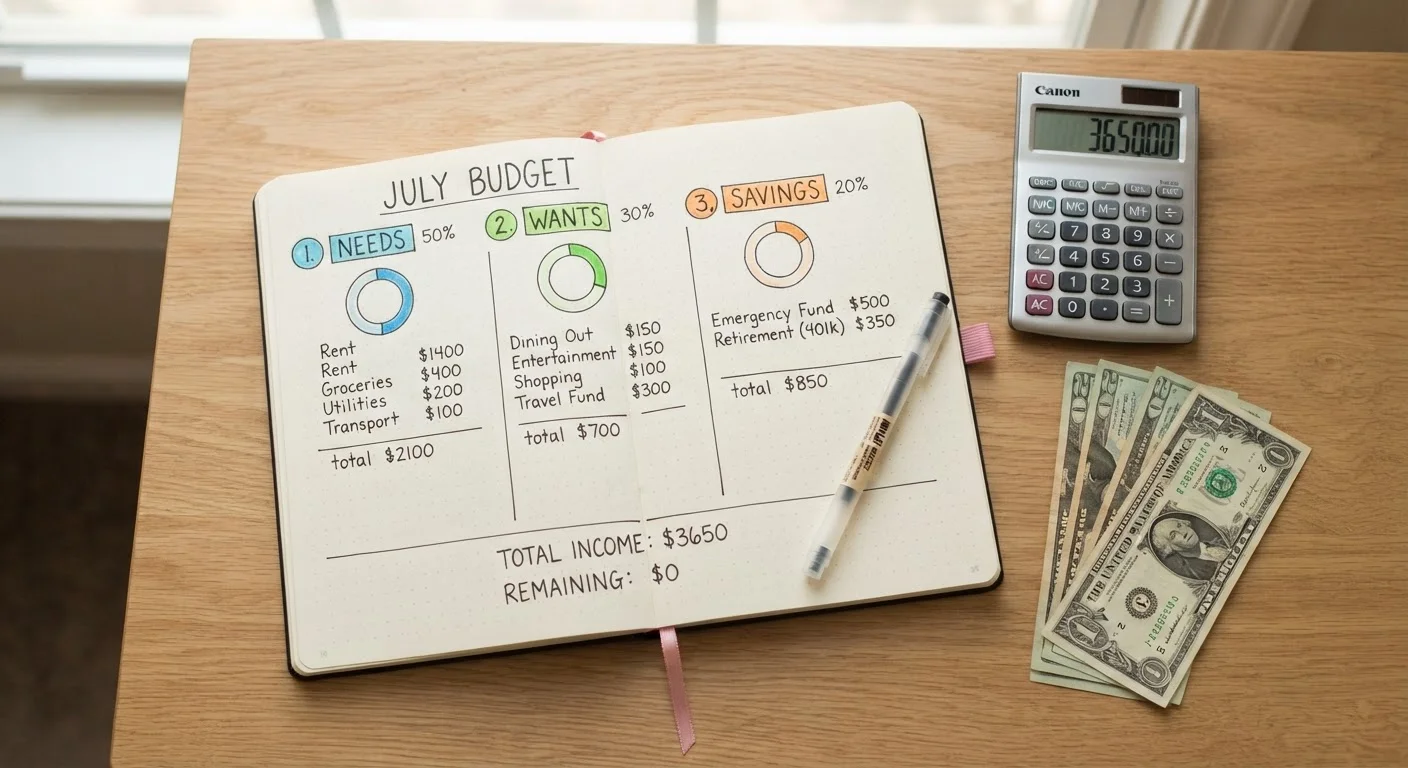
- The 50/30/20 rule splits after-tax income into needs, wants, and savings/debt categories.
- It works best as a starting point, not a rigid prescription for every household.
- High housing costs, low incomes, or significant debt can make the standard split unrealistic.
- Adapting the percentages to your circumstances is not only acceptable - it's often necessary.
- Tracking your actual spending first helps you see how far off the baseline you already are.
The 50/30/20 Rule
The 50/30/20 rule is a budgeting framework that divides your after-tax income into three categories: 50% for needs (essential living expenses), 30% for wants (discretionary spending), and 20% for savings and debt repayment. It was popularized as a way to give people a simple, memorable starting point for managing money without tracking every dollar. The goal is balance - covering obligations, enjoying life, and building financial security simultaneously.
The rule applies to net income (take-home pay after taxes and pre-tax deductions), not gross income. Applying it to gross income would significantly overstate how much you have available to allocate.
Breaking Down the Three Categories
The framework divides your monthly take-home pay into three buckets. Understanding what belongs in each one - and where the gray areas sit - is the first step to using it effectively.
Needs (50%)
Needs are non-negotiable expenses: rent or mortgage, utilities, groceries, health insurance premiums, minimum debt payments, and essential transportation costs. If skipping the payment would result in losing your housing, health coverage, or ability to get to work, it's a need. Clothing can be a need - but only basic, functional clothing, not a new wardrobe refresh.
Wants (30%)
Wants are choices that improve quality of life but aren't survival essentials: streaming subscriptions, dining out, gym memberships, vacations, and entertainment. This is the most flexible category and the first place to look when cash is tight. The distinction between needs and wants can feel blurry - a smartphone is a need for most workers today, but a premium data plan upgrade is typically a want.
Savings and Debt Repayment (20%)
This bucket covers contributions to emergency funds, retirement accounts (like a 401(k) or IRA), and any debt payments above the required minimum. Building this category consistently is what transforms the rule from a spending guide into a genuine wealth-building tool. For more on how to prioritize within this bucket, see our guide on splitting your paycheck strategically.
Start With What You Actually Spend
Before applying any target percentages, pull three months of bank and credit card statements and categorize your real spending. Most people are surprised by how far their actual habits deviate from any idealized split. Knowing your baseline makes it far easier to set realistic targets and measure genuine progress.
When the 50/30/20 Rule Breaks Down
The rule was designed to be universally accessible, but several real-world situations make the standard split unworkable - and recognizing them matters.
~37%
Average share of income spent on housing
According to U.S. Bureau of Labor Statistics Consumer Expenditure Survey data, housing regularly consumes around 33-37% of average household expenditures, often leaving little room for the full 50% needs allocation to cover other essentials.
57%
Americans living paycheck to paycheck
Survey data from LendingClub and PYMNTS has consistently found that a majority of U.S. consumers report living paycheck to paycheck, underscoring how the 20% savings target is aspirational for a significant portion of the population.
$1,200+
Average monthly consumer debt payment
Federal Reserve data on household debt service suggests many American families carry debt obligations that, when combined with housing costs, can push the 'needs' category well above 50% of net income.
High Housing Costs
In many US metropolitan areas, rent or mortgage payments alone can consume 40-50% of take-home pay for middle-income earners. When housing absorbs the entire needs allocation, there's nothing left for groceries, utilities, or transportation in that bucket - forcing an unrealistic squeeze on wants or savings.
Low or Variable Income
Workers with irregular income - freelancers, gig workers, or those in commission-based roles - may find percentage-based planning inconsistent from month to month. In lean months, even the 50% needs category may not stretch far enough. A floor-based approach (calculating your minimum monthly obligations first) often serves variable-income earners better.
Significant Consumer Debt
If you're carrying high-interest credit card balances or private student loans, directing only 20% toward debt and savings can mean paying substantial interest over a long repayment timeline. Many financial educators suggest temporarily raising the savings/debt category to 30% or more and reducing wants accordingly until high-interest debt is cleared.
Early Career or Entry-Level Incomes
At lower income levels, the math can simply not work. A household earning $35,000 net annually in a mid-cost city may find that needs alone consume 60-70% of income. Using the framework rigidly here adds pressure without producing results. Starting smaller - saving 5-10% and working up - is a more realistic path.
If you're building a budget from scratch, our article on building your first monthly budget walks through a flexible approach suited to real spending patterns.
How to Adapt the Framework to Your Life
The 50/30/20 rule is a starting point, not a finish line. Adjusting the percentages based on your circumstances is not a failure - it's good financial judgment.
Step 1: Calculate Your Actual Numbers First
Before applying any target percentages, track one to three months of real spending. Categorize each expense as a need, want, or savings contribution. Most people find their actual split differs significantly from 50/30/20 - and seeing the real data is more motivating than comparing yourself to an ideal.
Step 2: Identify Your Constraint
Determine which category is the binding constraint. If needs eat 65% of income, the solution isn't to further cut wants - it's to address the underlying cost (explore housing alternatives, reduce transportation costs, or increase income over time). If wants are running at 40%, that's the lever to pull.
Step 3: Set a Realistic Target Split
Your personal split might be 60/20/20 this year and 55/20/25 next year as income grows. Write it down, revisit it quarterly, and adjust when circumstances change - a raise, a move, or paying off a loan all warrant a reassessment.
The Rule Is a Framework, Not a Formula
No single budgeting method fits every household. The 50/30/20 rule was designed to be simple and broadly applicable, which means it necessarily sacrifices precision. Think of it as a compass that points you toward balance - not a GPS route you must follow exactly. Regularly reassessing your split as income, expenses, and goals evolve is part of using it well.
For a direct comparison of this rule against another popular method, see how the 50/30/20 rule compares to envelope budgeting.
This article is for general informational and educational purposes only and does not constitute personalized financial advice. Consult a qualified financial professional for guidance tailored to your individual situation.