

| APR disclosure requirement | Mandated by the Truth in Lending Act (TILA) (Consumer Financial Protection Bureau) |
| Typical credit card daily periodic rate formula | APR ÷ 365 |
| Grace period length (most credit cards) | At least 21 days after billing cycle closes (CARD Act of 2009) |
| APR vs. interest rate on mortgages | APR is almost always higher due to included fees |
| Compounding frequency (revolving credit) | Typically daily |
| Interest type for auto/personal/mortgage loans | Simple interest on remaining principal |
APR, Interest Rate, and Daily Periodic Rate: The Core Differences
When you borrow money - through a credit card, auto loan, or personal loan - three figures shape what you ultimately repay: the annual percentage rate (APR), the interest rate, and the daily periodic rate. They're related but not interchangeable, and confusing them is one of the most common reasons borrowers underestimate their true debt costs.
| APR disclosure requirement | Mandated by the Truth in Lending Act (TILA) (Consumer Financial Protection Bureau) |
| Typical credit card daily periodic rate formula | APR ÷ 365 |
| Grace period length (most credit cards) | At least 21 days after billing cycle closes (CARD Act of 2009) |
| APR vs. interest rate on mortgages | APR is almost always higher due to included fees |
| Compounding frequency (revolving credit) | Typically daily |
| Interest type for auto/personal/mortgage loans | Simple interest on remaining principal |
Interest rate refers strictly to the cost of borrowing the principal - the base percentage a lender charges annually, before any fees are layered on.
APR is broader. It folds in the interest rate plus most mandatory fees - origination fees, mortgage points, and similar charges - expressed as a single annualized figure. Federal law under the Truth in Lending Act (TILA) requires lenders to disclose APR so consumers can make apples-to-apples comparisons. On credit cards, APR and interest rate are often the same number because card fees are typically disclosed separately, but on mortgages and personal loans the APR is almost always higher than the stated interest rate.
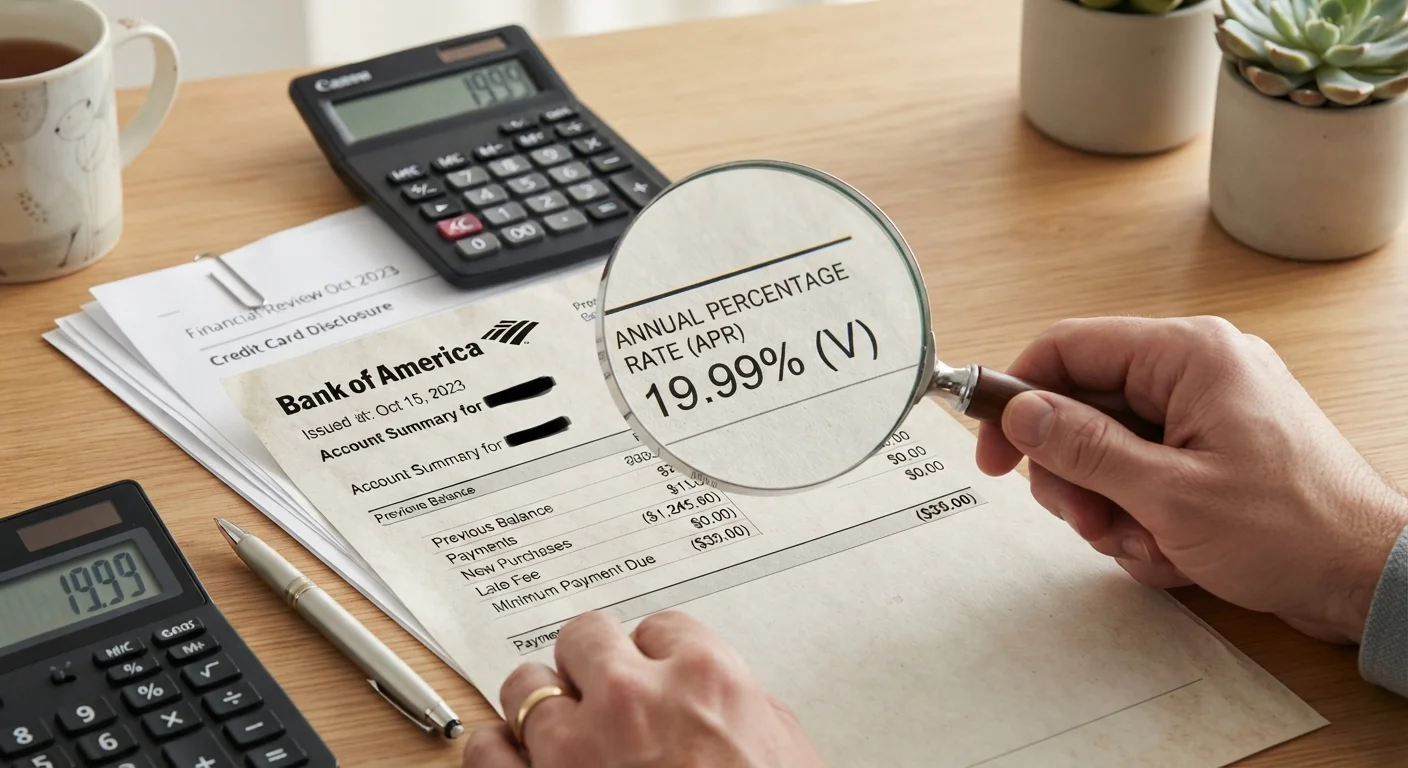
Daily periodic rate (DPR) is how lenders actually compute what you owe each day. It equals the APR divided by 365 (some lenders use 360). On a card with an 18% APR, the DPR is about 0.0493%. That fraction is applied to your average daily balance every single day of your billing cycle - which is why carrying even a modest balance forward generates more interest than many cardholders expect.
How Interest Compounds Against You - and What to Do About It
Most revolving credit (credit cards, lines of credit) uses daily compounding: each day's interest is added to the balance, and the next day's interest is calculated on that slightly higher amount. Over a full billing cycle - typically 28 to 31 days - the compounding effect makes your effective annual cost slightly higher than the stated APR. This gap is captured by the annual percentage yield (APY), sometimes called the effective annual rate. While the difference may look small on paper, it grows meaningfully when balances are large or carried for extended periods.
Installment Loans Work Differently Than Credit Cards
Unlike revolving credit, installment loans use simple interest and a fixed payment schedule. Your APR still determines the total interest cost, but interest does not compound on unpaid interest - it accrues only on the outstanding principal. Paying extra toward principal early in the loan term can meaningfully reduce total interest paid over the life of the loan.
Installment loans (auto, mortgage, personal) typically use simple interest calculated on the remaining principal. Your monthly payment is fixed, but in early months more of it goes toward interest than principal - a concept called amortization. As you pay down principal, the interest portion shrinks and more of each payment reduces your balance. Requesting an amortization schedule from your lender shows this breakdown for every payment.
The single most powerful lever you control is how much of your balance you carry month to month. Paying your credit card statement balance in full before the due date typically means you pay zero interest - most cards offer a grace period that suspends interest charges when no balance was carried from the prior cycle. Consistently paying only the minimum keeps a large average daily balance in play, maximizing the interest the lender earns.
When deciding which debts to tackle first, understanding the APR of each account is essential. See our guide to the debt avalanche and debt snowball strategies for a side-by-side comparison of the two most evidence-backed approaches. And before you assume you're paying down debt efficiently, it's worth checking which debt payoff myths may be slowing you down - some widely repeated advice can actually cost you more over time.
APR also matters beyond revolving debt. When calculating whether you can truly afford a vehicle, factoring in the loan's APR alongside insurance, maintenance, and depreciation gives a much clearer picture - as outlined in the real cost of owning a car beyond the monthly payment.
This article is for general informational and educational purposes only and does not constitute personalized financial or legal advice. Consult a qualified financial professional for guidance specific to your situation.