

Key Takeaways
- Monthly check-ins catch health issues early, before they escalate into costly treatments.
- Flea, tick, and heartworm prevention should be administered on a consistent monthly schedule.
- Dental hygiene between vet visits significantly slows the progression of periodontal disease.
- Tracking your pet's weight at home is one of the simplest early-warning tools available.
- Grooming milestones like nail trims and ear checks are care tasks, not just cosmetic ones.
Summary
18 items · 30-60 minutes per month
Why Monthly Maintenance Pays Off
Most pet health problems don't appear overnight. Dental disease, obesity, parasite infestations, and skin infections tend to build slowly - which means a consistent monthly routine gives you a reliable window to catch them early. The logic mirrors what many people already understand about home or vehicle upkeep: small, scheduled attention prevents the kind of breakdown that demands emergency intervention.
As explored in our comparison of preventive vs. reactive care, routine prevention is almost always less expensive - and less stressful for your pet - than treating a condition that has progressed unchecked. This checklist is designed to fit into a realistic household schedule, covering dogs and cats of most ages and sizes. If your pet is a senior, certain items may warrant more frequent attention; see our aging pet wellness framework for tailored guidance.
Parasite Prevention
Dental Hygiene
Weight and Body Condition
Grooming and Physical Checks
Environment and Supplies
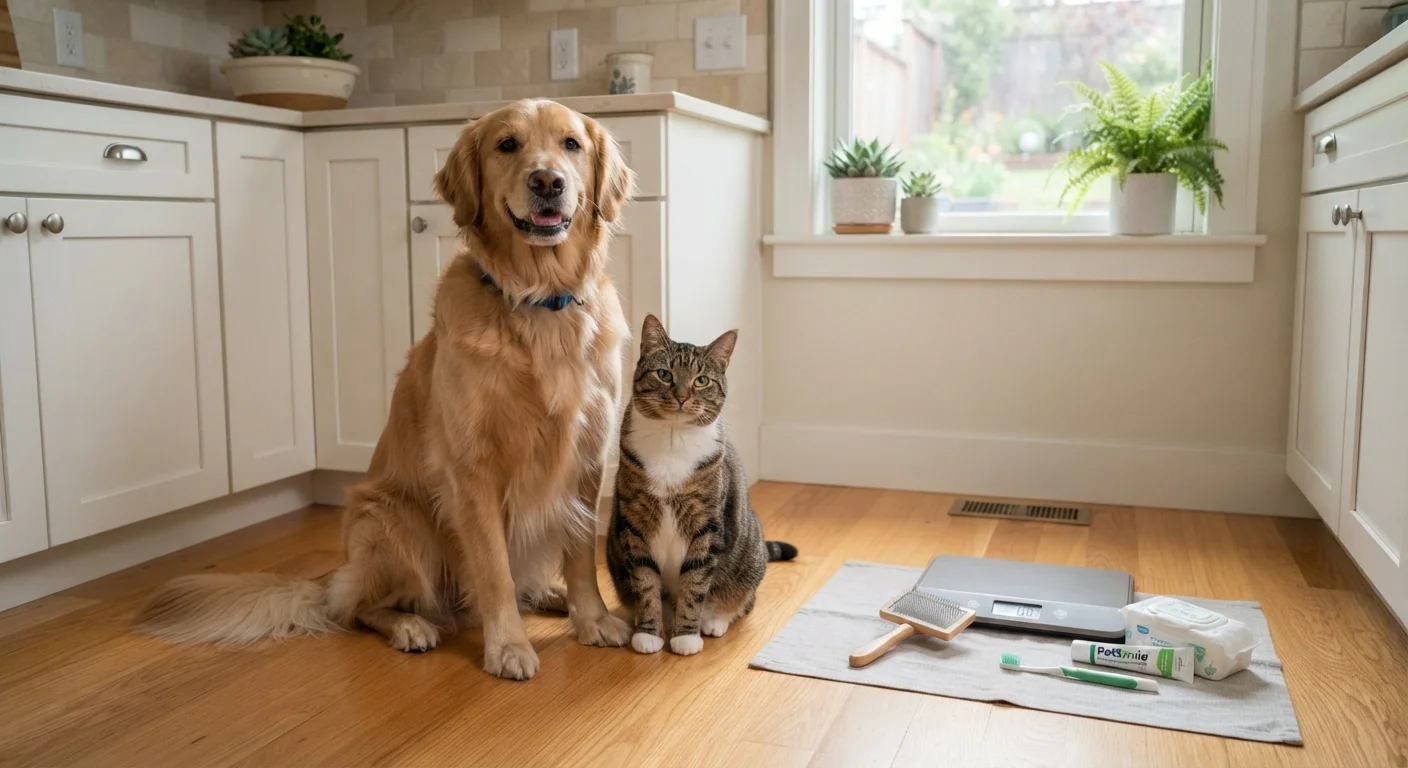
What You'll Need Before You Start
Running through this checklist efficiently requires a few basic supplies. None of these need to be premium products - the goal is consistency, not expense. Having everything in one dedicated spot (a small bin or basket works well) removes the friction that causes routines to lapse.
Bathroom or digital pet scale
Used to track your pet's weight month-over-month and catch gradual changes early.
Pet-safe toothbrush and toothpaste
Used to assess and maintain your pet's oral hygiene between professional cleanings.
Nail clippers (guillotine or scissor style)
Used to trim nails to a safe length and prevent gait and joint problems.
Fine-tooth comb and slicker brush
Used during grooming checks to remove mats, dead hair, and inspect skin condition.
Cotton balls or pet ear wipes
Used to gently clean the outer ear canal and assess for signs of infection.
Simple log notebook or tracking app
Used to record monthly weight and observations so you can spot trends over time.
Veterinarian-recommended parasite preventive
Applied monthly to protect against fleas, ticks, and heartworm per your vet's guidance.
Never Use Human Dental or Grooming Products
Human toothpaste contains fluoride and xylitol - both of which are toxic to dogs and cats. Similarly, some human ear-cleaning solutions and medicated shampoos can irritate or harm pets. Always use products formulated specifically for animals, and confirm with your veterinarian if you're unsure whether a product is appropriate for your pet's species and size.
Dental, Parasite, and Health Monitoring
Three areas - oral health, parasite control, and body condition - account for the majority of preventable veterinary visits. Dental disease in particular is chronically under-addressed at home. Understanding how plaque hardens into tartar helps clarify why even brief brushing sessions several times a week matter more than an occasional scrub. Monthly, you should assess what you're seeing and whether your between-visit habits are holding.
Parasite prevention is equally time-sensitive. Heartworm preventives, flea and tick treatments, and deworming products are typically dosed on a monthly cycle for a reason - the protection they offer is not cumulative. Skipping even one month carries real risks, particularly during warmer seasons when fleas and mosquitoes are most active. Talk to your veterinarian about which products are appropriate for your pet's species, weight, and health status.
Parasite Preventives Require Veterinary Guidance
Not all parasite prevention products are safe for every animal. Some flea treatments formulated for dogs are toxic to cats, and certain products are contraindicated for pets with specific health conditions or breed sensitivities. Always consult your veterinarian before starting, switching, or adjusting any parasite prevention regimen - do not rely solely on packaging instructions or general online guidance.
Grooming and Environmental Checks
Grooming tasks are often treated as optional or cosmetic, but many serve a direct health function. Overgrown nails alter gait and can cause joint strain over time. Matted fur traps moisture and heat against the skin. Ears that go unchecked can develop infections that become painful and difficult to treat. A monthly walkthrough of your pet's coat, paws, ears, and eyes takes only a few minutes and gives you a reliable baseline - so you notice changes before they become problems.
Don't overlook your pet's environment. Bedding, food and water bowls, and litter boxes or crate liners harbor bacteria and allergens. A monthly wash and wipe-down is good hygiene practice for both your pet and your household. If you'd like to supplement this routine with a home emergency readiness component, our guide to building a practical pet first-aid kit is a useful companion resource.
For additional context on what your veterinarian covers during an annual exam - and how your monthly observations support those visits - see what actually happens at a wellness visit.