

Key Takeaways
- Annual wellness exams cover far more than vaccinations - they include a full physical assessment.
- Early detection during routine visits often means simpler, less costly treatment.
- Your vet uses your pet's history across visits to spot gradual changes that owners may miss.
- Coming prepared with questions makes the appointment more productive for you and your vet.
- Senior pets typically benefit from more frequent wellness visits than once a year.
Annual Wellness Visit
An annual wellness visit - also called a routine or preventive exam - is a scheduled checkup where a veterinarian evaluates your pet's overall health from nose to tail. Unlike sick visits, these appointments happen even when your pet appears perfectly healthy. The goal is to catch early signs of disease, update preventive care, and establish a health baseline over time.
Veterinarians use the term 'physical examination' to describe the systematic head-to-tail assessment at the core of every wellness visit. Findings are documented in the patient record to track changes across visits.
What the Vet Is Actually Doing During the Exam
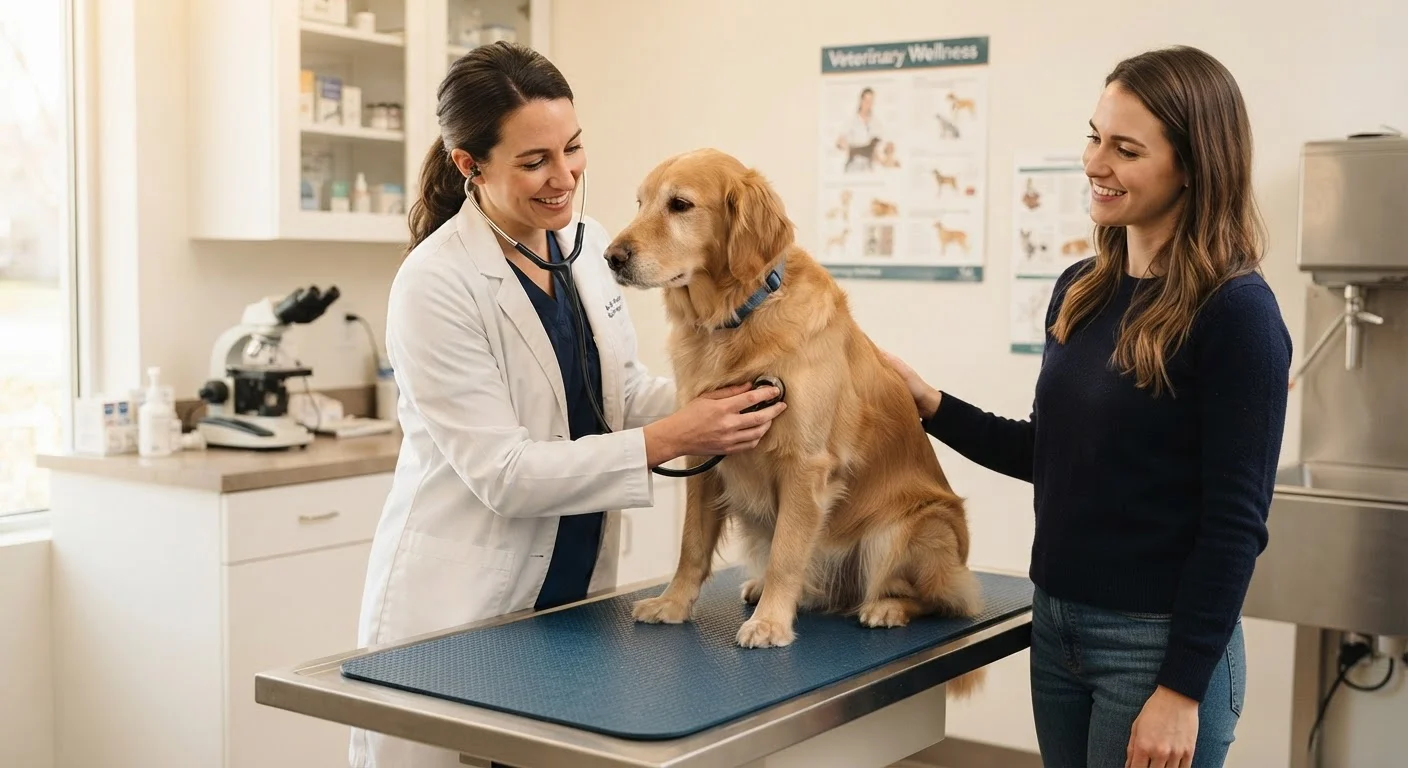
The heart of any wellness visit is the physical examination - a methodical, head-to-tail assessment that takes most vets roughly 10 to 15 minutes but generates a significant amount of clinical information. Here's what's typically covered:
- Eyes and ears: Checked for discharge, redness, cloudiness, or signs of infection and parasites.
- Mouth and teeth: The vet evaluates gum color, tartar buildup, tooth condition, and signs of periodontal disease. Dental disease is among the most common - and frequently underestimated - conditions in both dogs and cats. Our article on pet dental health explains what owners should know.
- Skin and coat: Examined for lumps, bumps, hair loss, parasites, or irritation.
- Heart and lungs: Using a stethoscope, the vet listens for murmurs, irregular rhythms, or abnormal breathing sounds.
- Abdomen: Palpated to assess organ size and detect any unusual masses or pain responses.
- Lymph nodes and joints: Checked for swelling, which can indicate infection, inflammation, or other systemic concerns.
- Weight and body condition: Compared against the pet's history to identify trends. Even gradual weight changes matter - see our guide on signs your pet may be overweight for context.
Everything the vet observes is documented, building a longitudinal health record that becomes more valuable with every visit.
Bring a Written List of Questions
Wellness appointments move quickly, and it's easy to forget what you wanted to ask once you're in the room. Jotting down three to five specific observations or questions beforehand - even small things like 'he's been scratching his ears more' - helps your vet give you more targeted, useful guidance. Your notes also give the vet context that isn't visible in a 15-minute exam.
Beyond the Physical: Vaccines, Parasite Prevention, and Diagnostics
After the hands-on exam, the visit shifts to preventive care planning. Your vet will review your pet's vaccination history and recommend any boosters that are due based on your pet's lifestyle, species, and local disease risk. Not every pet needs every vaccine every year - your vet can explain which are considered core (broadly recommended) and which are optional based on exposure.
Parasite prevention is also revisited. Fleas, ticks, heartworm, and intestinal parasites all pose real health risks, and the right prevention strategy depends on where you live and how your pet spends time outdoors. A fecal test - where a stool sample is checked for intestinal parasites - is often recommended annually or more frequently for pets with outdoor exposure.
For adult pets showing age-related changes or for senior animals, bloodwork is a common recommendation. A basic panel can reveal early kidney disease, thyroid dysfunction, diabetes, anemia, and more - often before outward symptoms appear. Catching these conditions early is a central reason preventive vet care matters even when pets seem healthy.
Wellness Visits Are Not the Same as Sick Visits
If your pet is showing symptoms - vomiting, limping, labored breathing, or sudden behavior changes - don't wait for a scheduled wellness appointment. Contact your veterinarian promptly. Wellness exams are designed for asymptomatic, apparently healthy pets and are not a substitute for timely care when something is visibly wrong.
How to Make the Most of Every Appointment
A wellness visit is a two-way conversation, not a passive experience. Coming prepared helps you leave with more clarity and better care for your pet.
Before the appointment: Write down any behavioral changes - increased thirst, altered sleep, changes in activity level, or new lumps you've felt. Note what your pet eats, including treats and supplements. If you're managing costs, ask upfront which diagnostics are optional versus strongly recommended given your pet's age and history. For general guidance on what you can handle at home versus when a vet is needed, our home care versus vet visit decision framework is a useful reference.
During the appointment: Ask your vet to explain findings in plain language. Good questions to ask include: Is my pet's weight trending in the right direction? Are there any early warning signs I should monitor? Is this vaccination still necessary given my pet's lifestyle?
After the visit: Keep a copy of the visit summary and any lab results. If your vet recommended a follow-up task - a dental cleaning, a recheck weight, or a dietary adjustment - note the timeline. Consistent follow-through between annual visits is covered well in our monthly pet care tasks checklist.
For pets entering their senior years, visit frequency often increases. The physical and metabolic changes that come with aging in dogs and cats call for closer monitoring - our article on keeping an aging pet comfortable outlines what shifts as pets grow older.
This article is for informational purposes only and is not a substitute for professional veterinary advice. Always consult a licensed veterinarian for guidance specific to your pet's health and circumstances.