

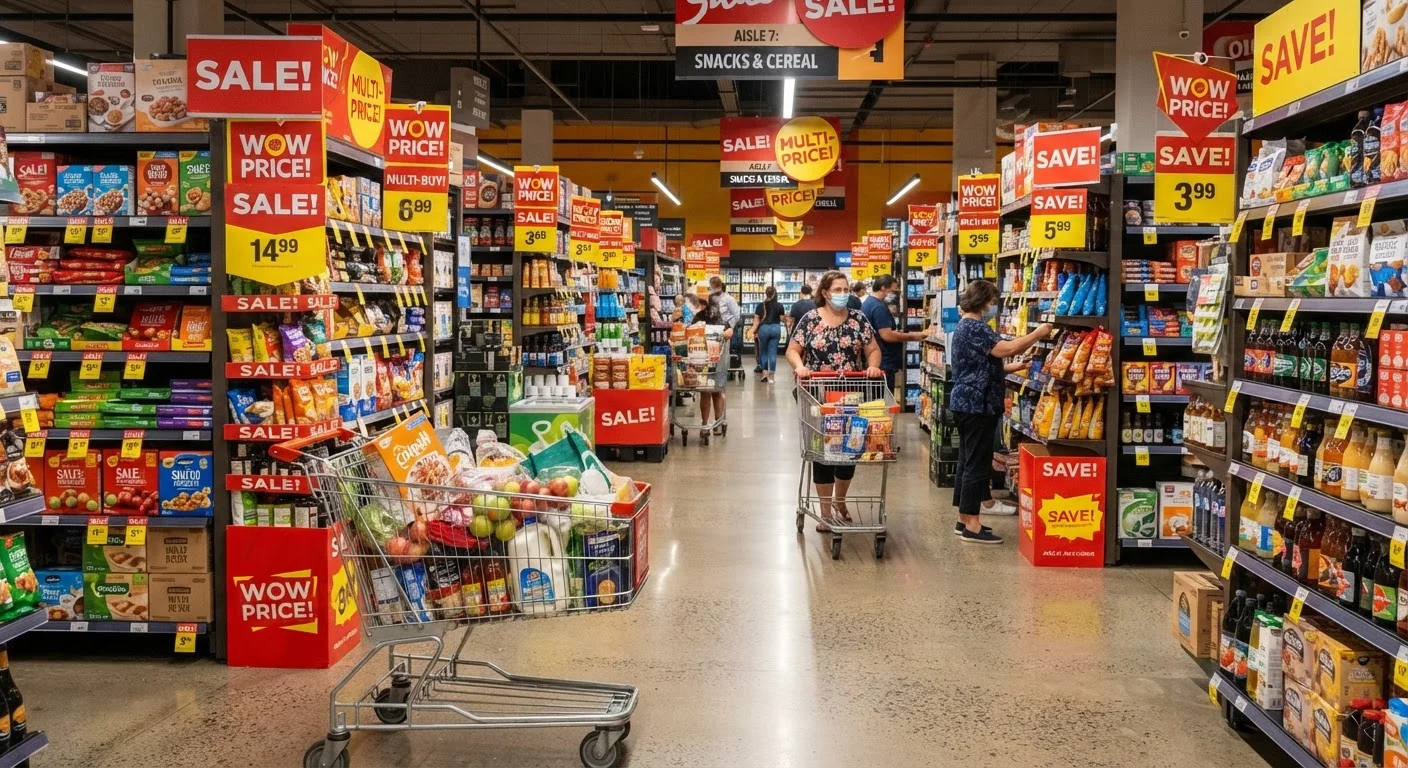
Key Takeaways
- Scarcity cues like 'limited stock' are often manufactured to pressure faster purchases.
- Loyalty programs frequently cost more in changed behavior than they return in rewards.
- Anchor pricing uses inflated 'original' prices to make discounts appear larger than they are.
- Store layouts are engineered to maximize exposure to high-margin products.
- Bundle deals can obscure whether individual items are genuinely priced competitively.
Why Even Experienced Shoppers Get Caught
Retail environments - physical and digital - are designed by professionals whose job is to maximize how much you spend per visit. The tactics they use aren't accidental or incidental; they're the result of decades of consumer behavior research applied systematically to store layout, pricing displays, promotions, and loyalty structures.
The uncomfortable truth is that familiarity with these tricks doesn't make you immune. Many work precisely because they operate below the level of deliberate thought. A price ending in .99 doesn't fool you consciously - it influences you before your conscious reasoning kicks in. Knowing that is a necessary first step, but it's not sufficient on its own.
This list covers seven specific tactics that trip up even careful shoppers, along with practical adjustments to counteract each one. For a broader foundation on building habits that hold up across any retail context, see smarter online shopping habits that hold up over time.
Build a pre-shopping habit that works
Before entering a store or opening a retailer's website, write down exactly what you need and a realistic price you'd consider fair for each item. This gives you a concrete benchmark that's harder for anchor prices, bundles, or scarcity cues to override. Shoppers who enter with a specific list and a price expectation consistently resist upsell pressure more effectively than those who browse open-endedly.
Anchor pricing makes discounts feel bigger than they are
When you see a price tag showing $120 crossed out above a $79 sale price, your brain anchors to that $120 and frames $79 as a bargain - regardless of what the item actually cost to produce or what competitors charge. This is called anchor pricing, and it's one of the most well-documented tactics in retail psychology.
The original 'reference price' is sometimes set artificially high, specifically to make the sale price look more attractive. Before accepting a marked-down price at face value, search for the same item across at least two other sources to establish a real market price. The psychology behind retail pricing tricks goes deeper on how anchoring and similar biases are exploited systematically.
An inflated 'original' price can make any sale look compelling, even when the deal isn't real.
Artificial scarcity creates pressure to act now
'Only 3 left in stock!' is a phrase that triggers loss aversion - the psychological discomfort of missing out on something. Retailers, both physical and online, know this and use low-stock warnings, countdown timers, and 'X people are viewing this right now' indicators to compress your decision-making window.
In practice, stock levels shown online are not always accurate reflections of true inventory, and items flagged as scarce often reappear at the same price days later. If you feel rushed, that's a signal to pause, not proceed. The impulse triggers retailers engineer into the shopping experience covers how urgency cues are deliberately built into store and website design.
Feeling rushed to buy is itself a sign that a scarcity cue is doing its job on you.
Loyalty programs shift your behavior more than your savings
Loyalty programs feel like free money - earn points, get rewards. But the math often favors the retailer. To accumulate meaningful rewards, shoppers typically end up concentrating purchases at one store even when lower prices exist elsewhere, spending up to thresholds to earn bonus points, or letting points expire before using them.
A rewards card that returns 2% in store credit is only a net benefit if you were going to shop there anyway at competitive prices. When loyalty points become a reason to overspend or overlook better alternatives, the program is working as intended - for the retailer. Treat rewards as a pleasant side effect of purchases you'd make regardless, not as a shopping strategy on their own.
Loyalty rewards only benefit you when they don't change where or how much you spend.
Bundle deals can hide individual price inflation
Buy-two-get-one-free and multi-item bundles are designed to increase total basket size. The implied savings feel obvious, but they depend entirely on the individual item prices being fair to begin with. A retailer can raise per-unit prices before building a bundle, making the 'free' item less free than it appears.
Bundles also push you toward buying more than you need. If you only wanted one item, a buy-three deal at a discount still costs more overall than purchasing one at full price. Before committing to a bundle, calculate the per-unit price and compare it against single-unit prices at other retailers. See how upselling and cross-selling work for more on how retailers increase your spend at every stage.
A bundle is only a deal if the per-unit price is actually competitive - check before you commit.
Store layout steers you toward high-margin products
Grocery and big-box stores place essential items - dairy, bread, basics - at the back or perimeter of the store. To reach them, you pass aisles of higher-margin goods. Eye-level shelves are typically reserved for products with the largest profit margins, while budget alternatives sit on lower shelves that require more effort to find.
End-cap displays - the prominent product placements at the end of aisles - often feature items that are not on sale, despite being positioned like sale merchandise. Being aware of store layout logic helps you shop with more intentionality. A list made before you enter and a habit of scanning full shelves (not just eye level) are low-effort defenses against layout manipulation.
The products placed at eye level are there because they're profitable for the store, not best for you.
Charm pricing makes prices feel categorically lower
Prices ending in .99 or .95 are so common that shoppers rarely question them, but the effect is real: $9.99 registers cognitively as closer to $9 than to $10 for many people. This is charm pricing, and decades of retail practice have built it into nearly every pricing structure.
More sophisticated versions include setting prices at $97 or $197 - figures that feel significantly cheaper than round-number equivalents despite the actual difference being small. When evaluating a price, practice rounding up to the nearest dollar before deciding whether the amount fits your budget. It's a small mental adjustment that partially neutralizes the effect. The consumer trap glossary defines charm pricing and other common tactics in plain language.
Round every price up mentally before deciding - it's the simplest counter to charm pricing.
Clearance labels don't guarantee genuine markdowns
A red 'clearance' tag carries a strong psychological signal - this is a deal, and it's going away. But clearance items are not always marked down from a price that was ever charged. Some are made specifically for clearance or outlet channels at a lower quality tier, while others carry inflated original prices that make modest reductions look dramatic.
Outlet store merchandise, in particular, is frequently manufactured separately from mainline products and may differ in materials or construction - it's not always excess inventory from regular retail. Common misbeliefs about clearance and outlet shopping unpacks the specific ways shoppers are misled in these contexts.
Clearance and outlet merchandise isn't always what it implies - verify before assuming it's a genuine bargain.
Making These Insights Work in Practice
Recognizing a tactic in the moment is useful, but the more durable defense is building a few low-effort habits that create distance between stimulus and decision. A shopping list made before you enter a store or website, a quick price comparison before committing to any bundle or sale price, and a willingness to walk away and return later all significantly reduce the leverage these tactics have.
These tactics are legal and widespread
None of the pricing or layout strategies described here are illegal under general U.S. consumer protection law, though specific deceptive pricing practices can attract regulatory scrutiny in some states. Understanding them is about making more deliberate choices, not assuming wrongdoing. For concerns about specific pricing claims that seem clearly false, the FTC provides consumer complaint resources.
Retailers also rely on friction - the more effortful comparison shopping feels, the less likely you are to do it. Tools like price history trackers and browser extensions that flag price changes can reduce that friction substantially. The dark patterns on shopping websites article covers how online retailers specifically add friction to decisions that would benefit you, like cancellations or price comparisons.
The goal isn't to become a suspicious or joyless shopper - it's to make sure your spending reflects your actual priorities rather than a retailer's revenue targets. Informed purchasing decisions, made deliberately, are both more satisfying and more financially sound over time.