

Key Takeaways
- Checking a bag can cost $35-$40 each way on many US carriers - carry-on travel eliminates that expense.
- A standard carry-on (22" × 14" × 9") holds a week of clothing when you build a mix-and-match wardrobe.
- Rolling clothes and using packing cubes reclaims meaningful space compared to traditional folding.
- Travel-size toiletries in a reusable quart bag keep liquids TSA-compliant without wasting volume.
- Wearing your bulkiest items on travel day frees interior space for lighter essentials.
What you will need
Why Carry-On Travel Pays Off
Checked baggage fees add up fast. Many major US airlines charge $35-$40 per bag each way, meaning a round trip for two people can cost $140-$160 before you've left the terminal. Beyond the money, checked bags mean waiting at carousels, the risk of delays or lost luggage, and less flexibility to move quickly between destinations.
Carry-on travel removes all of that friction. Once you master the system, it works for most trip types - domestic weekends, international city trips, warm-weather vacations. The key is shifting from packing what you might want to packing only what you'll actually use. This guide walks you through that process step by step.
For broader pre-departure preparation, see the pre-trip checklist covering documents, reservations, and finances. And if you're still deciding between a short trip and a longer journey, this comparison can help you weigh both formats honestly.
What You'll Need Before You Start
Gather everything before you begin packing - equipment choices matter as much as the clothes you select.
What you will need
Carry-on suitcase or travel backpack
Your primary bag - must fit in the overhead bin within your airline's stated dimensions.
Packing cubes
Compress and organize clothes by category, making the most of available space.
TSA-approved quart-size zip bag
Required to carry liquids through US airport security checkpoints.
Travel-size toiletry containers
Hold shampoo, conditioner, and other liquids in 3.4 oz (100 ml) or smaller volumes.
Slim personal item bag or daypack
Carries your laptop, snacks, and in-flight essentials without using carry-on space.
Step-by-Step: Packing a Week Into One Bag
Follow these steps in order. Each one builds on the last, and skipping ahead typically leads to overpacking or a disorganized bag.
Audit your destination's climate and activities
Write down every planned activity - walking, dining out, swimming, a workout. Note the expected temperature range. This list becomes your packing filter: if an item doesn't serve at least two activities on that list, it doesn't make the cut.
Build a neutral, mix-and-match wardrobe
Choose a palette of two or three complementary colors so every top pairs with every bottom. A practical starting point for a seven-day trip: 4-5 tops, 2-3 bottoms, one versatile layer (a light jacket or cardigan), and 2 pairs of shoes. Underwear and socks for each day are non-negotiable.
- Fabrics that resist wrinkles and dry quickly (merino wool, synthetic blends) extend your wardrobe's usefulness.
- One pair of shoes should work for both walking and casual dining to reduce footwear volume.
Pack toiletries into your quart bag first
Assemble your liquid toiletries before touching your clothes. TSA rules limit liquids to containers of 3.4 oz (100 ml) or smaller, all fitting in a single quart-size clear bag. Solid alternatives - bar shampoo, solid deodorant - bypass this limit entirely and free up space.
Consider whether your accommodation provides basics like shampoo and body wash; many hotels do, which eliminates those items from your bag.
Roll clothes and load the bag strategically
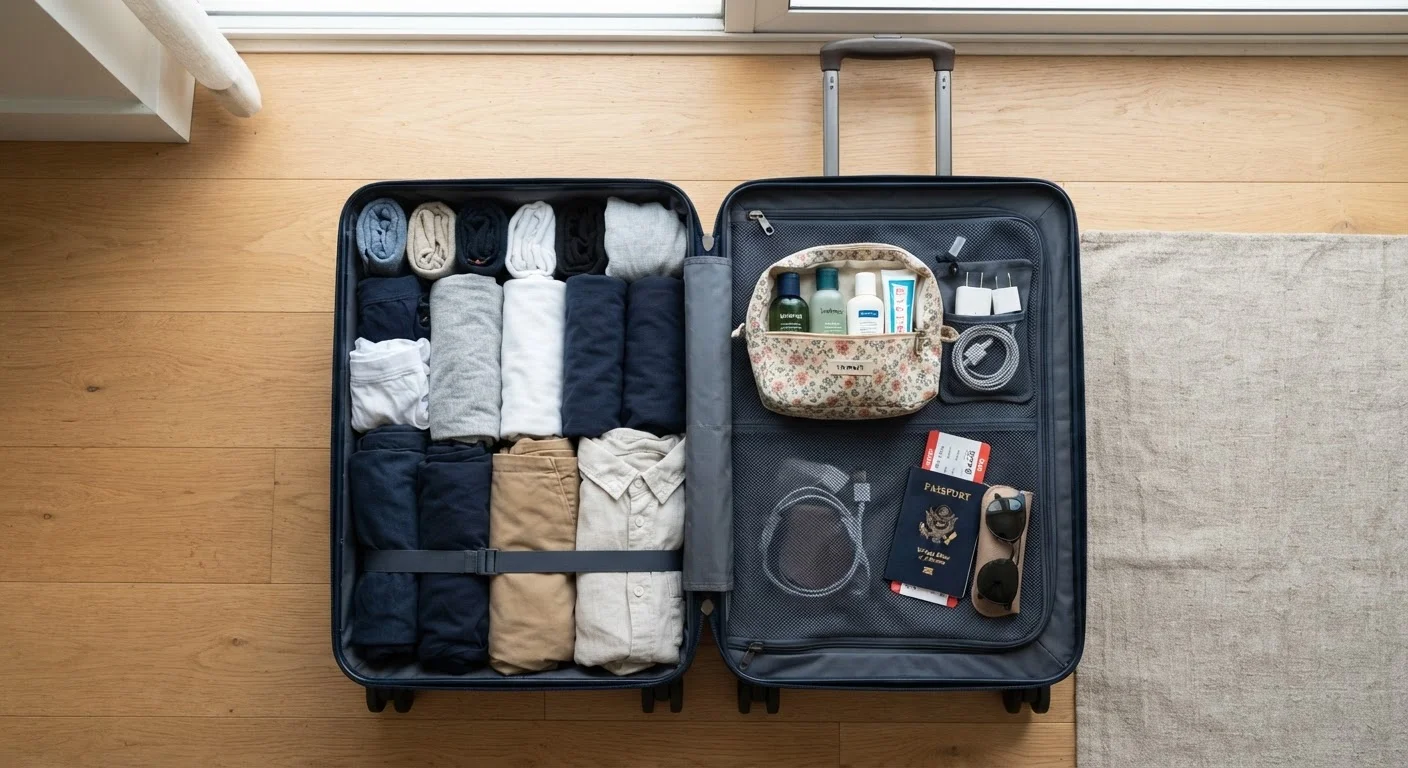
Roll each garment tightly from the bottom up. Place heavier items (jeans, shoes in a bag) along the wheeled end of a suitcase or at the base of a backpack. Lighter rolled clothes fill the middle, and flat items like a light jacket lay on top. Stuff socks into shoes to recover that hollow space.
If you're using packing cubes, dedicate one cube per category: tops, bottoms, undergarments. This keeps the bag organized throughout the trip, not just when you leave home.
Wear your bulkiest items on travel day
Your heaviest shoes, thickest jacket or sweater, and any item you're unsure will fit all go on your body for the flight. This is the single highest-leverage move for freeing carry-on space. A chunky pair of sneakers worn instead of packed can save several inches of interior volume.
Do a final weight and size check
Stand the packed bag upright and compare it visually to your airline's published dimensions. Many airports have sizing frames at check-in - if you're uncertain, arrive a few minutes early to test yours before reaching the gate. Use a handheld luggage scale (or a bathroom scale with the tare method) to verify weight if your carrier enforces carry-on weight limits, which some budget and international airlines do.
Plan for Laundry Mid-Trip
If your trip exceeds seven days or you're traveling somewhere with easy laundry access, packing for four to five days and doing one mid-trip wash is more practical than stretching your wardrobe thinner. Many urban hotels offer in-room laundry bags or point you to a nearby laundromat. This strategy pairs especially well with quick-dry fabrics.
Common Mistakes and How to Avoid Them
Even experienced carry-on travelers make predictable errors. The most common is packing for every possible scenario rather than the most likely ones. If there's a 10% chance you'll need a formal outfit, leave it - you can usually find a solution on the ground.
A second frequent mistake is underestimating toiletry volume. Full-size bottles eat through your quart bag allowance immediately. Decant products into travel-size containers before you pack, or plan to buy disposables at your destination.
Finally, don't ignore airline-specific size rules. Budget carriers - especially in Europe and on domestic routes - sometimes enforce stricter carry-on dimensions than the major legacy airlines. Always check the specific carrier's policy before you fly, not just the TSA guidelines.
Budget Airline Carry-On Rules Differ Significantly
Some budget carriers enforce weight limits on carry-on bags (commonly 15-22 lbs) and charge fees for bags that don't fit under the seat. Always verify the specific policy on your carrier's website before travel day - not just the TSA's general guidelines. Rules can change, and what applied on your last flight may not apply on the next.
For the logistical details that can derail even a well-packed trip - local SIM cards, currency exchange, time zones - see The Overlooked Details. And to make sure your finances are squared away before departure, review the financial prep checklist for budget travelers.