

Key Takeaways
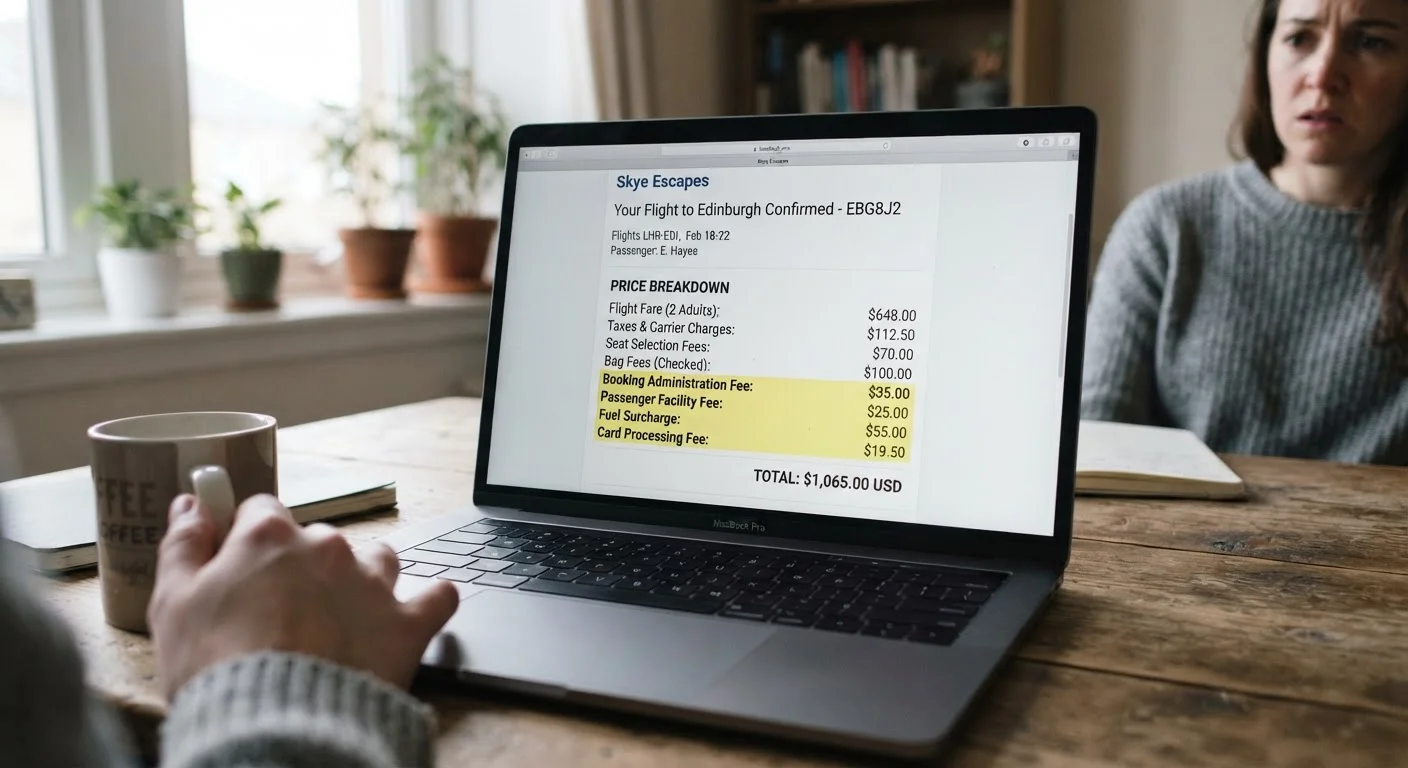
- Resort fees, seat selection charges, and bag fees can add 20-40% to your advertised travel price.
- Reading the full price breakdown before confirming any booking is the single most effective defense.
- Foreign transaction fees on credit and debit cards quietly inflate nearly every international purchase.
- Rental car extras - insurance waivers, GPS units, prepaid fuel - are among the most aggressively upsold add-ons.
- Checking your existing card benefits before a trip can eliminate several fees you'd otherwise pay out of pocket.
Why Hidden Fees Keep Catching Travelers Off Guard
Travel pricing is structured around a technique sometimes called "drip pricing" - the practice of advertising a low base rate and layering on mandatory or semi-mandatory charges only as you move through the booking process. It's legal, widespread, and highly effective at getting travelers to commit before the full cost is visible.
The result: a $99 flight becomes $160 after seat selection and a checked bag. A $180 hotel room costs $240 once a nightly resort fee is tacked on at checkout. A $45-per-day rental car doubles with collision waiver and GPS charges added at the counter.
These aren't rare edge cases - they're standard industry practice across airlines, hotels, and car rental companies. The good news is that most hidden fees follow predictable patterns. Once you know where to look, you can account for them before you book rather than absorb them at the end. See our guide to building a realistic travel budget for a fuller picture of costs that often go unplanned.
Accepting the advertised hotel rate without checking for resort fees.
Why it happens: Resort fees are rarely included in the room rate shown on search results, so the displayed price looks accurate until the final checkout screen.
Booking an airline fare without accounting for seat selection and baggage fees.
Why it happens: Basic economy fares are priced to look competitive but exclude seat assignments and often restrict carry-on bags, making the true cost significantly higher.
Declining rental car insurance at the counter without knowing what your existing coverage includes.
Why it happens: The counter agent presents the waiver as a simple yes/no decision under time pressure, and most travelers don't know their credit card or personal auto policy details well enough to make an informed call.
Using a debit or standard credit card abroad without checking for foreign transaction fees.
Why it happens: Foreign transaction fees aren't prominently displayed at point of sale - they appear later on statements, making the cost invisible in the moment.
Prepaying for a full tank of gas at rental car pickup without evaluating the actual cost.
Why it happens: The prepaid fuel option sounds convenient and is presented as a deal, but the per-gallon rate charged is often higher than local pump prices.
Skipping the full itemized total before confirming an online booking.
Why it happens: Booking platforms present a compelling price early in the flow, and many travelers mentally commit to that number before reaching the checkout summary where fees appear.
Fee Categories Most Travelers Overlook
Beyond the individual booking mistakes, certain categories of fees consistently fly under the radar even for experienced travelers.
~$3.8B
Annual U.S. hotel resort fee revenue (estimated)
Industry analysts have estimated that resort and amenity fees generate several billion dollars annually for U.S. hotels, with the practice expanding well beyond traditional resort properties.
1%-3%
Typical foreign transaction fee range
Most standard U.S. bank cards charge between 1% and 3% on purchases made in foreign currencies or processed through non-U.S. banks, according to general card disclosure terms.
$35-$75+
Typical airline checked bag fee (round trip, one bag)
Domestic checked bag fees on major U.S. carriers commonly range from $35 to $75 or more for a round trip, based on publicly posted airline fee schedules.
Foreign transaction fees are a quiet drain on international trips. Many standard debit and credit cards charge 1-3% on every purchase made in a foreign currency or processed through a foreign bank. On a $3,000 international trip, that's up to $90 in fees that never appear as a line item - they simply show up in your statement as slightly inflated totals. Checking whether your card waives these fees before departure is worth the two-minute effort. Our overview of underused card perks covers this and other benefits that cardholders frequently leave on the table.
Airport transfer and parking fees also go unbudgeted surprisingly often. Off-airport parking for a week-long trip, or a round-trip rideshare from a distant terminal, can approach or exceed a modest hotel night. If you're driving to an airport, compare on-site, off-site, and neighborhood parking options in advance - costs vary widely even within the same city.
Destination-specific tourism taxes and levies are another category that surprises travelers, particularly in Europe and parts of the Caribbean, where nightly city or tourist taxes are charged separately from the hotel rate. These are usually disclosed somewhere in the booking flow, but they appear late and in small print. Checking the "taxes and fees" itemization on any hotel booking - not just the per-night rate - is a habit worth building. The same principle applies in other spending contexts; understanding how extra charges build up before checkout follows a similar pattern across industries.
For broader strategies on keeping total trip costs in check, practical habits cost-conscious travelers use offers a solid starting point.
"Free" Amenities Aren't Always Free
Hotels charging resort fees often justify them by listing amenities like pool access, fitness center use, or Wi-Fi - but these are frequently available to all guests regardless of whether a resort fee was explicitly charged. Don't assume a fee is unavoidable just because it's listed. Some properties will waive or reduce resort fees for guests who ask at check-in, particularly if the amenities are unused. Always verify what you're being charged for and whether the fee is truly mandatory.