

Key Takeaways
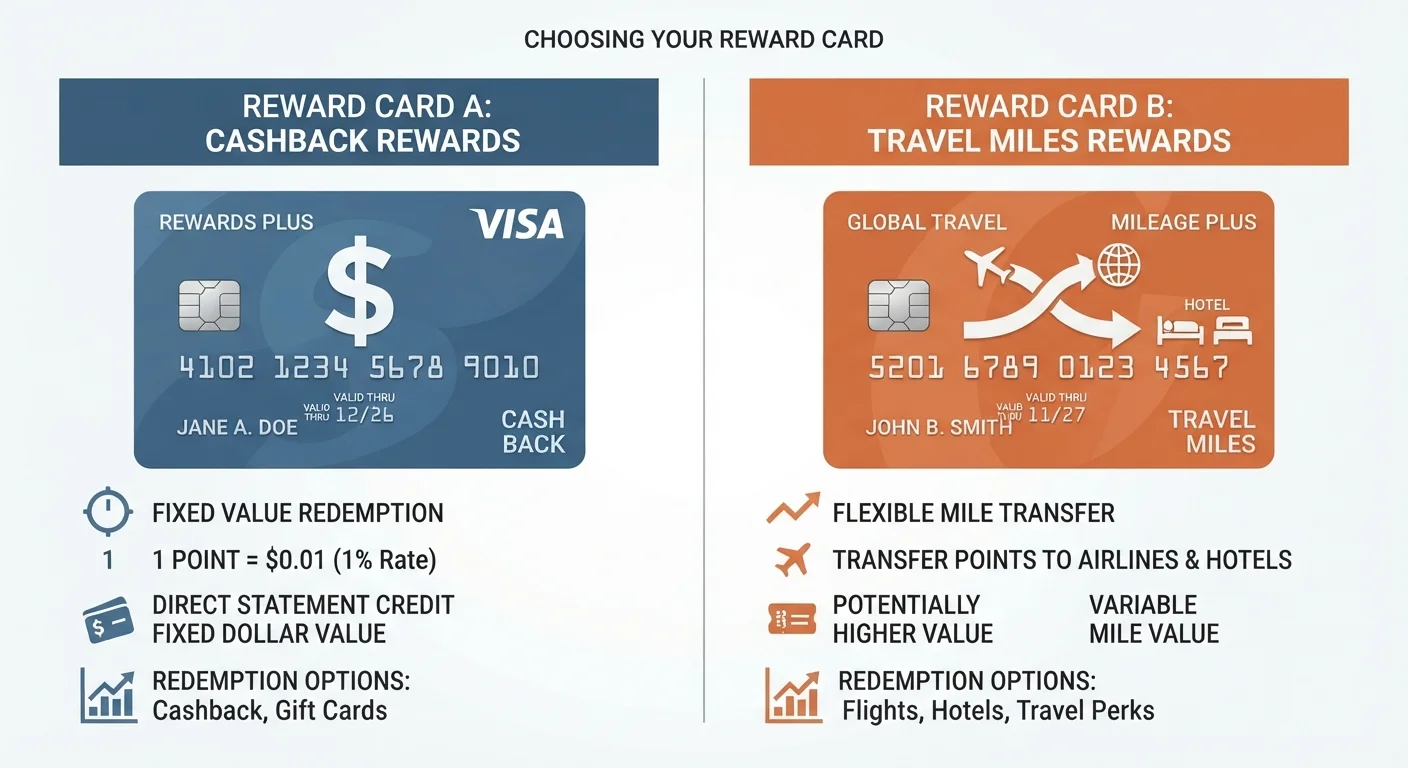
- Fixed-value points redeem at a set rate, typically 1 cent per point, regardless of how you use them.
- Transferable points can move to airline or hotel loyalty programs, where redemption value can vary dramatically.
- The best point type for you depends on how much effort you're willing to invest in optimizing redemptions.
- Devaluations affect both point types, but transferable programs can change partner ratios unexpectedly.
- Understanding the difference is the first step to getting real value from any rewards program.
Option A
Fixed-Value Points
The predictable, no-surprises option.
Best for: Travelers who want simplicity and consistent redemption value without managing transfer partners.
Option B
Transferable Points
The flexible, higher-ceiling alternative.
Best for: Travelers willing to invest time learning transfer partners in exchange for potentially much higher redemption value.
If you want straightforward, hassle-free redemptions
Fixed-Value Points
Fixed-value points give you a predictable return every time, with no partner programs to track or transfer windows to manage.
If you're aiming for business or first-class flights at a fraction of retail price
Transferable Points
Premium cabin awards through airline partners can yield redemption values well above the fixed rate, often 2-4 cents per point or more.
If you travel infrequently and don't want to manage multiple loyalty programs
Fixed-Value Points
Simpler programs mean less risk of points expiring unused or devaluing before you have a chance to transfer them.
If you want maximum flexibility in how and where you book travel
Transferable Points
Transferable currencies work across multiple airlines and hotel chains, giving you far more options than a single fixed-rate program.
What Fixed-Value Points Actually Mean
Fixed-value points are exactly what they sound like: each point is worth a predetermined amount - most commonly 1 cent - when you redeem it. You earn them, you spend them, and the math is always the same. There are no partner programs to navigate and no transfer ratios to decode.
The most familiar use case is redeeming points as a statement credit against travel purchases, or booking travel through a program's portal where each point offsets a fixed dollar amount. Some programs offer a modest bonus - say, 1.25 cents per point - when redeeming specifically through their own travel portal.
The upside is clarity. You always know what your balance is worth in real dollars. The downside is a ceiling: no matter how strategically you redeem, you can't squeeze more than the fixed rate out of them. For a deeper look at how points systems are structured in general, see our plain-language breakdown of travel rewards programs.
How Transferable Points Work - and Why the Ceiling Is Higher
Transferable points - sometimes called flexible currency - are earned through certain credit card programs and can be moved into partner airline or hotel loyalty accounts. Once transferred, they're redeemed at that partner program's award rates, which aren't tied to a fixed cent value.
This is where the math can get interesting. A business-class flight that retails for $3,000 might be available for 60,000 miles through a partner program. If you transferred 60,000 flexible points to get there, your effective redemption value is 5 cents per point - five times a typical fixed rate. Of course, that same sweet spot isn't always available, and poor redemptions through partner programs can actually perform worse than a fixed-value option.
| Criterion | Fixed-Value Points | Transferable Points |
|---|---|---|
| Redemption value | Set rate (typically 1-1.25¢ per point) | Variable (0.5¢-5¢+ depending on redemption) |
| Complexity | Low - straightforward redemption | Higher - requires learning partner programs |
| Flexibility | Limited to issuer's portal or statement credits | Broad - multiple airline and hotel partners |
| Upside potential | Capped at fixed rate | Significant upside with strategic use |
| Devaluation risk | Low (gradual via inflation) | Higher - partner programs can change rates |
| Best redemption scenario | Any travel purchase at consistent value | Premium cabin awards through partner airlines |
Transfer ratios matter, too. Most programs transfer at 1:1 (one flexible point becomes one airline mile), but some partners receive points at different ratios. Timing matters as well - transfers are typically one-way and irreversible. For a step-by-step look at how transfers actually work, our practical walkthrough on transferring points to airline partners covers the mechanics in detail.
The Hidden Risks of Each Approach
Fixed-value points feel safe, but they carry their own risk: inflation quietly erodes their purchasing power over time. A point worth 1 cent today buys slightly less travel every year as prices rise. They also tend to earn at lower rates in bonus categories compared to flexible programs.
Transferable points carry more moving parts. Award availability isn't guaranteed. Partner programs can devalue their own award charts independently of the credit card program - meaning your points could lose value overnight through a decision you have no control over. Understanding why hoarding points carries real risk is an important part of managing any flexible currency balance.
Transfers Are One-Way and Irreversible
Once you move flexible points into an airline or hotel loyalty account, you generally cannot transfer them back. This makes it critical to confirm award availability before initiating a transfer. Some programs allow point pooling between household members, but rules vary significantly by program. Always verify current terms directly with the loyalty program before transferring.
It's also worth recognizing that redemption value isn't always obvious. The stated value of a point and what it actually buys you can diverge significantly depending on when and how you redeem. Why your points may be worth less than you think breaks down the variables that determine real-world point value.
Choosing the Right Structure for Your Travel Style
Neither point type is universally better. The right fit depends on two things: how often you travel and how much time you're willing to spend on redemption strategy.
If you take one or two trips a year, value simplicity, and don't want to track multiple loyalty programs, fixed-value points will serve you well. You'll redeem at a reliable rate without worrying about transfer windows or award availability.
If you fly more frequently, have a specific airline you prefer, or are targeting a premium cabin experience, transferable points offer a realistic path to outsized value - provided you're willing to learn the landscape. Flexibility across multiple partners also provides a hedge: if one airline's program devalues or loses availability, you still have options.
Before committing to any program, it's worth reading a balanced look at the real costs and benefits of loyalty programs - rewards structures are designed to encourage spending, and understanding that dynamic protects you from over-optimizing in ways that cost more than they save.
This article is for general informational purposes only and does not constitute financial or investment advice. Rewards program terms, transfer ratios, and point values can change at any time. Verify current terms directly with program providers before making any financial decisions.