

Key Takeaways
- Private sales typically yield more money than trade-ins, but require considerably more time and effort.
- Trade-ins offer a sales tax offset in most states that partially closes the price gap with private sales.
- Your vehicle's condition, age, and local demand will affect which method makes the most financial sense.
- Dealers price trade-ins for resale profit, meaning their offer is rarely your vehicle's full market value.
- Timing and paperwork responsibilities differ significantly between the two methods.
Our Verdict
Private sales generally return more money, but the advantage narrows when you factor in the tax offset most states provide on trade-ins. For sellers who value speed and convenience, trade-ins are a reasonable choice. For those with time to manage the process and a vehicle in strong condition, private sales tend to produce a better financial outcome.
| Best for | Recommended |
|---|---|
| Sellers who want a fast, low-hassle transaction | Trade-In |
| Sellers prioritizing maximum return on their vehicle | Private Sale |
| Sellers in states with significant sales tax on new purchases | Trade-In |
| Sellers with vehicles in excellent condition and strong market demand | Private Sale |
How Each Method Works
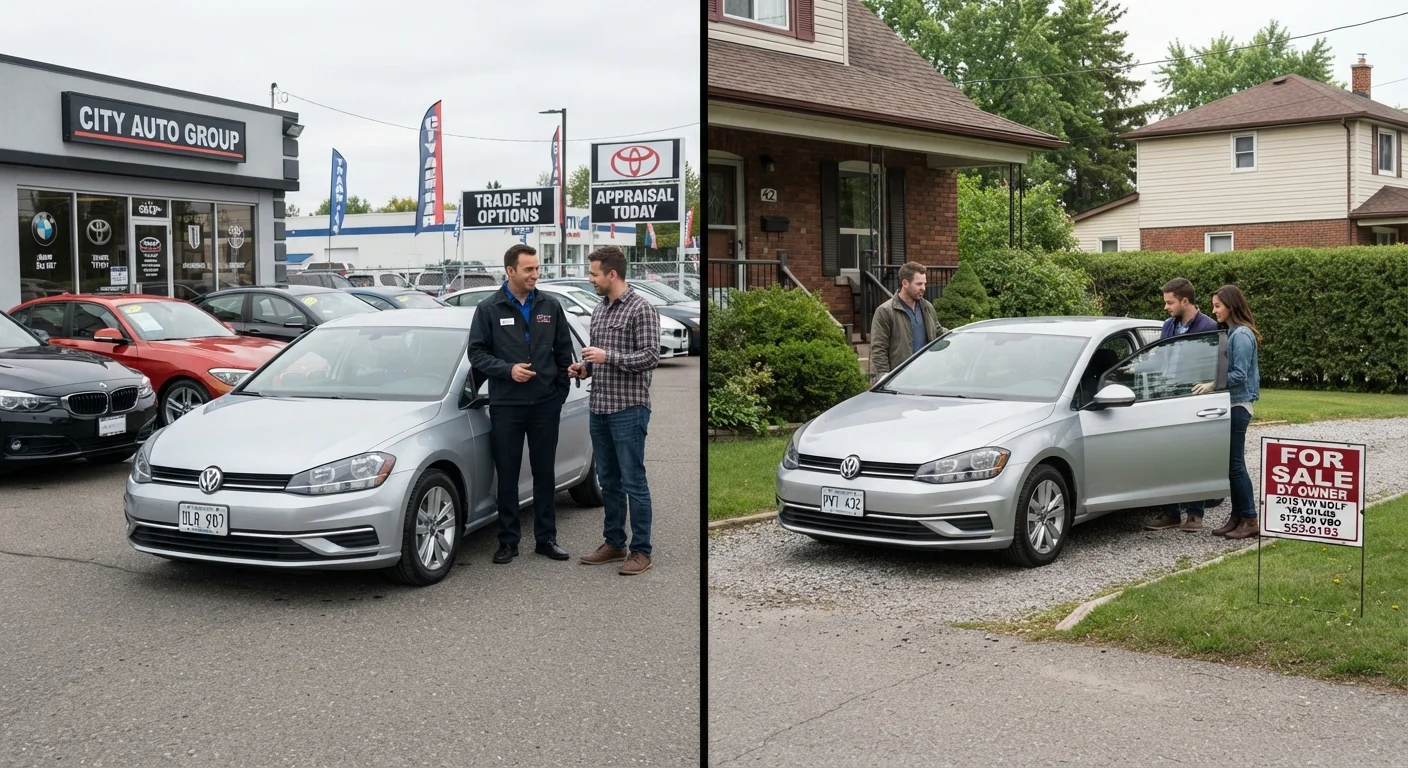
When you trade in a vehicle, you bring it to a dealership and apply its value toward your next purchase. The dealer assesses the car, makes an offer, and deducts that amount from your new vehicle's price. It's a single transaction completed in hours.
A private sale involves listing your vehicle yourself - on platforms, in classified ads, or by word of mouth - negotiating directly with individual buyers, and handling the paperwork transfer independently. It takes more time but puts you in direct control of pricing.
Understanding how vehicles lose value over time is useful before entering either process, since depreciation shapes what buyers and dealers are willing to pay.
The Price Gap: What You Actually Pocket
In most cases, private sales net sellers more money. Dealers build a resale margin into their trade-in offers - they need to profit when they resell the vehicle. That gap can vary widely depending on your car's age, mileage, condition, and local demand, but it is a consistent structural feature of the trade-in process.
However, the gap is often smaller than it first appears. Most U.S. states allow you to deduct your trade-in value from the taxable purchase price of a new vehicle. This sales tax credit can represent a meaningful real-dollar savings depending on the state tax rate and the price of your next vehicle.
| Trade-In | Private Sale | |
|---|---|---|
| Typical sale price | Below market value | Closer to market value |
| Sales tax offset on next purchase | Yes, in most states | No offset available |
| Time to complete | Same day possible | Days to several weeks |
| Paperwork responsibility | Handled by dealer | Seller manages title transfer |
| Risk of deal falling through | Very low | Moderate |
| Best vehicle condition for this method | Any condition | Good to excellent condition |
For example, if you trade in a vehicle worth $10,000 and your state charges 7% sales tax on vehicle purchases, you effectively save $700 in taxes compared to selling privately and paying full tax on the new car. That's money the private-sale route doesn't offset.
Time, Effort, and Hidden Costs
Trade-ins are fast. You can walk into a dealership, receive an offer, and complete the transaction the same day. You avoid advertising costs, repeated test drives with strangers, and the risk of a buyer backing out after you've invested time.
Private sales take longer. You'll typically spend time creating listings, fielding inquiries, scheduling viewings, and negotiating. Depending on your vehicle and market, it can take days to several weeks to close a sale. You may also incur small costs for listing fees, vehicle history reports provided to buyers, or detailing services to improve your vehicle's appeal.
Get Multiple Offers Before Deciding
Before accepting a trade-in offer from a dealership, get written quotes from at least two or three sources - including other dealers and any instant-offer services available in your area. This gives you a realistic baseline and strengthens your negotiating position. Dealers expect some back-and-forth, and a competing offer is one of the most effective tools available to you.
There's also the paperwork dimension. A dealer handles the title transfer on your behalf. In a private sale, you are responsible for completing the title correctly, following your state's DMV procedures, and - critically - canceling your insurance only after the transfer is confirmed. Errors in private title transfers can create legal exposure.
Sellers considering their broader financial picture may also want to review the financial comparison between buying new and used, since your sale method interacts with your next purchase decision.
When a Trade-In Makes More Sense
A trade-in tends to make practical sense when your vehicle has high mileage, cosmetic damage, or mechanical issues that would make private buyers hesitant or lower their offers significantly. Dealers who wholesale such vehicles are less deterred by these factors than private buyers tend to be.
It also makes sense when you're buying your next car from a dealership anyway. The tax credit, combined with the convenience, can close much of the price gap. And if time is genuinely short - a relocation, job change, or urgent purchase - eliminating the private-sale timeline has real value.
If you're weighing leasing versus buying your next vehicle, a trade-in works within both scenarios at most dealerships.
When a Private Sale Makes More Sense
Private sales typically shine when your vehicle is in strong condition, relatively recent, and in demand in your local market. Clean, well-maintained vehicles attract serious private buyers willing to pay near market value. The effort-to-reward ratio improves considerably in these cases.
If you're not purchasing a new vehicle immediately, you also don't benefit from a trade-in tax credit - meaning the private sale's higher gross proceeds aren't offset by anything on the other side of the ledger.
Sellers who are comfortable with negotiation, paperwork, and a flexible timeline are best positioned to capture the full upside of a private sale. Those who find negotiation stressful or the process opaque may find the trade-in's certainty worth the price difference.
Before committing to either path, research your vehicle's current market value through widely available online valuation tools. Knowing the realistic range - not just the highest private-sale estimate - helps you evaluate any dealer offer with clear-eyed perspective.