

Key Takeaways
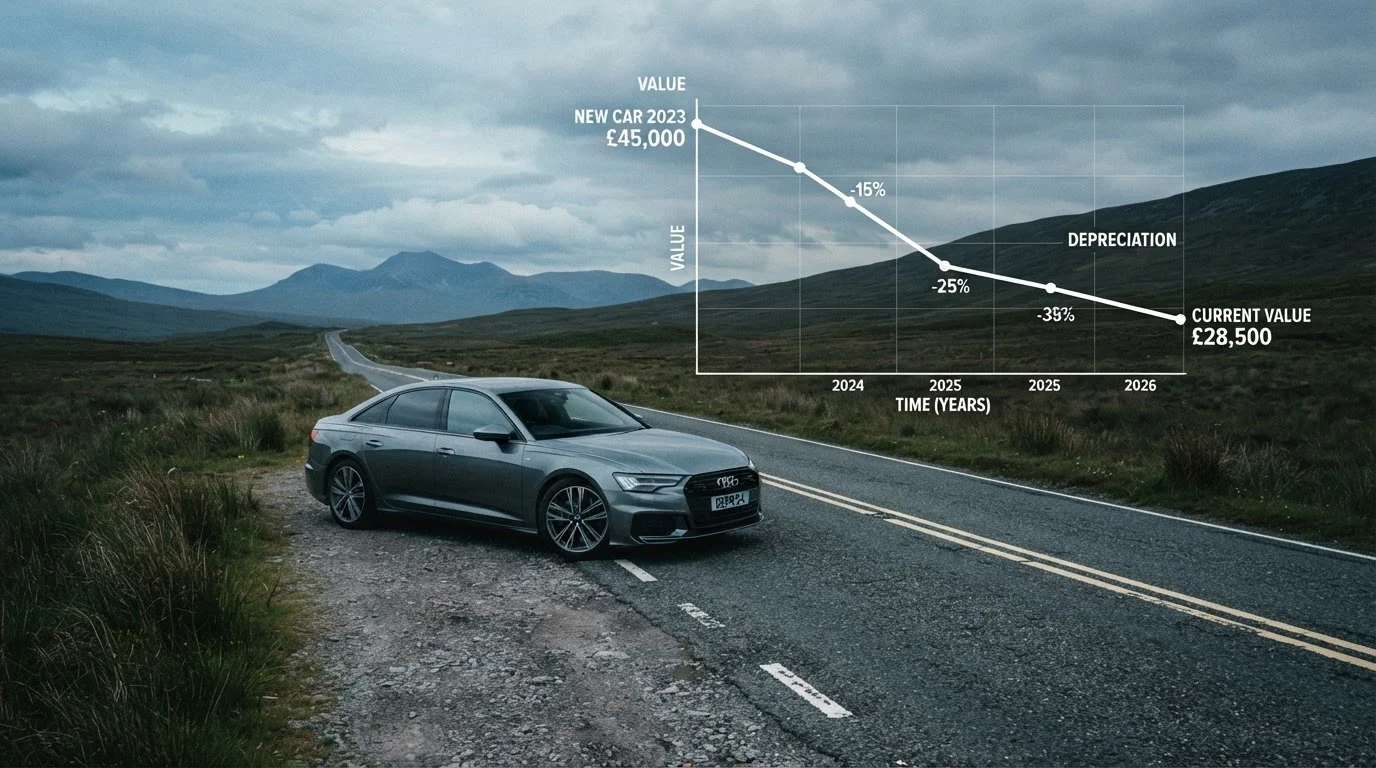
- New cars typically lose 15-25% of their value in the first year alone.
- Depreciation is usually the single largest cost of owning a vehicle over time.
- Factors like mileage, condition, brand reputation, and vehicle type all influence how fast a car loses value.
- Buying a used vehicle that has already absorbed heavy depreciation can significantly reduce your ownership costs.
- Keeping a car well-maintained can slow value loss and improve resale outcomes.
Car Depreciation
Car depreciation is the gradual loss in a vehicle's market value over time. It begins the moment you drive a new car off the dealer lot and continues - at a slowing pace - throughout the life of the vehicle. Depreciation is essentially the gap between what you paid and what you could sell the car for today.
Depreciation is typically calculated as the difference between a vehicle's original purchase price and its current fair market value, often expressed as a percentage lost per year or over a set ownership period.
Why Cars Lose Value From the Moment You Drive Away
The moment a new vehicle leaves the dealership, it transitions from "new" to "used" in the eyes of the market. That shift alone triggers an immediate drop in value - often estimated at several percentage points before you've put a single mile on the odometer. This isn't a flaw in the system; it simply reflects supply and demand. A used car, no matter how new, cannot command the same price as a factory-fresh one with a manufacturer's warranty still fully intact.
From there, depreciation continues on a curve. The losses are steepest in the early years - particularly years one through three - and then gradually slow as the vehicle ages. By the time a car reaches seven to ten years old, annual depreciation becomes relatively modest simply because there's less value left to lose.
Understanding this curve is important because it shapes every major financial decision around vehicle ownership - from when to buy and sell to whether a lease makes sense. For a fuller picture of where depreciation fits alongside other ownership expenses, see the real cost of owning a car.
~20%
Average value lost in year one
Industry estimates commonly place first-year depreciation for new vehicles in the 15-25% range, depending on make, model, and market conditions.
~50%
Value lost by year five
Many new vehicles retain only around 40-50% of their original purchase price after five years of typical ownership, according to automotive valuation research.
#1
Depreciation as a cost of ownership
For many drivers, depreciation represents the largest single expense of vehicle ownership over time, exceeding fuel, insurance, and maintenance combined.
What Accelerates (or Slows) Depreciation
Not all cars depreciate at the same rate. Several factors push a vehicle's value down faster - or help it hold on longer.
- Mileage: Higher annual mileage signals more wear. A vehicle driven 20,000 miles per year will typically depreciate faster than one averaging 10,000 miles.
- Condition: Scratches, dents, stained interiors, and deferred maintenance all reduce what a buyer is willing to pay. Consistent upkeep - covered in depth in our maintenance primer for new drivers - directly protects resale value.
- Brand and model reputation: Vehicles known for reliability and low long-term repair costs tend to hold value better. Market perception matters as much as the actual product.
- Vehicle type: Pickup trucks and popular SUVs have historically depreciated more slowly than many sedans, largely because sustained consumer demand keeps used prices firm.
- Color and features: Unusual colors and limited-appeal options can make a vehicle harder to sell and may reduce resale value compared to neutral, broadly appealing configurations.
- Fuel type shifts: As market preferences evolve - such as rising interest in fuel-efficient or electric vehicles - certain vehicle types can see accelerated depreciation if demand shifts away from them.
Protect Value With Consistent Maintenance
Keeping a detailed service record - oil changes, tire rotations, brake work - can meaningfully improve resale outcomes. Buyers and dealers view documented maintenance as evidence the vehicle was cared for, which supports a stronger asking price. Even minor cosmetic upkeep, like addressing paint chips or interior stains promptly, can make a measurable difference when it's time to sell.
How Depreciation Affects Real Ownership Decisions
Depreciation isn't an abstract accounting concept - it has direct financial consequences for everyday drivers.
Buying new vs. used: When you buy a used vehicle that is two to four years old, you're letting the original owner absorb the steepest portion of the depreciation curve. You pay a lower purchase price for a car that will now lose value more gradually. The new vs. used financial comparison walks through how these numbers play out in practice.
Leasing: Lease payments are structured around projected depreciation - you pay for the value the car loses during your lease term, not the whole vehicle. Cars that hold value well can translate to lower monthly lease costs. Our guide to lease terminology explains how residual value connects to what you pay each month.
Timing a sale or trade-in: Selling a vehicle before it hits the steepest part of a depreciation drop - or after the curve has flattened - can meaningfully affect how much equity you recover. Knowing where your vehicle sits on that curve helps you make a more informed timing decision.
For a structured way to estimate these costs before purchase, the total cost of ownership walkthrough provides a practical framework.
Putting Depreciation in Perspective
For most drivers, depreciation represents the single largest component of vehicle ownership cost - outpacing fuel, insurance, and maintenance over a typical ownership period. That makes it worth factoring in before you sign any purchase agreement, not just when you go to sell.
The goal isn't to eliminate depreciation - that's not possible - but to make decisions that account for it honestly. Choosing a vehicle that holds value reasonably well, keeping it in good condition, and timing your ownership period thoughtfully are all moves that reduce how much depreciation costs you in practice.
Explore essential car maintenance tips to understand how consistent upkeep protects both your vehicle's reliability and its long-term value.
This article is for general informational and educational purposes only. Vehicle values vary based on market conditions, geography, and individual circumstances. Consult a qualified financial professional before making significant purchase or financial decisions.