

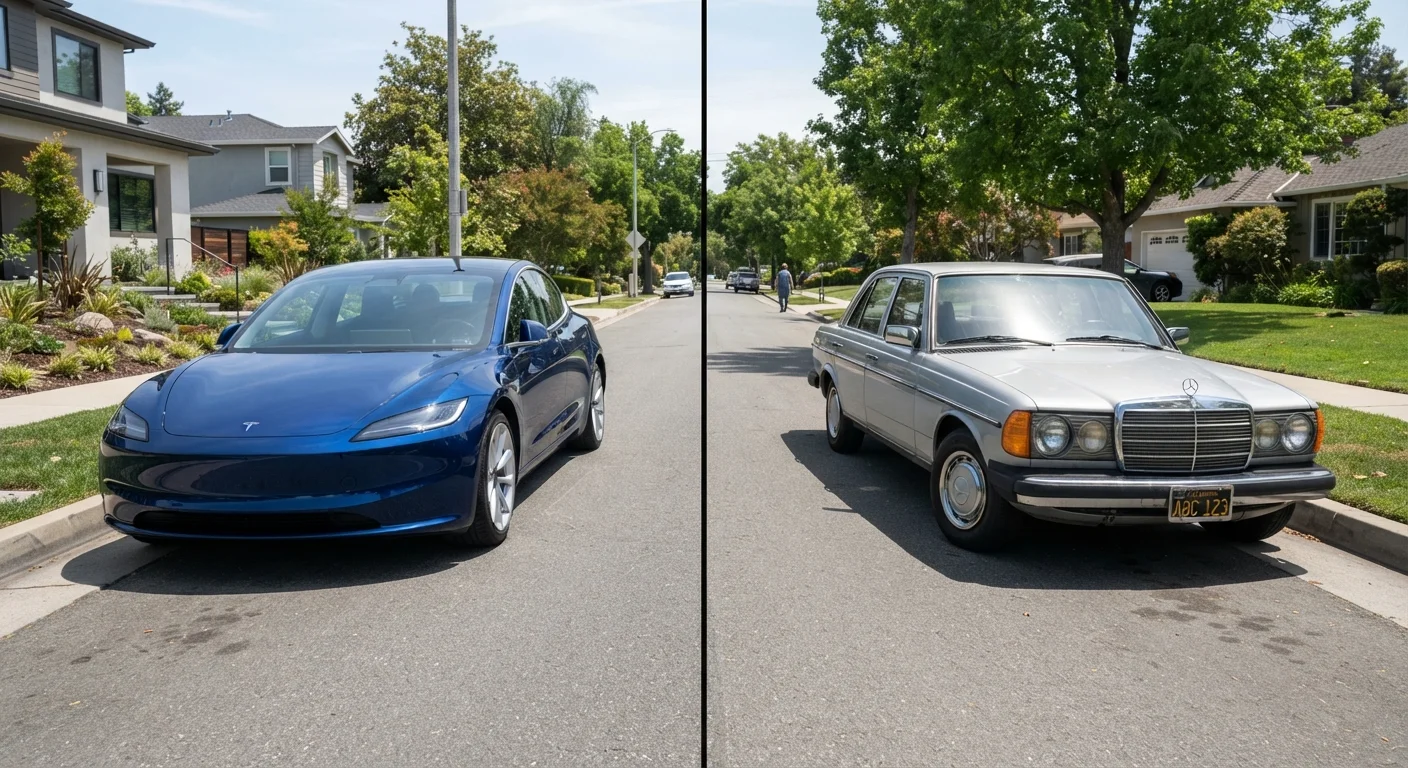
Key Takeaways
- New cars typically lose 15-25% of their value within the first year of ownership.
- Used cars cost less upfront but may carry higher interest rates and repair uncertainty.
- A certified pre-owned vehicle can bridge the gap between new-car peace of mind and used-car pricing.
- Insurance premiums are generally higher on newer vehicles due to their replacement value.
- The best financial choice depends on your intended ownership length, financing terms, and risk tolerance.
Option A
Buying New
The predictable, warranty-backed choice.
Best for: Drivers who prioritize peace of mind, the latest safety features, and a clean ownership history with no unknowns.
Option B
Buying Used
The lower entry cost, value-focused alternative.
Best for: Budget-conscious buyers willing to do some homework in exchange for a significantly lower purchase price and slower depreciation.
If you plan to keep the vehicle for 8-10 years
Buying New
The higher upfront cost spreads over many years, and you benefit from the full manufacturer warranty from day one. Long-term reliability risk is minimized.
If you want to minimize monthly payments and total outlay
Buying Used
A used vehicle purchased at two to four years old lets someone else absorb the steepest depreciation, reducing both purchase price and loan amount.
If you want near-new reliability without new-car pricing
Buying Used
A certified pre-owned (CPO) vehicle offers manufacturer-backed inspections and extended warranties at a meaningful discount versus new sticker prices.
If you drive high annual mileage and need predictable costs
Buying New
Factory warranties and free scheduled maintenance offers (where available) reduce the financial unpredictability of heavy use in the early years.
Purchase Price and Financing: Where the Gap Is Widest
The most immediate difference between new and used is the sticker price. A new mid-size sedan or SUV commonly carries a manufacturer's suggested retail price (MSRP) of $28,000-$45,000 or more, while a comparable three-year-old model of the same vehicle can often be found for 20-35% less - sometimes more, depending on demand and mileage.
That price gap shapes your financing. New cars typically qualify for lower interest rates, including promotional financing offered by manufacturers. Used car loans, by contrast, tend to carry higher annual percentage rates (APRs), especially at banks and credit unions. A lower loan amount at a higher rate may still produce a lower monthly payment than a larger loan at a promotional rate - always compare total interest paid over the loan term, not just the monthly figure. See our guide to dealership vs. bank financing for a closer look at how loan sources affect your total cost.
| Criterion | Buying New | Buying Used |
|---|---|---|
| Typical purchase price | Higher (full MSRP) | Lower (20-40% less) |
| Financing rate | Often lower; promotional rates available | Generally higher APR |
| Depreciation exposure | High in first 1-3 years | Steepest drop already absorbed |
| Warranty coverage | Full factory warranty | Limited or expired; CPO extends it |
| Insurance premiums | Higher (greater replacement value) | Lower for comparable models |
| Repair predictability | High (warranty covers most repairs) | Lower; depends on vehicle history |
| Ownership history | None - starts fresh | Unknown unless disclosed or verified |
Depreciation: The Hidden Cost That Favors Used Buyers
Depreciation - the loss of a vehicle's market value over time - is the single largest cost most car owners never see itemized on a bill. New vehicles typically shed 15-25% of their value in the first year and can lose close to half their value within three years, depending on the make and model.
When you buy used, you step in after that sharpest decline has already happened. A vehicle that is two to four years old has already absorbed the steepest depreciation curve, meaning your own loss in value over the next several years will be more gradual. Our article on how car depreciation works explains what accelerates or slows this process and how it affects resale.
~20%
Average new-car value lost in year one
Industry data consistently shows new vehicles lose roughly 15-25% of their value within the first 12 months of ownership.
~50%
Value retained after five years (typical)
Many mainstream vehicles retain roughly half their original value after five years, though this varies significantly by make, model, and market conditions.
The practical implication: if you sell or trade in after three to five years, a used-car buyer is likely to recoup a higher percentage of their original purchase price than someone who bought new.
Running Costs: Insurance, Maintenance, and Repairs
Operating costs are where new-car buyers often reclaim some of the financial ground lost on purchase price. Manufacturer warranties - commonly three years or 36,000 miles for basic coverage, and five years or 60,000 miles for powertrain - cover many of the repair costs that used-car owners must pay out of pocket. Some automakers also include complimentary scheduled maintenance for the first two to three years.
Insurance premiums are another variable. Because collision and comprehensive coverage is based largely on the vehicle's replacement value, newer vehicles generally cost more to insure. A two- to three-year-old used car typically carries a lower insurance premium for the same driver profile, though this depends on the specific model and your insurer.
Maintenance expenses on a used vehicle are less predictable. Prior wear on tires, brakes, and consumable components means you may face those costs sooner. Before buying used, factor in the likely near-term maintenance needs - our used car verification checklist walks through what to inspect and confirm before committing. For a complete picture of ongoing ownership costs on either choice, see the real cost of owning a car beyond the monthly payment.
Making the Decision: A Total Cost Mindset
Neither choice is universally superior - the right answer depends on how long you plan to own the vehicle, how much financial uncertainty you're comfortable absorbing, and how you'll finance the purchase. A useful exercise is to estimate the total cost of ownership over your intended holding period: purchase price minus expected resale value, plus interest paid, insurance premiums, fuel, and maintenance. Our total cost of ownership walkthrough provides a structured method for doing exactly that.
If you're weighing alternatives beyond buying outright, leasing vs. buying is a separate comparison worth reviewing before finalizing your approach.
Certified Pre-Owned: A Middle Path
Certified pre-owned (CPO) programs, offered by most major manufacturers, put used vehicles through a multi-point inspection and extend warranty coverage beyond what remains on the original policy. CPO vehicles are typically two to five years old with limited mileage. They cost more than standard used cars but less than new, and they come with more documented assurance than a private sale or a non-certified dealer unit.
This article is for general informational purposes only and does not constitute financial or legal advice. Consult a qualified financial professional for guidance specific to your situation.