

Key Takeaways
- Underinflated tires can reduce fuel economy by up to 3% per underinflated tire.
- Proper tire pressure extends tire life and reduces the risk of dangerous blowouts.
- Your vehicle's recommended PSI is on the driver's door jamb sticker, not the tire sidewall.
- Tire pressure drops roughly 1 PSI for every 10°F decrease in outside temperature.
- Checking pressure monthly and before long trips is sufficient for most drivers.
Tire Pressure (PSI)
Tire pressure refers to the amount of air inside your tire, measured in pounds per square inch (PSI). Each vehicle has a manufacturer-recommended PSI range - too low and the tire flexes excessively, too high and it loses road contact. Maintaining the correct pressure keeps your car safe, efficient, and easy to handle.
PSI stands for pounds per square inch. A tire's maximum pressure is molded into the sidewall, but your vehicle's recommended operating pressure - usually lower - is found on the driver's door jamb sticker or in the owner's manual.
Why Tire Pressure Is a Safety Issue, Not Just a Maintenance Checkbox
Most drivers top up their tires when a warning light comes on - but by that point, the damage to safety and fuel efficiency has already begun. Tire pressure affects how your car steers, brakes, and holds the road in emergency situations. A tire that is significantly underinflated generates excess heat through repeated flexing of the sidewall, which accelerates wear and increases the chance of a sudden blowout at highway speeds.
According to the National Highway Traffic Safety Administration (NHTSA), tire-related crashes are responsible for hundreds of fatalities and thousands of injuries on US roads each year. Underinflation is consistently identified as a primary contributing factor. For a deeper look at how tire health connects to blowout risk, see our guide on tire pressure, tread depth, and blowout risk.
~3%
Fuel economy loss per underinflated tire
The US Department of Energy estimates that underinflation can reduce gas mileage by up to 3% per tire.
1 PSI
Pressure drop per 10°F temperature fall
This well-established rule of thumb explains why tires frequently go low in autumn and winter without any visible damage.
25%
Pressure loss before TPMS activates
Federal standards require the TPMS warning light to trigger at 25% below recommended pressure - a level where handling is already compromised.
The Fuel Economy Connection
Tires that are underinflated create more rolling resistance - meaning your engine has to work harder to move the car forward. The US Department of Energy notes that you can improve your gas mileage by roughly 0.5-3% by keeping your tires inflated to the proper pressure. That may sound modest, but across tens of thousands of miles, it adds up to real dollars at the pump.
This is one of the simplest and cheapest maintenance habits available to any driver. A quality tire gauge costs only a few dollars and is sold at virtually any auto parts store. Checking takes less than two minutes. If you want a fuller picture of how small maintenance oversights compound into large costs, this breakdown of deferred maintenance costs is worth reading.
Check Pressure Before the Pump, Not After
Always check tire pressure before a long drive or trip to the gas station - not immediately after. Driving even a short distance heats the air inside the tire and temporarily raises pressure by several PSI. Checking cold tires gives you an accurate baseline and a reliable comparison against your door jamb sticker.
How to Check and Adjust Your Tire Pressure Correctly
The most important rule: check pressure when tires are cold - meaning the vehicle has been parked for at least three hours or driven fewer than a mile. Driving heats the air inside the tire and raises pressure artificially, giving you a misleading reading.
- Find your target PSI. Check the sticker on the inside of the driver's door jamb. Front and rear tires sometimes have different recommended pressures.
- Remove the valve cap from each tire's valve stem.
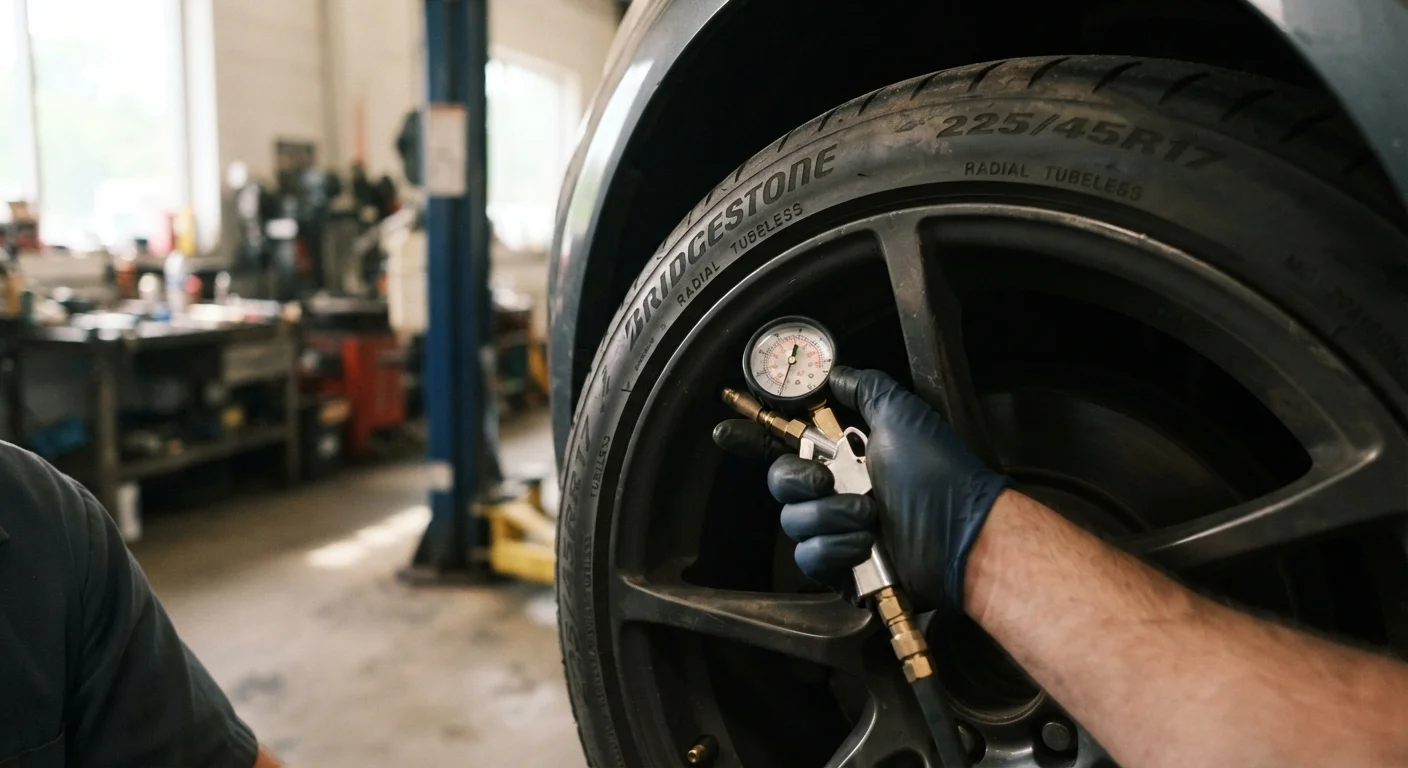
- Press a gauge firmly onto the valve. A digital gauge gives the clearest reading, but a standard stick gauge works well too.
- Compare to the sticker. Add air at a gas station air pump if pressure is low, or release a small amount using the valve pin if it's too high.
- Replace the valve cap securely to keep out dirt and moisture.
Uneven readings across your four tires can signal alignment or suspension issues. Unusual tire wear patterns can help you spot these problems early.
Seasonal Changes and the TPMS Light
Temperature swings are one of the most common reasons tires end up underinflated without any apparent cause. For every 10°F drop in ambient temperature, tire pressure falls by roughly 1 PSI. This means tires set perfectly in September may be noticeably low by December - and most drivers never notice until the warning light appears.
The Tire Pressure Monitoring System (TPMS), required on all passenger vehicles sold in the US since 2008, alerts you when pressure drops about 25% below the recommended level. That is useful as a floor - but it is not a substitute for regular manual checks. Think of the TPMS as a last-resort alert, not a routine monitoring tool.
For drivers who want to understand the broader category of driving safety practices, tire pressure sits alongside braking distance, tread depth, and road visibility as one of the most controllable risk factors in everyday driving.