

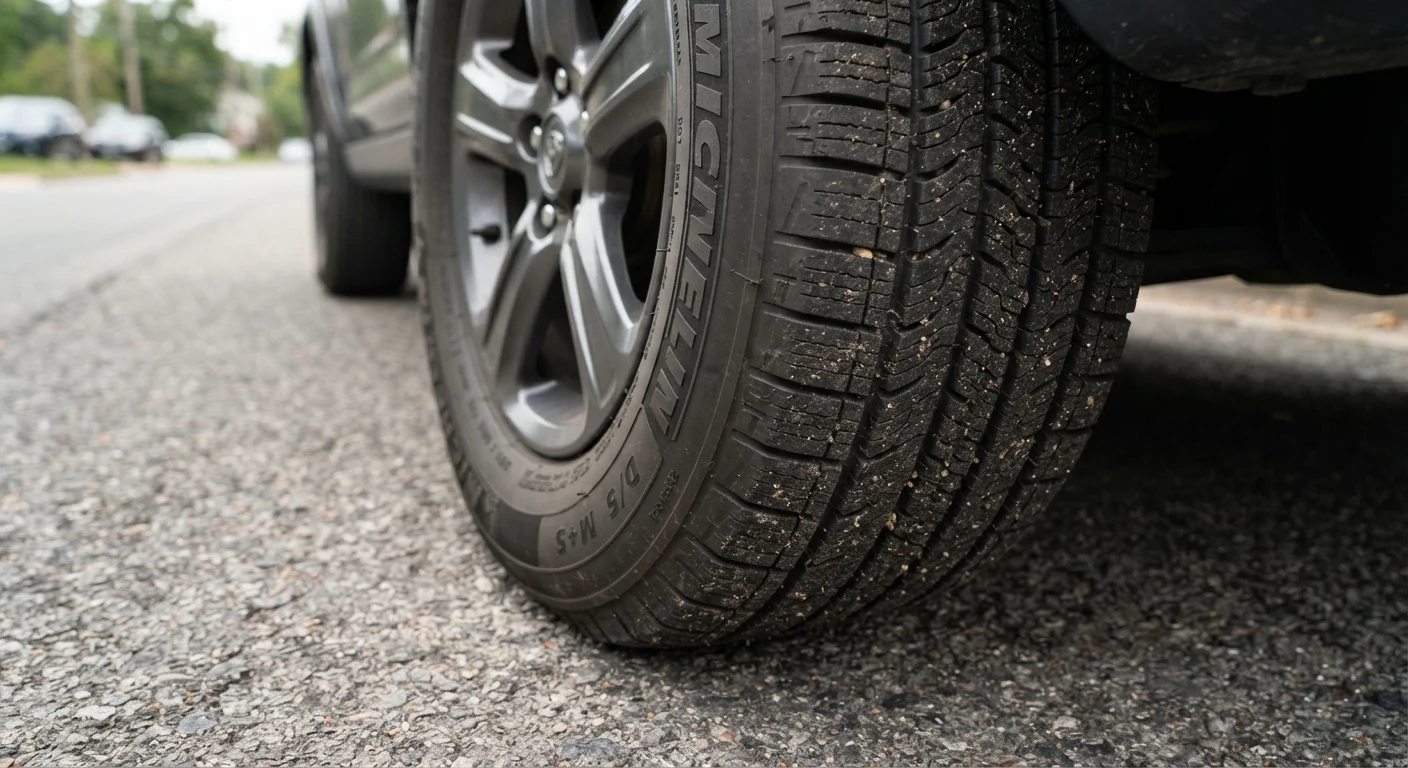
The Two Numbers Every Driver Needs to Know
Tire safety comes down to two measurable values: inflation pressure and tread depth. Both directly affect your vehicle's ability to grip the road, shed water, and handle emergency maneuvers. Neglecting either one significantly raises the risk of a tire failure - including a sudden blowout at highway speed.
Your vehicle's recommended tire pressure is not the number printed on the tire's sidewall. That number is the tire's maximum pressure limit. Instead, find the manufacturer's recommended pressure on the sticker inside your driver's door jamb or in your owner's manual. Most passenger vehicles call for somewhere between 30 and 35 PSI (pounds per square inch), though the exact figure varies by vehicle and tire size. Always use your vehicle's spec, not the tire's maximum.
For tread depth, the legal minimum in the United States is 2/32 of an inch, but most safety experts recommend replacing tires before they reach that point. At 4/32", wet-road stopping distances begin to increase noticeably. Tires at 2/32" or below should be considered unsafe in rain. See how traction changes on wet and icy roads to understand what worn tread means in real driving conditions.
How to Check Tire Pressure and Tread Depth at Home
Both checks take less than five minutes and require only basic, inexpensive tools.
Checking Tire Pressure
- Check pressure when tires are cold - meaning the vehicle has been parked for at least three hours or driven fewer than one mile. Driving heats air inside the tire, temporarily raising the reading.
- Remove the valve cap from the tire's valve stem (the small rubber or metal nozzle on the inner edge of the wheel).
- Press a tire pressure gauge firmly onto the valve stem and read the PSI displayed.
- Compare the reading to your vehicle's recommended pressure. Add air if low; release air with the small pin inside the valve stem if over-inflated.
- Replace the valve cap and repeat for all four tires - and don't forget the spare.
Checking Tread Depth
- Quarter test: Insert a U.S. quarter into a tread groove with Washington's head pointing down. If you can see the top of his head, the tread is at or below 4/32" - consider replacing soon.
- Penny test: Insert a penny the same way. If you see all of Lincoln's head, the tread is at or below 2/32" - replace immediately.
- Tread wear indicators: Most tires have molded bars running across the grooves. When the tread surface is flush with those bars, the tire is at the legal minimum.
- Tread depth gauge: An inexpensive gauge (available at auto parts stores) gives a precise reading in 32nds of an inch.
Make these checks part of your pre-trip vehicle inspection, especially before long drives.
How Tire Problems Lead to Blowouts
A blowout is a rapid, uncontrolled loss of tire pressure. Understanding why they happen helps you prevent them.
PSI
Pounds per square inch - the unit used to measure air pressure inside a tire. Your vehicle's recommended PSI is the target inflation level for safe operation.
Tread Depth
The measurement of the rubber remaining in the grooves of a tire. Deeper tread channels water away from the contact patch, improving grip on wet roads.
Tread Wear Indicator
Molded rubber bars built into tire grooves at 2/32" depth. When the tread surface is level with these bars, the tire has reached its legal minimum and should be replaced.
TPMS
Tire Pressure Monitoring System - an electronic system in many modern vehicles that alerts the driver via a dashboard warning light when tire pressure drops significantly below the recommended level.
Blowout
A sudden and rapid loss of tire pressure, often caused by structural failure of the tire. Blowouts can result in loss of vehicle control and are frequently linked to underinflation, excessive heat, or severely worn tread.
Valve Stem
The small rubber or metal fitting on the inner edge of a wheel through which air is added or released. A valve cap protects it from dirt and moisture.
Underinflation is the most common cause. When a tire carries too little air, its sidewalls flex excessively with each rotation. This generates heat, and heat breaks down the rubber compounds and internal structure over time. Eventually, the tire can fail suddenly. Running a tire just 20% below its recommended pressure - for example, 26 PSI instead of 32 PSI - can substantially reduce its structural integrity and increase heat buildup.
Worn tread removes the rubber buffer between the road and the tire's steel or fabric belts. As tread wears down, the remaining rubber thins and becomes more vulnerable to punctures from road debris and to structural failure from the heat and stress of driving.
Overloading your vehicle beyond its rated capacity puts excess strain on tires. The maximum load rating is listed on the tire's sidewall. Exceeding it raises internal temperature and pressure beyond safe limits.
Blowouts most often happen in summer, when pavement temperatures are highest and pressure fluctuations from heat are greatest. This makes seasonal tire checks especially important before warmer months.
How Often Should You Check?
Tire pressure changes naturally over time - tires typically lose about 1 PSI per month and an additional 1 PSI for every 10°F drop in outside temperature. That means a tire that was properly inflated in summer may be noticeably low by mid-winter without ever having a puncture.
General guidance from automotive safety organizations suggests checking tire pressure at least once a month and before any long road trip. Tread depth should be checked monthly as well, or any time you notice a change in how the vehicle handles - particularly pulling to one side or reduced grip in wet conditions. Uneven wear patterns can also signal alignment or suspension issues that accelerate tire deterioration.
Many newer vehicles include a Tire Pressure Monitoring System (TPMS) that lights a dashboard warning when pressure drops significantly. However, TPMS alerts are typically triggered at 25% below recommended pressure - already well into the danger zone. Do not rely on the warning light as your primary check; use a gauge proactively.
For deeper guidance on keeping your tires - and your wallet - in good shape, see the Car Maintenance hub.