

Key Takeaways
- The plate method divides your dish visually - no tracking apps or food scales required.
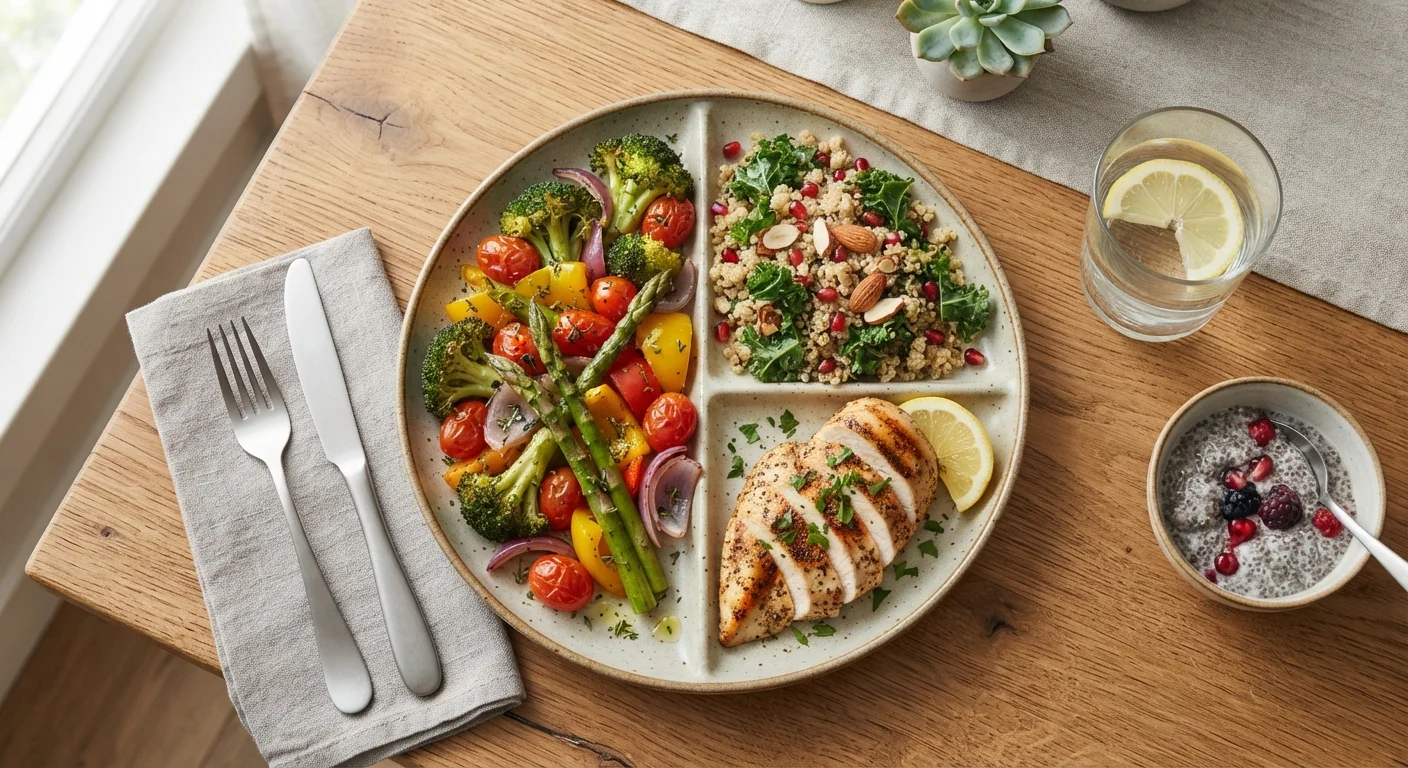
- Half your plate from vegetables and fruit, a quarter from whole grains, a quarter from protein is a reliable starting framework.
- Portion awareness, not perfection, is the sustainable goal for most healthy adults.
- Healthy fats, hydration, and food variety matter alongside macronutrient balance.
- One meal rarely makes or breaks your overall eating pattern - consistency across the week matters more.
What you will need
Why the Plate Method Works for Everyday Life
Calorie counting can be an effective tool in certain clinical contexts, but for most people navigating busy, ordinary lives, it creates more friction than it resolves. Research on eating behavior consistently finds that sustainable dietary habits are built on simplicity, not precision. The plate method - originally developed and popularized by nutrition researchers and health organizations as a teaching tool - translates core nutrition principles into a visual guide anyone can use at any meal, at home or away from it.
If you're new to thinking about food composition, our first principles introduction to eating well covers the foundational concepts that make the steps below easier to understand.
This Is General Nutrition Information
This article provides general education about healthy eating patterns for typical healthy adults. It is not a substitute for personalized medical or dietary advice. If you have a chronic health condition, specific nutritional needs, or concerns about your diet, please consult a registered dietitian or your healthcare provider before making significant changes to what you eat.
The framework below applies to a standard mixed meal for a generally healthy adult. It is a starting point, not a prescription. Individual caloric and nutritional needs vary based on age, activity level, body size, health status, and other factors.
A standard dinner plate (9-10 inches)
Used as a visual guide to divide food groups without any measuring tools.
Your hand
Palm, fist, and cupped-hand sizes serve as reliable personal portion reference points.
Measuring cups (occasional use)
Useful for calibrating your eye for portion sizes until visual estimates become second nature.
How to Build Your Balanced Plate
The steps below require no apps, no food scales, and no memorizing numbers. All you need is a regular dinner plate and the visual proportion guidelines described in each step.
What you will need
Fill half your plate with vegetables and fruit
Start by covering roughly half of your plate with non-starchy vegetables - think leafy greens, broccoli, peppers, cucumbers, or carrots. A small portion of whole fruit can also occupy this half. Vegetables add fiber, vitamins, and minerals while taking up significant visual space, which naturally moderates how much of everything else you reach for.
Variety matters more than perfection here. Rotating through different colored vegetables across the week helps cover a broader range of nutrients without any complicated planning.
Reserve a quarter of your plate for whole grains or starchy foods
Use one quarter of your plate for an energy-providing carbohydrate source: brown rice, whole-wheat bread or pasta, quinoa, oats, potatoes, corn, or legumes like lentils and chickpeas. These foods supply fiber and sustained energy. Choosing whole-grain versions over refined counterparts generally increases fiber content, which supports digestive health and helps you feel full longer.
If you want to understand more about how different carbohydrates affect your body, our guide to the glycemic index and its real limits is a useful next read.
Fill the remaining quarter with a protein source
The final quarter of your plate goes to a lean or plant-based protein: chicken, fish, eggs, tofu, tempeh, beans, or low-fat dairy. Protein supports muscle maintenance, keeps hunger at bay, and is involved in many body processes. You don't need a large portion - a serving roughly the size of your palm is a practical visual guide.
Plant-based proteins like beans and lentils pull double duty: they also contribute to your fiber and complex carbohydrate intake, so their placement on the plate is flexible.
Add a small amount of healthy fat
Healthy fats don't need a section of the plate, but they should appear somewhere in the meal. A drizzle of olive oil used in cooking, a quarter of an avocado, a small handful of nuts or seeds, or a piece of oily fish all contribute unsaturated fats that support heart and brain health. Keep portions modest - fats are calorie-dense - but don't avoid them entirely.
Choose a low-sugar or water-based drink alongside your meal
What you drink alongside your plate affects your overall nutritional intake. Water, sparkling water, unsweetened tea, or low-fat milk are good defaults. Sugar-sweetened beverages add significant added sugar and calories without contributing satiety or meaningful nutrients. This one habit shift can have a notable effect on overall diet quality without requiring any changes to what's on the plate itself.
Apply the same framework across meals and across the week
No single meal needs to be nutritionally perfect. If breakfast is lighter on vegetables, aim to include them at lunch and dinner. A day-by-day checklist for balanced weekly eating can help you audit your overall pattern without obsessing over any individual meal. Variety, consistency, and flexibility across the week matter far more than hitting an ideal ratio at every sitting.
Make It Work With What You Have
You don't need special ingredients or expensive grocery runs to build a balanced plate. Frozen vegetables, canned beans, and whole-grain staples like brown rice or whole-wheat bread are affordable, nutritious options that fit the same framework perfectly. See our strategies for eating well on a busy schedule for more practical ideas.
Portion Awareness Isn't Restriction
The goal of the plate method is balance and variety - not eating less or cutting out foods you enjoy. Rigid food rules can backfire for many people. If you notice eating habits that feel difficult to manage, speaking with a registered dietitian or mental health professional can be genuinely helpful.
For a deeper look at how to read nutrition information when you're grocery shopping, our guide to reading a nutrition label without getting confused is a practical companion resource.
This article is for general informational and educational purposes only. It is not a substitute for professional medical or dietary advice, diagnosis, or treatment. Always consult a qualified healthcare provider or registered dietitian with questions about your personal nutritional needs or health conditions.