

Key Takeaways
- Serving size is the foundation of every number on the label - always check it first.
- Percent Daily Value (%DV) uses a 2,000-calorie reference diet and helps compare foods quickly.
- Added sugars and total sugars are listed separately - they are nutritionally distinct.
- Aim for higher %DV for fiber, vitamins, and minerals; lower %DV for sodium and saturated fat.
- The ingredient list and nutrition panel together tell the full story of a food product.
What you will need
Why Nutrition Labels Exist - and What They're Actually Telling You
The Nutrition Facts panel is a federally standardized tool required by the FDA on most packaged foods sold in the United States. Its purpose is straightforward: give consumers consistent, comparable information so they can make informed choices. Yet for many shoppers, the label produces more confusion than clarity.
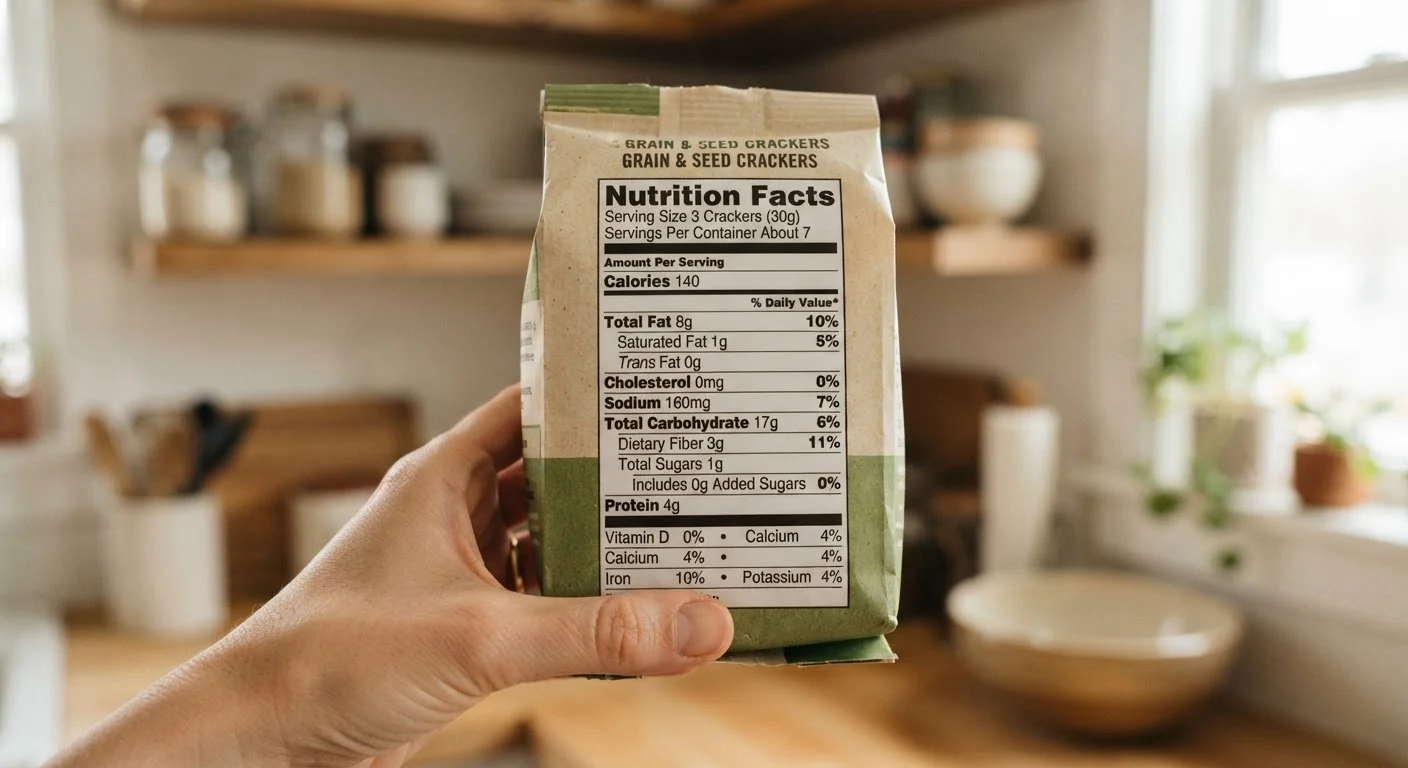
Part of the problem is that labels pack a lot of information into a small space, and not all of it is intuitively easy to parse. Once you understand the structure - which flows from serving size at the top, through macronutrients and micronutrients in the middle, to %DV values on the right - the whole panel becomes much more readable.
If you're newer to thinking about nutrition generally, our foundational nutrition guide is a useful starting point before diving into label details.
This Is Education, Not Medical Advice
The information in this article is general nutritional education intended to help you interpret food labels. It is not personalized dietary or medical advice. If you have a health condition, food allergy, or specific nutritional concern, consult a registered dietitian or qualified healthcare provider before making significant changes to your diet.
The steps below walk you through the label from top to bottom, explaining what each section means and what to actually look for.
Food package or label
The actual nutrition facts panel you'll be reading and interpreting.
Calculator or smartphone
Useful for multiplying nutrient values when you eat more than one listed serving.
What to Do With This Information at the Store
Reading a nutrition label takes only seconds once you know what to focus on. For most everyday shopping decisions, a quick scan of serving size, calories, sodium %DV, added sugars, and fiber gives you a solid snapshot of a product's nutritional profile.
Use %DV as a Quick Comparison Tool
When choosing between two similar products, scan the %DV column rather than the raw gram amounts. A nutrient at 5% DV or below is considered low; 20% DV or above is considered high. This shortcut works whether you're comparing breakfast cereals, soups, or snack bars.
The label is also useful for comparing products side by side. Because serving sizes for similar foods are standardized by the FDA, comparing two brands of yogurt or two breakfast cereals is a genuine apples-to-apples exercise - as long as you check that the serving sizes are the same.
Serving Sizes Can Be Misleading
Manufacturers set their own serving sizes, and they don't always match how people realistically eat. A bag of chips or a bottled beverage may list two or three servings - meaning all calorie and nutrient values must be multiplied accordingly. Always check servings per container before assuming the panel reflects the whole package.
Pair label-reading with broader meal planning habits for the most practical results. Our guide to building a balanced plate without counting every calorie offers complementary strategies that don't require tracking every number.
This article provides general nutritional education and is not a substitute for personalized advice from a registered dietitian or healthcare provider. Individual nutritional needs vary based on age, health status, and other factors.