

Key Takeaways
- Small, consistent nutrition habits outperform occasional perfect meals over the long run.
- Stocking a few versatile staples makes nutritious eating faster than ordering takeout.
- Protein and fiber at each meal help manage hunger and support steady energy levels.
- You don't need to count every calorie - balanced plate habits can be built intuitively.
- Planning even one or two meals ahead each week reduces decision fatigue significantly.
Why Nutrition Feels So Hard When Life Gets Full
Most Americans want to eat well. The barrier usually isn't motivation - it's time, mental bandwidth, and the gap between advice designed for ideal conditions and the reality of packed weekdays. Nutrition content often focuses on elaborate meal-prep systems or specialty ingredients that feel inaccessible when you're managing work, family, and everything else.
The evidence, however, consistently points toward something more manageable: small, repeated habits tend to outperform dramatic dietary overhauls. If you're new to thinking about nutrition fundamentals, our foundational primer is a solid place to start before layering in the strategies below.
This article focuses on practical, durable approaches that fit into real schedules - no specialty foods, no hour-long cooking sessions required.
Core Practices for Nutritious Eating on a Tight Schedule
The following practices are grounded in established dietary guidance and are designed to be incremental rather than all-or-nothing. Start with one or two that feel most manageable, not all six at once.
Stock five or six versatile pantry staples and rotate them into meals all week.
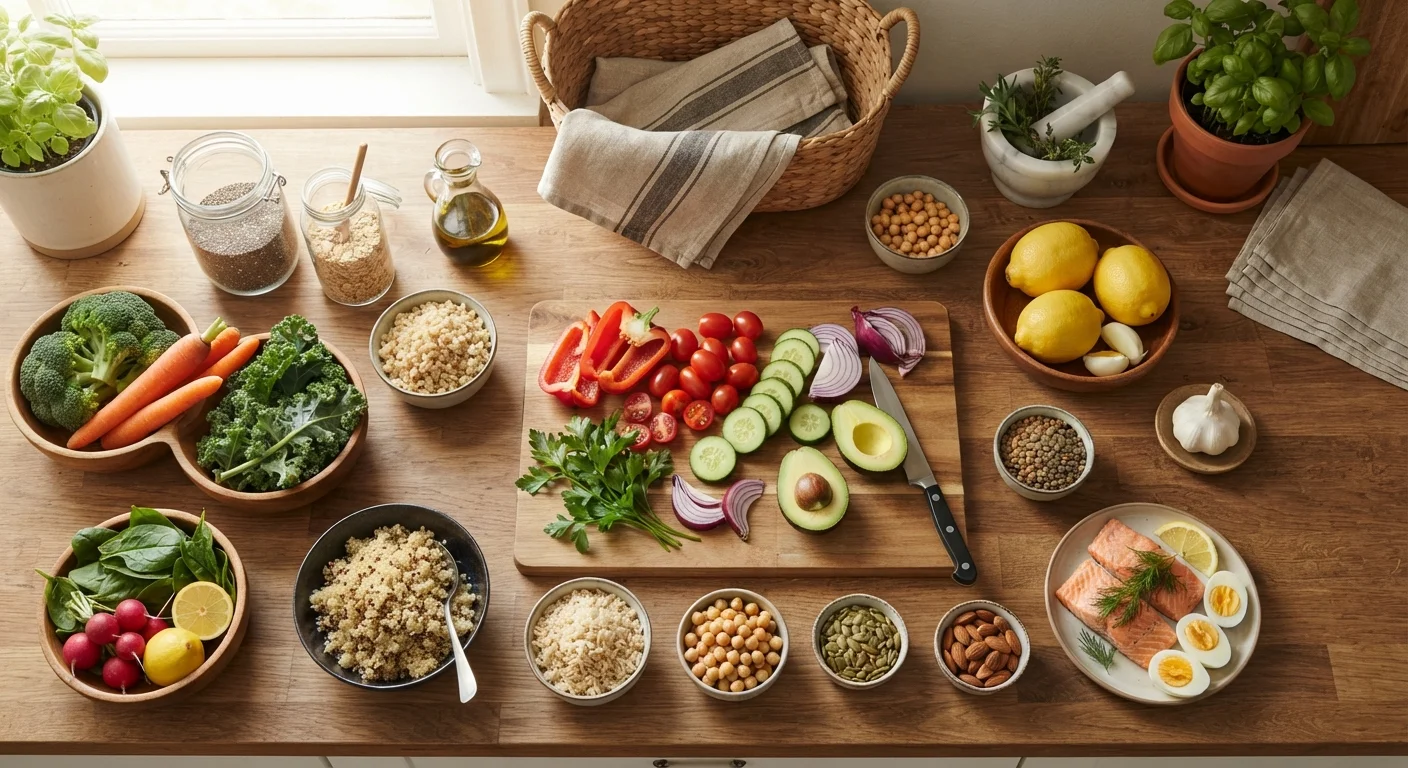
When wholesome ingredients are already on hand, you're far less likely to default to processed convenience foods or expensive takeout. A short, consistent staples list - such as canned beans, whole-grain pasta, frozen vegetables, eggs, and oats - covers multiple food groups and takes minimal planning. This approach also keeps grocery costs predictable.
Anchor every meal with a protein source and at least one vegetable or fiber-rich food.
Protein and dietary fiber both contribute to satiety, helping reduce the mid-afternoon energy slump that often leads to impulsive snacking. According to dietary guidance from the U.S. Department of Agriculture, most adults fall short on fiber - making a simple 'protein plus plant' habit one of the highest-return adjustments most people can make.
Do one small act of meal preparation during a moment you're already in the kitchen.
Full Sunday meal-prep sessions are effective but unrealistic for most busy households. Instead, use existing kitchen time - while waiting for water to boil or coffee to brew - to wash produce, portion snacks, or cook a batch of grains. These micro-prep moments accumulate without requiring dedicated blocks of time.
Choose hydration as a default before reaching for snacks.
Thirst is frequently mistaken for hunger, particularly during busy stretches when people eat and drink on autopilot. Keeping water accessible throughout the day supports both appetite regulation and cognitive performance - and costs essentially nothing. This isn't a weight-loss strategy; it's a practical tool to support clearer hunger cues.
Apply a simple mental template - half vegetables, a quarter protein, a quarter grains - when building any plate.
A visual framework removes the mental load of calculating nutrients. Plate-building templates, like those informed by USDA's MyPlate model, give practical structure without requiring apps or food scales. The goal is nutritional balance across the day, not precision at every single meal.
Plan just two or three dinners per week rather than every meal.
Over-planning sets up perfectionistic expectations that collapse when life gets busy. Planning a small number of anchor meals creates enough structure to reduce daily decision fatigue while leaving room for flexibility, leftovers, and the occasional simple option like eggs on toast. Consistent partial planning beats inconsistent total planning.
For a deeper look at how to build a balanced plate without tracking every gram, see our guide to building a balanced plate without counting every calorie.
Where to Start: Quick Wins for This Week
If the practices above feel like a lot to absorb, the four actions below are immediately doable - no planning required. Each one builds momentum toward the broader habits without demanding a complete schedule change.
This Is General Nutrition Information
The guidance in this article is intended as general health education, not personal medical or dietary advice. Individual nutritional needs vary based on age, health status, activity level, and other factors. If you have a specific health condition, are pregnant, or have concerns about your diet, consult a registered dietitian or your healthcare provider before making significant changes.
Once these actions feel routine, consider auditing your weekly eating patterns using the weekly nutritionally balanced eating checklist to identify any consistent gaps. And if grocery costs are a concern as you build these habits, the grocery spending habits guide offers practical, low-effort approaches to keeping food costs in check.
This article is for general informational and educational purposes only and does not constitute medical or dietary advice. Consult a qualified healthcare provider or registered dietitian for guidance specific to your health needs.