

Key Takeaways
- Animal proteins contain all essential amino acids in proportions the body uses efficiently.
- Most plant proteins are lower in one or more essential amino acids, but smart food pairing can close the gap.
- Bioavailability - how much protein your body actually absorbs - differs meaningfully across sources.
- Blended diets combining animal and plant proteins may offer both nutritional completeness and health variety.
- Individual health goals, ethical preferences, and budget all legitimately shape the right protein mix.
Our Verdict
No single protein source is universally superior. Animal proteins offer completeness and high bioavailability, plant proteins bring fiber and phytonutrients alongside their protein, and blended approaches can capture the strengths of both. The most practical choice depends on an individual's health status, lifestyle, and dietary preferences - and ideally involves guidance from a registered dietitian.
| Best for | Recommended |
|---|---|
| Those prioritizing amino acid completeness and absorption efficiency | Animal protein sources |
| Those seeking heart health benefits, lower environmental impact, or ethical alignment | Plant protein sources |
| Those wanting nutritional flexibility and the broadest dietary variety | Blended (animal + plant) diet |
Why Protein Quality Isn't One-Size-Fits-All
Protein is made of amino acids - 20 in total, nine of which are considered essential because the body cannot produce them on its own. What distinguishes protein sources is how well they deliver those nine essentials, and how efficiently the body can actually use what's consumed.
Two key concepts matter here. Amino acid profile refers to which and how many essential amino acids a source contains. Bioavailability (sometimes expressed as the Digestible Indispensable Amino Acid Score, or DIAAS) reflects how much of that protein the body absorbs and puts to work. A food can be high in protein on paper but score lower if absorption is limited. Understanding both concepts helps cut through a lot of the marketing noise around protein.
It's also worth noting that protein needs vary by age, activity level, and health conditions. This article is general nutritional information - not personalized medical or dietary advice. For guidance tailored to your situation, consult a registered dietitian or healthcare provider.
Animal Protein: Completeness and Bioavailability
Animal-based sources - including meat, poultry, fish, eggs, and dairy - are considered complete proteins. They supply all nine essential amino acids in ratios that closely match human needs. Eggs and dairy in particular score among the highest on bioavailability measures, making them efficient sources even in moderate quantities.
Beyond amino acids, animal proteins often deliver nutrients that can be harder to obtain from plants alone: heme iron (absorbed more readily than plant-based iron), vitamin B12, zinc, and long-chain omega-3 fatty acids from fatty fish. These co-nutrients are relevant for groups such as older adults, athletes, and people managing specific health conditions.
The trade-offs are real, however. Processed and red meats have been associated in observational research with increased cardiovascular risk when consumed in large amounts. Saturated fat content varies significantly by cut and preparation method. And for many Americans, cost and access to quality animal proteins are genuine practical constraints.
| Animal Protein | Plant Protein | Blended Diet | |
|---|---|---|---|
| Amino acid completeness | Complete (all 9 essential AAs) | Often incomplete; varies by source | Complete when varied sources combined |
| Bioavailability (absorption) | Generally high | Moderate; affected by antinutrients | High overall with smart pairing |
| Dietary fiber | None | High; supports gut health | Moderate to high |
| Key co-nutrients | B12, heme iron, zinc, omega-3s | Phytonutrients, folate, magnesium | Broad nutrient variety |
| Potential health considerations | Saturated fat in some sources | Lower saturated fat; may need B12 | Balanced; depends on food choices |
| Practical flexibility | Wide availability; variable cost | Often lower cost; widely available | Highest flexibility and variety |
Plant Protein: Nutrients, Fiber, and a Few Caveats
Legumes, lentils, tofu, tempeh, edamame, nuts, seeds, and whole grains all contribute protein - and they bring dietary fiber, antioxidants, and phytonutrients that animal products lack. Diets rich in plant proteins have been associated in population studies with lower rates of certain chronic diseases, though the overall dietary pattern matters, not any single food.
The main limitation is amino acid completeness. Most plant proteins are low in at least one essential amino acid - lysine is commonly limited in grains, while methionine tends to be low in legumes. The good news: you don't need to combine complementary proteins at every single meal. Eating a variety of plant proteins throughout the day is generally sufficient to meet amino acid needs for healthy adults.
Bioavailability is another consideration. Antinutrients such as phytates and tannins - found in legumes, whole grains, and seeds - can reduce absorption of protein and certain minerals. Cooking, soaking, sprouting, and fermentation all reduce antinutrient content meaningfully. For more on how processing affects nutritional content in grain-based foods, see our guide to whole grains vs. refined grains.
Easy Ways to Boost Plant Protein Absorption
Soaking dried legumes overnight and discarding the soaking water before cooking can reduce phytate content significantly. Fermenting soy into tempeh or sprouting lentils also improves mineral and amino acid absorption. These simple prep steps make plant proteins work harder nutritionally without requiring any special equipment.
Blended Diets: Practical Flexibility
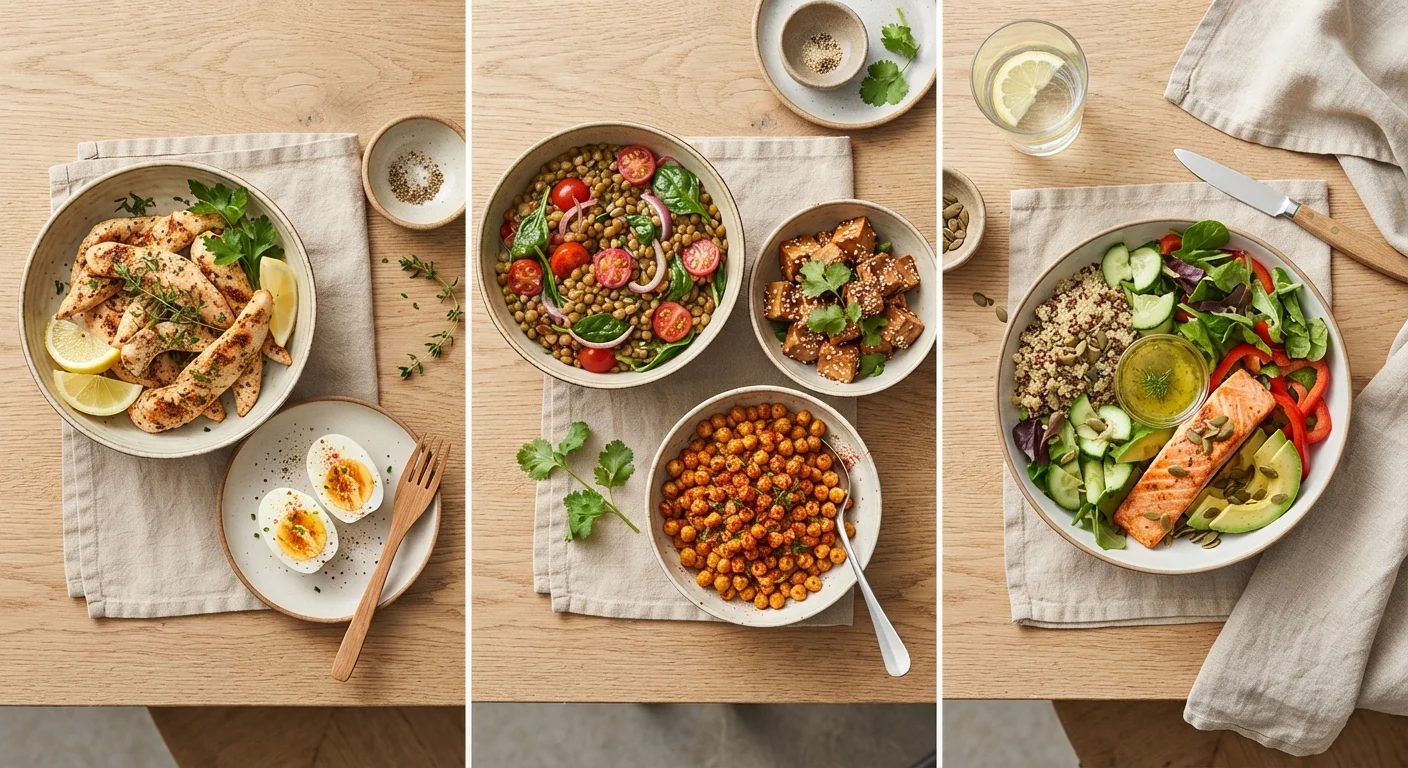
A blended approach - drawing protein from both animal and plant sources - is how most Americans already eat, and it has real nutritional logic behind it. Pairing animal protein's completeness and bioavailability with plant protein's fiber and phytonutrient benefits can address gaps that either approach alone may leave.
In practice, this might look like building meals around a modest portion of lean animal protein while filling the plate with legume-based sides and vegetables. It keeps amino acid needs met without leaning heavily on any single source. Flexibility also makes it easier to adapt to budget, seasonality, and personal preferences over time.
Blended diets tend to be easier to sustain than strict elimination approaches for many people, which matters because dietary consistency is often more important to long-term health outcomes than any individual food choice. That said, well-planned vegan and vegetarian diets can meet all nutritional needs - planning and sometimes supplementation (notably vitamin B12) are key considerations.
This article is for general informational and educational purposes only and does not constitute medical or dietary advice. Please consult a qualified healthcare professional or registered dietitian for guidance specific to your health needs.