

Key Takeaways
- Most dogs and cats show significant dental disease by age three, often without obvious symptoms.
- Plaque hardens into tartar within days; regular at-home care slows this process meaningfully.
- Dental disease can affect your pet's heart, kidneys, and liver if left untreated long-term.
- Professional cleanings require anesthesia for safe, thorough treatment - this is standard and necessary.
- Daily tooth brushing with pet-safe toothpaste is the most effective home care strategy available.
- Dental costs are manageable when caught early through consistent preventive routines.
Start here
Why Pet Dental Health Is Frequently Overlooked
Understand the problem
How Dental Disease Develops
Know the signs
Signs Your Pet May Have a Dental Problem
Learn about treatment
What Professional Dental Care Involves
Take action at home
At-Home Dental Care: What Actually Helps
Why Pet Dental Health Is Frequently Overlooked
Dental disease is one of the most common conditions seen in veterinary practice - yet it remains one of the most under-addressed. Studies by major veterinary organizations indicate that a significant majority of dogs and cats show signs of periodontal disease by the age of three. Despite this, many pet owners don't include dental care in their regular routines until a problem becomes impossible to ignore.
Part of the reason is visibility. Pets rarely cry out from tooth pain the way people do. Their instinct to mask discomfort means that by the time an owner notices bad breath or a dropped piece of food, disease may already be well advanced. As part of a broader commitment to preventive care - which you can read more about in our guide to preventive vet care - oral health deserves a dedicated place in every pet owner's routine.
Plaque
A sticky, invisible film of bacteria that forms on tooth surfaces after eating. It's the starting point for nearly all dental disease in pets.
Tartar (Calculus)
Hardened plaque that has mineralized on the tooth surface. It cannot be removed by brushing alone and requires professional veterinary tools.
Gingivitis
Inflammation of the gum tissue surrounding the teeth, typically caused by plaque and tartar irritation. It's reversible when caught early with proper treatment.
Periodontal Disease
Advanced gum disease that affects the bone and tissue supporting the teeth. It is not fully reversible and can result in tooth loss if untreated.
VOHC Seal
A certification from the Veterinary Oral Health Council indicating a dental product has met tested standards for reducing plaque or tartar in pets.
Anesthesia-Free Dental Cleaning
A procedure that removes visible tartar from a pet's teeth without sedation. Major veterinary organizations caution against it because it cannot safely address disease below the gumline.
How Dental Disease Develops
Dental disease begins when bacteria in the mouth combine with food particles and saliva to form plaque - a sticky film that coats the teeth. Left undisturbed, plaque mineralizes into tartar (also called calculus) within as little as 24 to 48 hours. Tartar is much harder to remove and can only be safely cleared during a professional cleaning.
As tartar builds up along and below the gumline, it triggers inflammation in the surrounding gum tissue - a condition called gingivitis. If gingivitis progresses without treatment, it can develop into periodontal disease, which damages the bone and soft tissue that hold teeth in place. In advanced stages, teeth may loosen or require extraction. Bacteria from infected gum tissue can also enter the bloodstream, which researchers have linked to changes in the heart, kidneys, and liver over time. For a detailed look at how this progression unfolds, see how dental disease develops in pets.
Signs Your Pet May Have a Dental Problem
Because pets instinctively hide pain, owners need to watch for subtler signals. The following signs are worth discussing with your veterinarian:
- Persistent bad breath - some odor is normal, but strong or foul breath often indicates bacterial buildup or infection
- Visible tartar - yellow or brown discoloration at the base of the teeth near the gumline
- Red, swollen, or bleeding gums - classic signs of gingivitis
- Dropping food or chewing on one side - may indicate pain when biting
- Pawing at the mouth or reluctance to be touched around the face
- Changes in appetite or eating behavior
If you're unsure whether your pet is showing signs of oral discomfort, our guide to reading pain signals in pets offers a helpful framework. None of these signs are a substitute for a professional evaluation - always consult your veterinarian for diagnosis and treatment guidance.
Start Checking Your Pet's Mouth Early
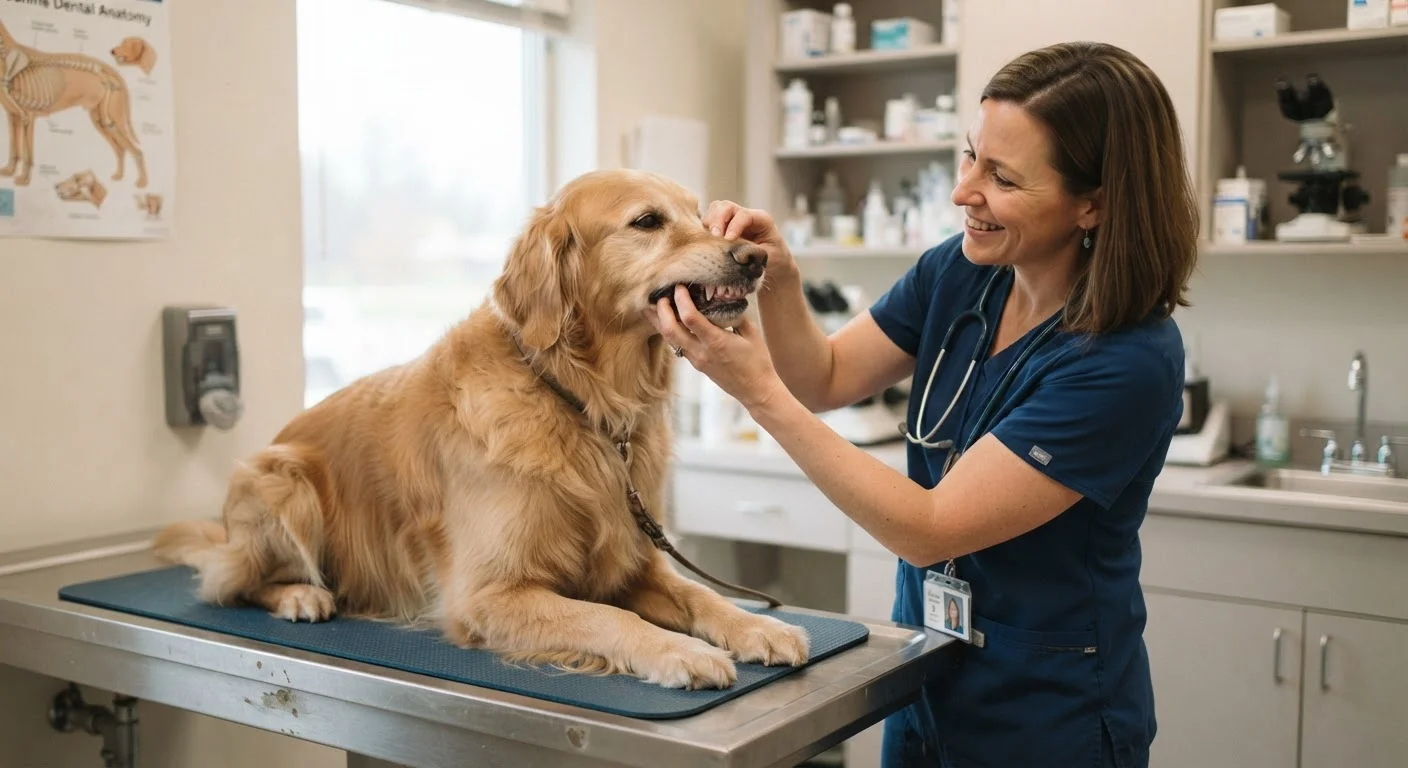
Getting your pet comfortable with having their mouth handled from a young age makes dental care far easier throughout their life. Gently lifting their lips and touching their teeth regularly - even without a toothbrush - builds tolerance. If you've adopted an older pet, go slowly and use high-value rewards to create a positive association.
What Professional Dental Care Involves
A professional veterinary dental cleaning is the only reliable way to remove tartar and assess what's happening below the gumline. Unlike human dental visits, this procedure requires general anesthesia. Without it, a pet cannot be safely kept still for the thorough probing, cleaning, and X-ray work needed to evaluate the full extent of disease - and a conscious animal could be injured during the process.
Before the procedure, vets typically run bloodwork to screen for underlying conditions that could affect anesthetic risk. During the cleaning, they will scale tartar from all tooth surfaces, probe gum pockets for signs of disease, take dental X-rays to evaluate roots and bone, and extract any teeth that are too damaged to save. Recovery is generally smooth, with most pets eating normally within a day or two.
Dental cleanings are part of the broader category of care covered in what happens during your pet's annual wellness visit. Costs can vary widely depending on the extent of disease and your location, but catching problems early almost always results in less involved - and less expensive - treatment. For context on how dental bills fit into overall pet expenses, see the hidden costs of pet ownership.
Anesthesia-Free Cleanings Are Not Recommended
Some grooming services and non-veterinary providers offer dental cleanings without anesthesia. While these may remove visible surface tartar, they cannot evaluate or treat disease below the gumline - where most serious dental disease occurs. Major veterinary organizations, including the American Veterinary Dental College, caution against this practice as it creates a false impression of dental health. Always seek professional veterinary dental care for your pet.
At-Home Dental Care: What Actually Helps
No at-home method eliminates the need for professional cleanings, but a consistent home routine can significantly slow the buildup of plaque and extend time between cleanings. Here's what the evidence supports:
- Tooth brushing
- Daily brushing with a soft-bristled pet toothbrush and pet-specific toothpaste is the gold standard. Human toothpaste contains fluoride and other ingredients that are unsafe for pets. Introduce brushing gradually, especially with younger animals, to build tolerance over time.
- Dental chews and treats
- Some products have been evaluated by the Veterinary Oral Health Council (VOHC) and awarded a seal indicating they meet certain plaque- or tartar-reduction standards. Look for the VOHC seal rather than general marketing claims, and use these as supplements - not replacements - for brushing.
- Water additives and dental gels
- These can help reduce bacterial load in the mouth and may be useful for pets who resist brushing, though their effectiveness is generally lower than mechanical cleaning. Always confirm any product is safe for your specific pet with your vet.
- Diet considerations
- Contrary to common belief, standard dry kibble does not meaningfully clean teeth. Specialized veterinary dental diets designed with larger kibble sizes and specific fiber structures may offer some mechanical benefit - discuss this option with your veterinarian. For a broader look at how food choices affect your pet's health, see our comparison of wet and dry pet food.
Dental hygiene fits naturally into a broader monthly care schedule. Our monthly pet care task guide can help you build habits that prevent small problems from becoming costly ones.
This article is for general informational and educational purposes only and is not a substitute for professional veterinary advice, diagnosis, or treatment. Always consult a qualified veterinarian for guidance specific to your pet's health needs.