

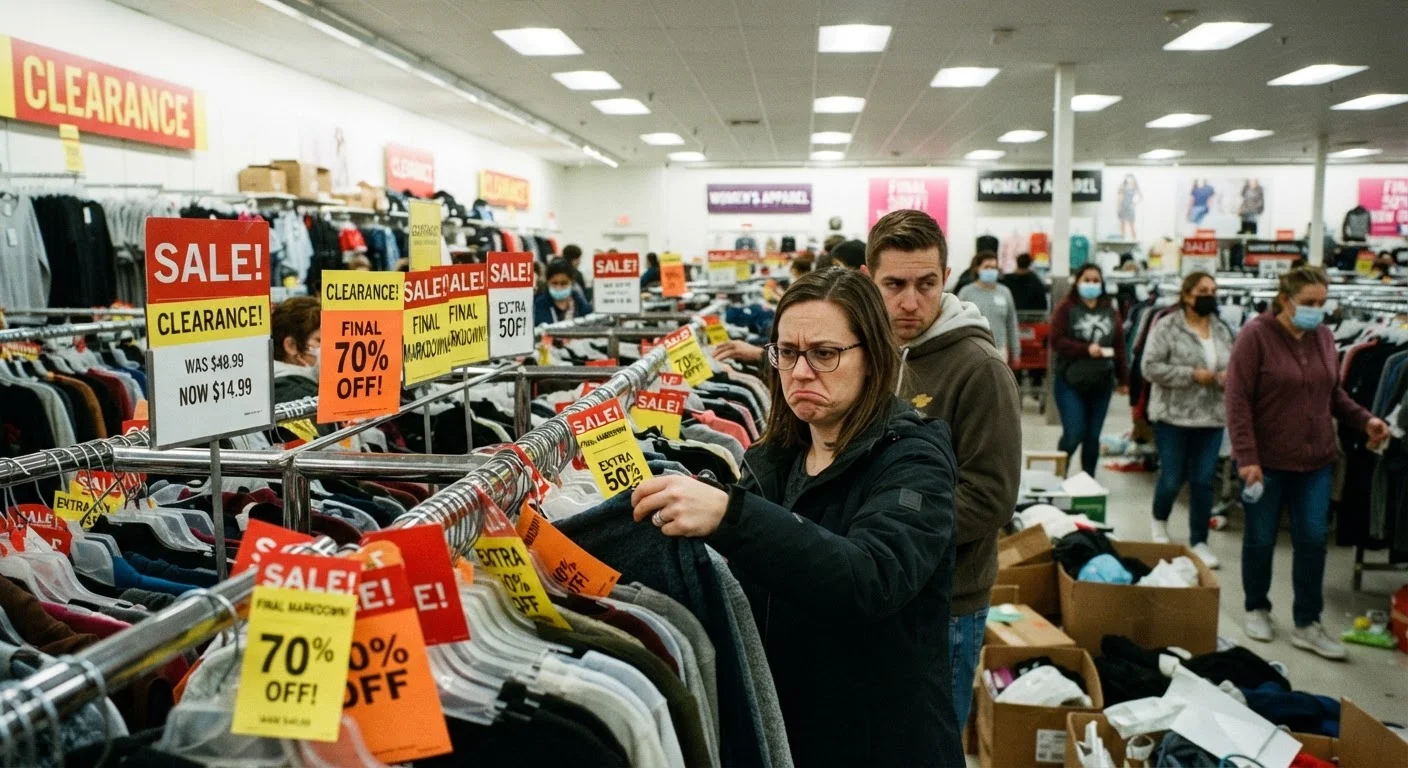
Key Takeaways
- Outlet stores often sell merchandise made specifically for those locations, not factory leftovers from mainline stores.
- Clearance prices are frequently marked down from inflated 'original' prices, not what the item ever regularly sold for.
- Return policies at outlet and clearance sections are often stricter than standard store policies - check before buying.
- A low price tag alone does not make something a good deal; value depends on quality, need, and true market price.
- Retailers use psychological pricing tactics to make clearance feel more urgent and exclusive than it actually is.
Why Clearance and Outlet Shopping Trips Up Smart Shoppers
Few retail environments feel as rewarding as finding something marked down 60% on a clearance rack or walking out of an outlet mall with a bag full of "deals." That feeling of winning against retail is powerful - and retailers know it. The problem is that clearance sections and outlet stores are two of the most heavily engineered shopping environments in consumer retail, designed specifically to trigger deal-seeking behavior while controlling what you actually see, compare, and buy.
This isn't cynicism - it's how these formats are built. Understanding the mechanics helps you shop with clear eyes. The myths below represent some of the most common and costly misbeliefs shoppers carry into these environments. For a broader look at how pricing signals get manufactured, see our guide on what separates real savings from marketing noise.
Myth
Outlet stores sell the same products as regular stores, just at lower prices because they're overstock or factory seconds.
Fact
Most outlet merchandise today is manufactured specifically for outlet channels and is not the same product sold in mainline stores.
The "factory outlet" concept originally described stores where manufacturers sold genuine overstock and discontinued inventory at a discount. That model has largely disappeared. Academic and consumer research has documented that many major retailers produce outlet-exclusive lines made with different materials, construction standards, or design specifications than their mainline equivalents. The brand name is the same; the product often is not. If you're comparing an outlet item to a mainline one, you're frequently comparing two different products. For more on how these labels are applied, see what clearance, closeout, and open-box labels actually mean.
Myth
The "original price" shown on a clearance tag is what the item actually sold for before the markdown.
Fact
Reference prices on clearance tags are often inflated anchor prices that the item may never have sold at in any meaningful volume.
Retailers are legally required to ensure that reference prices bear some relationship to prior selling prices, but the standards vary by state and are inconsistently enforced. A common practice is to briefly offer an item at a high price - sometimes for only a few days - before marking it "on sale" or placing it on clearance. The percentage-off figure is calculated against a number that was never a realistic market price. This is a well-documented form of reference-price manipulation, and it's particularly common in clearance and promotional retail environments. The markdown feels large; the actual value delivered may be modest.
Myth
If something is on clearance, it must be a good deal - why else would the store discount it?
Fact
Items end up on clearance for many reasons that have nothing to do with the underlying value they offer the shopper.
Clearance exists primarily to move inventory, not to reward shoppers. An item may be clearanced because a season is ending, a store is remodeling, a product line is being discontinued, or the retailer simply overbought. None of those reasons make the item desirable or the price genuinely low relative to comparable alternatives. Clearance sections also mix genuinely good values with poor-quality items that didn't sell precisely because consumers rejected them at the regular price. The clearance label tells you the retailer wants to move the item quickly - it says nothing about whether it's worth buying.
Myth
Outlet and clearance purchases have the same return rights as regular purchases.
Fact
Return terms at outlets and clearance sections are frequently more restrictive, and some purchases are explicitly marked final sale.
Outlet locations and clearance sections routinely operate under separate return policies from the same retailer's mainline stores. Common restrictions include shortened return windows (sometimes 14 days versus 30-60 days in regular stores), store-credit-only returns, and outright final-sale designations on deeply discounted items. These restrictions are often disclosed on signage or receipts, but shoppers focused on the discount rarely read them before purchasing. A non-returnable item you don't end up using is a 100% loss regardless of how much it was marked down.
Myth
Shopping outlets saves money compared to waiting for sales at regular stores.
Fact
Mainline store sales, particularly end-of-season events, frequently match or beat outlet pricing on equivalent products.
The assumption that outlets represent a category of permanently lower prices doesn't hold up to comparison shopping. Many consumers who track prices across channels find that clearance events, seasonal sales, and promotional periods at standard retailers bring prices to levels competitive with - or lower than - outlet equivalents, especially when the outlet merchandise is a lower-specification product to begin with. Add in travel costs and time if the outlet is a destination mall, and the math becomes even less favorable. Outlets can offer value, but they rarely represent a universally superior channel for saving money.
How to Actually Shop Clearance and Outlets Wisely
Once you strip away the myths, clearance and outlet shopping can still offer genuine value - but only when approached with discipline. A few habits make a significant difference:
- Know the market price before you go. Look up what an item sells for at mainstream retailers before assuming an outlet or clearance tag represents a real markdown. Price comparison takes two minutes and eliminates most regrettable purchases.
- Inspect items carefully. Clearance merchandise may have been handled repeatedly on a sales floor. Check for damage, missing components, or signs of previous return. Outlet-exclusive products may also use lower-grade materials than their mainline counterparts - examine construction, not just labels.
- Read the return policy before buying. Many outlet and clearance purchases come with shortened return windows or store-credit-only policies. Our explainer on reading a retail return policy without getting caught off guard details what to look for in the fine print.
- Ask yourself whether you'd buy it at full price. If the honest answer is no, a discount doesn't change the underlying math. You're spending money, not saving it.
Final Sale Tags Are Legally Binding
When clearance or outlet items are marked 'final sale,' most retailers will not accept returns under any circumstances, including defects discovered after purchase. Before buying a final-sale item, inspect it thoroughly in-store. Consumer protection laws vary by state, so don't assume a defective product guarantees a refund - verify the retailer's policy and your state's rules before completing the transaction.
Clearance and outlet shopping overlaps with broader retail psychology that affects even careful consumers. The retail tricks that even careful shoppers fall for are well worth understanding before your next shopping trip.