

Key Takeaways
- A genuine discount requires a verifiable baseline price, not a retailer-set reference figure.
- Price history tools can reveal whether a "sale" price is actually lower than the item's recent average.
- Total cost - including shipping, fees, and add-ons - determines real savings, not the headline percentage.
- Urgency tactics like countdown timers are marketing tools, not reliable signals of value.
- The best time to evaluate a deal is before you need the item, not in the moment of temptation.
A Real Deal
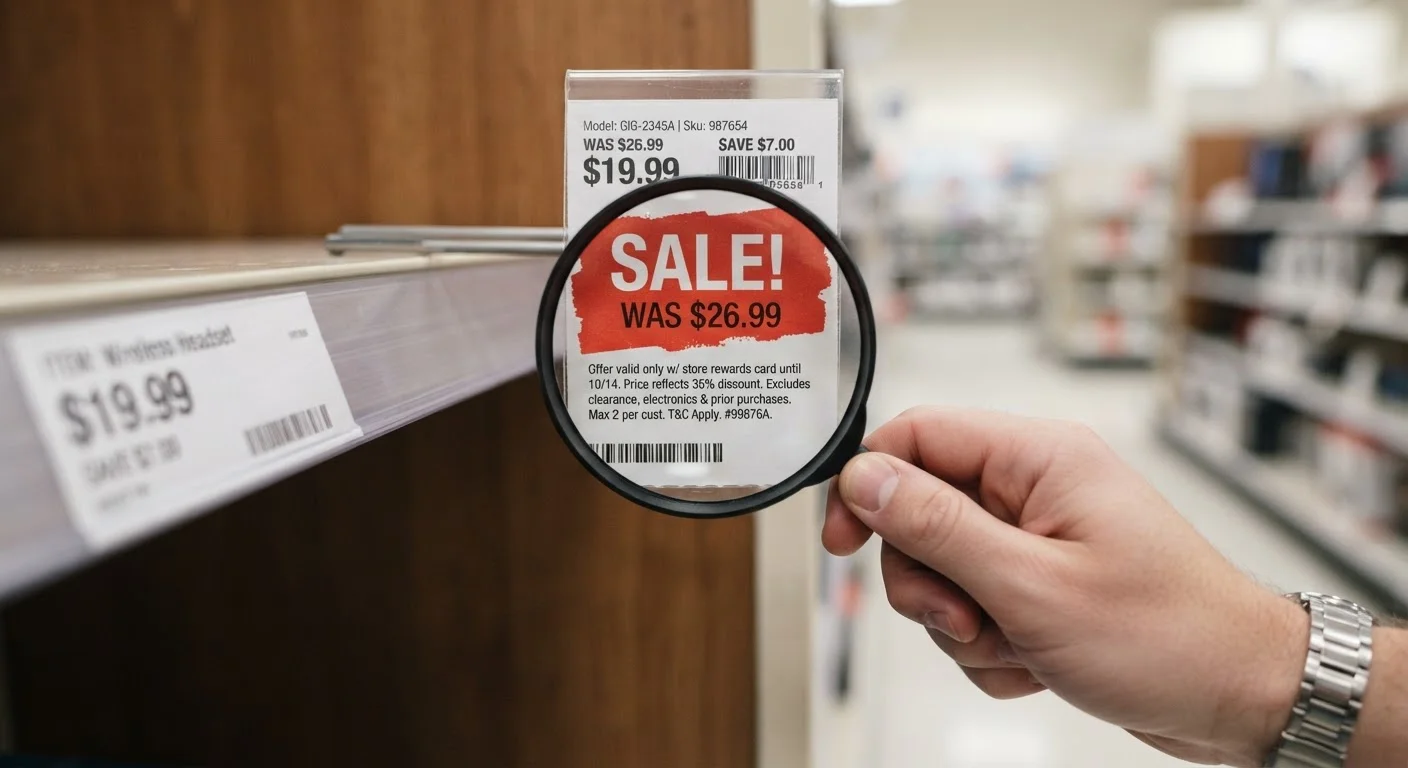
A genuine deal is a price reduction that reflects an actual, verifiable decrease from what an item normally sells for - not a discount calculated from an inflated or rarely-charged reference price. Real savings mean you pay meaningfully less than the item's true market value without hidden costs offsetting the difference. Marketing noise, by contrast, is the use of discount theater - large percentage banners, countdown timers, or "original" prices that were never the norm - designed to create urgency without delivering proportionate value.
The FTC's Guides Against Deceptive Pricing state that a "former price" used to frame a discount must represent an actual price at which the item was offered for a substantial period of time - a standard many promotional markdowns do not meet.
Why Most "Deals" Aren't What They Claim
American retail is engineered around the perception of savings. Walk through any store or scroll any product page and you'll encounter strikethrough prices, percentage-off banners, and flash timers - all implying that acting now means winning. The uncomfortable truth is that many of these signals are constructed, not discovered. Understanding the difference is the foundational skill of any serious shopper.
The core mechanism behind most retail noise is reference pricing - displaying a higher "original" or "was" price to make a lower price look like a significant reduction. When that higher figure is inflated or was only briefly charged, the discount is largely theatrical. As the detailed breakdown of reference pricing explains, this practice is widespread and legal within broad limits, which means shoppers can't rely on retailers to frame prices honestly.
The antidote isn't cynicism - it's a specific, repeatable framework for evaluating whether a price is actually lower than it should be.
The Three Signals That Indicate Genuine Value
Cutting through promotional noise means focusing on a small set of verifiable signals rather than retailer-provided context. Three stand out consistently:
- Price history. A deal is only a deal relative to what the item has actually sold for. Browser extensions and price-tracking tools log historical sale prices across major retailers. If a current price sits below the item's 90-day average, that's meaningful signal. If the price has been at this level for weeks, the "sale" framing is cosmetic.
- Cross-retailer comparison. A price that looks attractive at one retailer may be standard or even above-average elsewhere. Checking two or three competing sources takes minutes and routinely reveals whether a discount is store-specific or reflects a genuine category-wide price movement.
- Total cost accounting. The advertised price is rarely the full price. Shipping, required accessories, subscription fees, and restocking policies all factor into real cost. A headline price that's 15% lower than a competitor's can vanish quickly when shipping fees are included. Unit pricing and total-cost thinking applies equally to bulk purchases and single-item deals.
~87%
Shoppers influenced by sale signage
Research published in the Journal of Marketing has found that "sale" labels increase purchase likelihood even when the price is unchanged - illustrating how formatting drives behavior independently of actual savings.
2-3 min
Time to verify a price with tracking tools
Most free browser-based price history tools return a full pricing timeline in under three minutes, making verification practical for any purchase above a modest threshold.
Up to 30%
Price variation for identical items across retailers
Consumer reports and price-tracking analyses have documented price spreads of 20-30% or more for identical products listed simultaneously across major U.S. online retailers.
Urgency Tactics: Pressure Without Proof
Countdown timers, "only 3 left in stock" notices, and "today only" labels are among the most heavily researched tools in retail psychology. Their purpose is singular: compress the time a consumer has to think. Research in consumer behavior consistently finds that artificial scarcity and time pressure increase purchase rates - whether or not the deal has genuine merit.
Recognizing these patterns doesn't require paranoia. It requires a simple rule: urgency is a prompt to verify, not a reason to act. If a timer is running, check the price history. If stock is listed as low, note whether that item has been "low stock" for days. The broader landscape of consumer traps is built on exactly these mechanisms, repeated across categories.
“Consumers systematically underestimate how much their purchasing decisions are shaped by the context in which prices are presented, rather than the prices themselves.”
— Richard Thaler, Nobel Prize-winning economist and behavioral economics researcher
The practical counter is to establish a target price before you encounter a promotion. When you already know what you're willing to pay for a specific item, promotional framing loses much of its power - the question becomes simply whether the current price clears your threshold, not whether the retailer's countdown should be trusted.
Applying the Framework Before You Shop
The most reliable deal-finding habit isn't reactive - it's prospective. Shoppers who consistently pay less tend to research items before they need them, set price alerts, and treat promotional events as opportunities to check, not obligations to buy. This approach is covered in depth in the core habits of systematic deal hunters.
A few structural habits that reinforce this mindset:
- Build a short list of items you expect to buy in the next one to three months. Research their price history now, not when a sale lands.
- Set a specific target price - not a percentage off, but a dollar figure based on verified market data.
- When a promotion arrives, run it through the three signals above before deciding. The complete playbook for finding lower prices offers an end-to-end structure for this process.
- Account for total cost in your target, including shipping and any predictable add-ons.
One often-overlooked angle: consider what happens when you wait. Sometimes holding for a sale is genuinely rational; other times the hidden costs of delay outweigh any potential discount. The anatomy of a good deal includes knowing when not to wait as much as knowing when to act.
Set Your Price Before You See the Sale
Research an item's price history and set a concrete dollar target before you encounter any promotion. When you arrive at a sale already knowing your threshold, you evaluate the actual price - not the retailer's framing of it. This single habit removes most of the emotional leverage that urgency tactics rely on.