

Key Takeaways
- Retailers engineer the physical and digital shopping environment to prompt purchases you didn't plan to make.
- Scarcity cues, strategic product placement, and sensory design are among the most documented tactics.
- Checkout zones - both in-store and online - are especially optimized for unplanned add-on purchases.
- Awareness of these tactics doesn't guarantee immunity, but it creates a deliberate pause before spending.
- Timed urgency prompts and countdown timers exploit anxiety, not genuine deal value.
Impulse Buying Triggers
Impulse buying triggers are deliberate design choices - in store layouts, pricing displays, website interfaces, and sensory environments - that retailers use to prompt unplanned purchases. They exploit predictable quirks in how the human brain evaluates value, urgency, and reward. Most shoppers encounter dozens of these triggers on a single trip without recognizing them.
In consumer behavior research, these triggers are often studied under the umbrella of 'choice architecture' - the idea that the context surrounding a decision shapes the outcome as much as the decision itself.
The Store Layout Is a Sales Tool
Physical retail stores are not arranged for shopper convenience - they're arranged for revenue. The practice is backed by decades of consumer behavior research and refined continuously through store analytics. A few structural patterns appear across virtually every major brick-and-mortar retailer.
Perimeter placement of essentials. Grocery staples like dairy, bread, and produce tend to be positioned along the outer edges or back of the store. This routing forces shoppers through more aisles, increasing exposure to non-essential items. The more ground you cover, the more trigger opportunities the retailer creates.
Eye-level stocking. Products placed at adult eye level consistently outsell those placed higher or lower. Higher-margin items are deliberately positioned in that prime zone. Store-brand equivalents are often placed at knee or ankle height - functional but harder to notice at a glance.
End-cap and transition zones. The displays at the end of aisles and at major transition points (entering a new department, rounding a corner) are premium real estate. These spots interrupt the shopper's routine path and are frequently stocked with promoted or high-margin goods, whether or not they represent genuine value.
Understanding the layout logic doesn't require cynicism - it's simply useful information. For more on how store-level pricing strategies complement these layouts, see retail pricing psychology.
This Is General Consumer Education
The tactics described here are documented features of retail environments, not claims about any specific retailer's practices. Individual stores vary widely. The goal is to help you recognize common patterns, not to suggest that every purchase prompt is deceptive. Informed awareness is the objective.
Checkout Zones and the Last-Minute Push
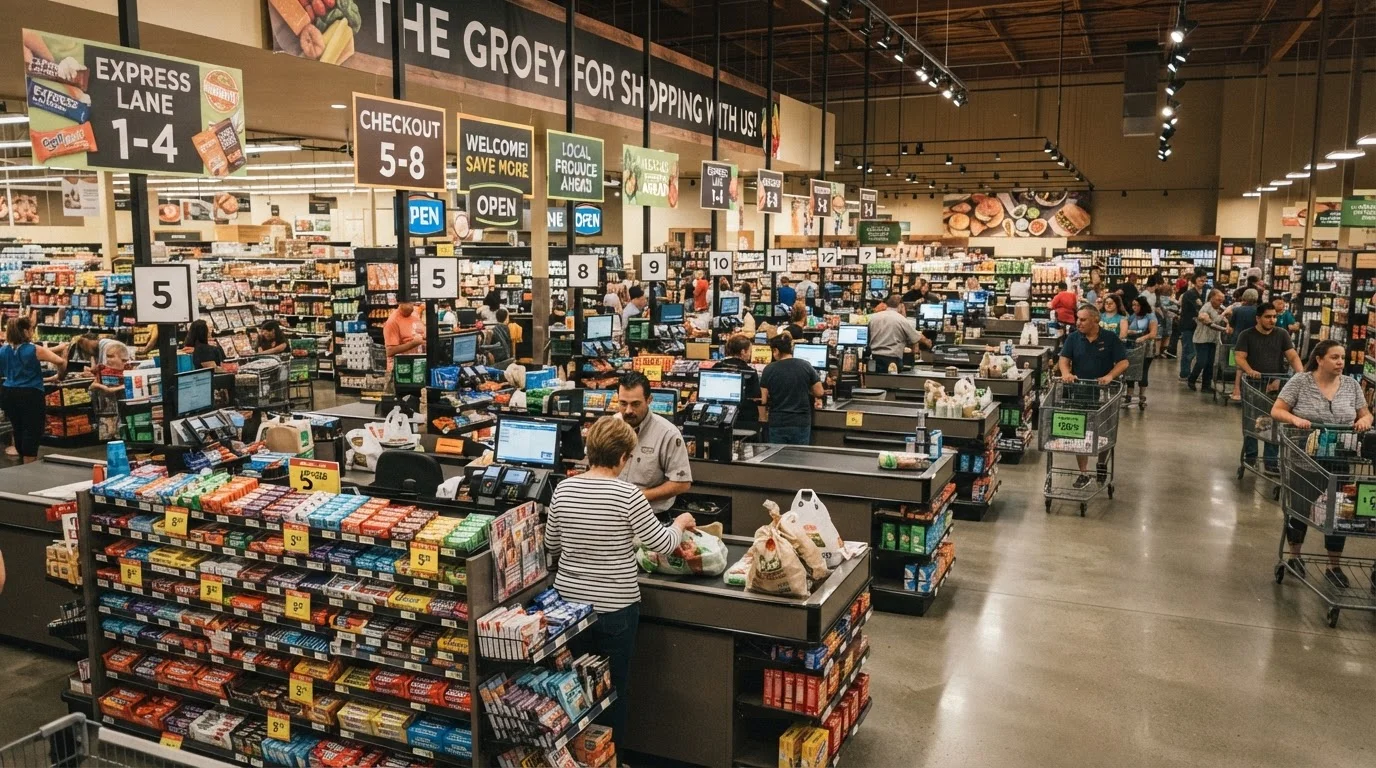
The checkout area - whether a physical queue or the digital equivalent - is the most intensively optimized zone in any retail environment. By the time a shopper reaches it, they're in a lower-resistance state: decisions have been made, mental energy is reduced, and the purchase mindset is already active.
In-store checkout lanes are lined with small, low-cost items designed to clear the impulse threshold with minimal deliberation. The price points are chosen specifically to feel inconsequential. Candy, batteries, travel-size items, and magazines are staples because they require almost no justification in the moment.
Online checkout flows replicate this dynamic through 'add-on' suggestions, bundle offers, and last-second upsell prompts presented just before payment confirmation. One-click purchasing removes a friction point that previously gave shoppers a natural pause. Reducing steps reduces the chance of reconsideration.
~40-80%
Share of in-store purchases that are unplanned
Multiple consumer behavior studies over the past three decades have estimated that a large proportion of supermarket and general retail purchases were not on the shopper's original list, though estimates vary by store type and methodology.
2-3x
Sales lift from eye-level vs. lower shelf placement
Retail shelf placement studies have consistently found that products positioned at adult eye level significantly outsell the same products placed at floor or ankle height.
Seconds
Average time spent deciding on an impulse purchase
Consumer decision research suggests that many low-cost impulse purchases involve deliberation measured in seconds rather than minutes, underscoring how effectively environmental cues bypass rational evaluation.
Retailers also use cart-abandonment recovery tools - emails or notifications triggered when a digital cart is left without purchase - to re-engage shoppers after the initial impulse has passed. These are calibrated to arrive when the emotional window is still at least partially open. For practical countermeasures, the research on impulse purchase psychology offers useful framing.
Artificial Urgency and Scarcity Cues
Urgency and scarcity are two of the most reliable levers in retail psychology. Both exploit a well-documented cognitive tendency: the potential loss of an opportunity tends to feel more motivating than an equivalent gain. Retailers know this and build it into both physical and digital environments.
Countdown timers on e-commerce sites create time pressure that may or may not reflect a genuine constraint. The deadline can feel viscerally real even when the underlying offer is renewable or arbitrary. The anxiety response is genuine even when the scarcity is manufactured.
Low-stock indicators - 'Only 3 left!' labels - function similarly. Consumer research has shown that perceived scarcity increases perceived value, independent of the item's actual merit. A product flagged as nearly gone can seem more desirable purely because of that flag.
Flash sale framing ties both urgency and pricing together. The compressed time window short-circuits comparison shopping, which is exactly the point. Even when the underlying price isn't exceptional, the framing positions inaction as the riskier choice. For a broader look at how sale cycles are actually structured, see how seasonal markdown cycles work.
Pause Before Any Unplanned Add-On
Before adding any item not on your original list - whether in-store or online - give yourself a defined waiting period. Even 60 seconds of deliberate consideration changes the nature of the decision from automatic to intentional. Ask: 'Would I have come here specifically for this?' If the answer is no, that's useful information.
Sensory Design and Social Proof
Beyond layout and pricing mechanics, retailers use sensory inputs and social signals to lower purchase resistance in ways that are easy to overlook.
Ambient music tempo influences pace of movement through a store. Slower music is associated with longer browsing times and higher average spend in some retail research contexts. Scent - notably in food retail and some apparel environments - can prime positive emotional states that make spending feel less consequential.
Lighting and color are calibrated by department. Warm, softer lighting in apparel sections creates a flattering environment that influences how products are evaluated. Bright, cool lighting in electronics sections signals precision and quality. Neither is accidental.
Social proof mechanisms - star ratings, review counts, 'bestseller' labels, and purchase activity notifications ('47 people are viewing this item') - introduce a social dimension to what might otherwise be a solitary decision. They suggest consensus without requiring the shopper to verify it independently.
Recognizing these signals as design choices, rather than neutral information, is the starting point for more deliberate shopping. The tactics that catch even careful shoppers covers additional mechanisms worth knowing. For building long-term habits that hold up against these pressures, smarter online shopping habits offers a practical framework.