

Key Takeaways
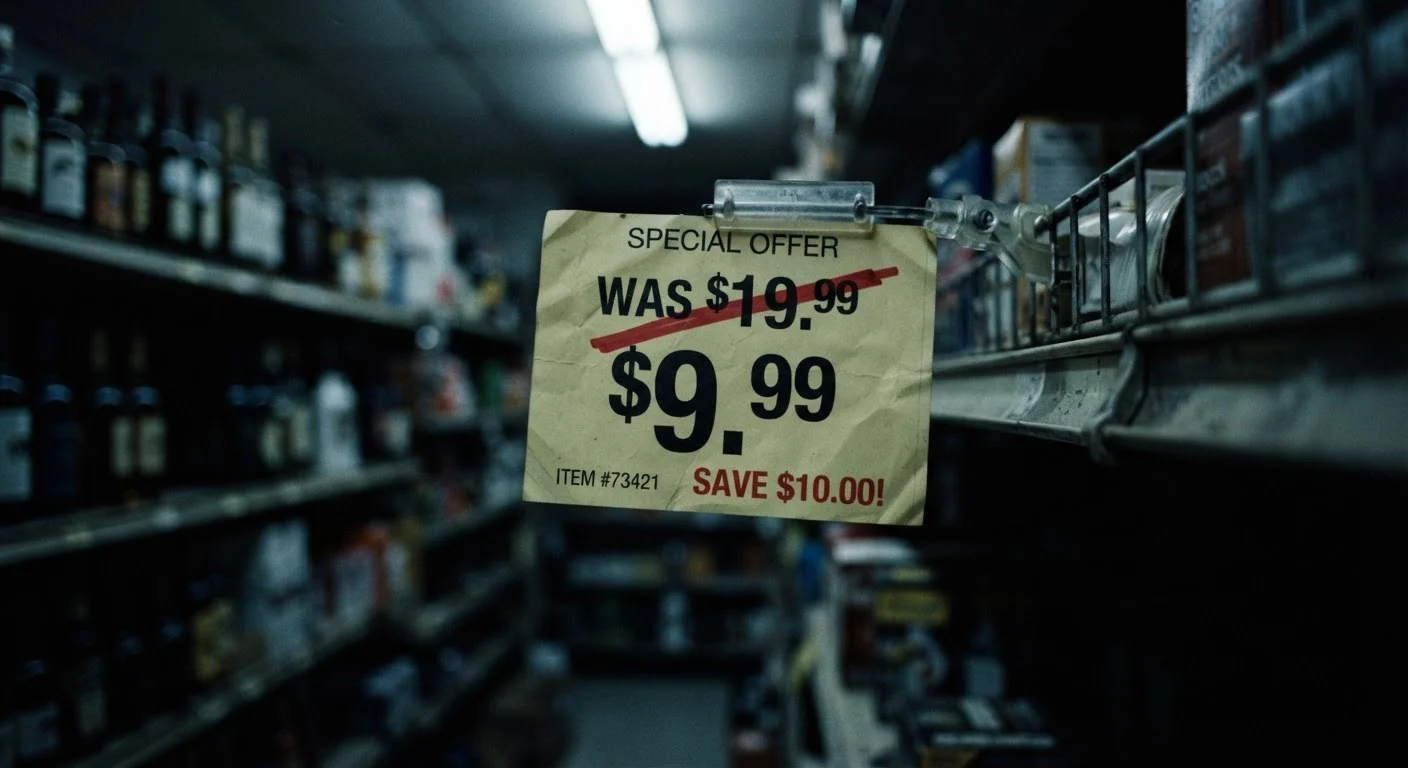
- Charm pricing ($9.99 vs. $10) exploits how the brain processes numbers left-to-right, making prices feel significantly lower than they are.
- Price anchoring uses a high reference point - often artificial - to make the actual asking price seem like a bargain.
- Decoy pricing introduces a third, deliberately unattractive option to make one specific choice look more reasonable.
- Scarcity and urgency cues trigger loss aversion, pushing shoppers to decide before they're ready.
- Awareness of these tactics is the most reliable defense - you can't unsee a pricing trick once you understand how it works.
Retail Pricing Psychology
Retail pricing psychology refers to the strategies merchants use to influence how shoppers perceive prices and make purchase decisions. These tactics exploit predictable cognitive biases - mental shortcuts our brains take - rather than purely reflecting product value. Understanding them doesn't require a psychology degree; it just requires knowing what to look for.
Behavioral economists call these influences "choice architecture" - the way options are framed shapes decisions as powerfully as the options themselves, a principle documented extensively in the work of researchers like Daniel Kahneman and Richard Thaler.
How Retailers Turn Number Perception Into Revenue
Every price you see in a store or on a product page has been deliberated over. Retailers and their pricing teams draw on decades of consumer behavior research to present numbers in ways that encourage spending. The core insight: humans don't evaluate prices in absolute terms. We evaluate them in relative terms - compared to nearby numbers, recent memory, and our expectations.
Three foundational tactics underpin most of what you encounter:
- Charm pricing - ending prices in .99 or .95 to exploit left-digit anchoring
- Reference pricing (anchoring) - displaying an inflated "original" price to make the current price feel like a deal
- Decoy pricing - introducing a third option that makes your intended upsell look rational
These aren't fringe tactics. They're mainstream retail practice, applied consistently across grocery, apparel, electronics, and even car dealerships - a context covered in depth in the Car Costs & Buying hub.
~$0.01
Actual difference in charm pricing
Research in the Journal of Consumer Research found that prices ending in .99 are consistently perceived as significantly lower than the next whole dollar - despite the gap being a single cent.
2x
Weight of losses vs. equivalent gains
Nobel laureate Daniel Kahneman's research on prospect theory found that people feel losses roughly twice as powerfully as they feel equivalent gains, which is why scarcity cues are so effective.
Up to 30%
Sales lift from decoy option
Behavioral economics studies, including research associated with Dan Ariely's work at MIT, have shown that introducing a decoy option can shift purchase share toward the target option by substantial margins.
Anchoring: The Phantom Price That Shapes Your Judgment
Anchoring is arguably the most powerful pricing manipulation most shoppers never consciously notice. When a retailer shows you a price of $249 next to a crossed-out $499, your brain immediately uses $499 as a reference point. The $249 feels like it represents real value - a genuine 50% savings. But the relevant question you rarely think to ask is: was $499 ever a real price that real customers paid?
Reference prices in retail advertising are frequently aspirational list prices (MSRP) that few buyers ever paid, or inflated "compare at" figures from unverified sources. The FTC has rules about deceptive reference pricing, but enforcement is inconsistent and the burden on consumers to investigate is high.
The practical countermeasure is to evaluate a price on its own merits - is this item worth this amount to me, regardless of what the tag claims it used to cost? For a structured framework on spotting genuine versus manufactured discounts, see The Anatomy of a Good Deal.
“A person can know that the anchor is irrelevant information, and yet will still be influenced by it. Anchoring effects are among the most reliable and robust findings in social psychology.”
— Daniel Kahneman, Nobel laureate in Economic Sciences and author of 'Thinking, Fast and Slow'
Scarcity, Urgency, and Loss Aversion in Pricing
"Only 3 left in stock." "Sale ends tonight." These aren't just informational - they're psychological levers designed to activate loss aversion, the well-documented tendency for humans to feel potential losses more acutely than equivalent gains. When scarcity signals appear, the rational calculus of whether you actually need the item often gets crowded out by the fear of missing out.
Urgency cues are especially effective online, where countdown timers and low-stock alerts can be dynamically generated - and are not always accurate reflections of actual inventory or deadline constraints. This connects directly to the broader patterns described in our coverage of impulse buying triggers retailers engineer into the shopping experience.
A simple resistance strategy: treat any urgency cue as a reason to pause, not to act. If an item is genuinely worth buying, it will still be worth buying in 24 hours - and the decision made with a clear head is almost always better than one made under manufactured pressure.
What You Can Actually Do With This Knowledge
Understanding pricing psychology doesn't automatically immunize you - cognitive biases are partly automatic. But awareness measurably shifts behavior. Here are practical applications:
- Set your price before you browse. Decide the maximum you'd pay for a category of item before you see any retailer's framing. This limits how much anchoring can distort your judgment.
- Compare unit prices, not package prices. A "value size" that costs more per ounce than the standard size is not a value. Unit pricing strips away bundling tricks.
- Ignore the "was" price by default. Evaluate what the item is worth to you at the current price, independently of any reference figure.
- Recognize the decoy. When three options are presented and one seems absurdly placed, ask which option that middle tier is designed to push you toward.
These habits compound. Shoppers who apply them consistently report making fewer regretted purchases - not because they spend less, but because their spending is more intentional. For a comprehensive set of deal-finding strategies that complement this awareness, the Complete Shopper's Playbook is a useful resource. And if you want to understand how these same dynamics play out in digital retail environments, our piece on how online pricing actually works goes deeper on algorithmic and dynamic pricing tactics.