

Key Takeaways
- Reference prices are only meaningful if an item genuinely sold at that price for a significant period.
- The FTC and state attorneys general have pursued retailers for deceptive reference pricing practices.
- Price history tools let you verify whether a 'sale' represents an actual drop from a real previous price.
- A large percentage discount is not itself evidence that the underlying deal is good.
- Comparing the sale price to competing retailers is often more reliable than trusting the crossed-out figure.
Option A
Sale Price
The number you're meant to act on.
Best for: Shoppers who want to understand what they're actually paying at the register - and whether it reflects real market value.
Option B
Reference Price
The number designed to shape your perception.
Best for: Shoppers who want to understand how retailers establish a pricing anchor - and when that anchor is legitimate versus inflated.
If you want to know what you'll pay today
Sale Price
The sale price is the only number that directly reflects your out-of-pocket cost. Focus on it - then independently verify whether it's competitive.
If you want to assess whether a discount is genuine
Reference Price
A reference price, when legitimate and verifiable, tells you where the price has been. Cross-check it against price history tools before trusting it.
If you're shopping major sale events like Black Friday
Sale Price
Reference prices are most aggressively inflated during major promotional events. Anchor to the sale price and compare it externally rather than to the crossed-out figure.
If you're buying something infrequently purchased, like appliances
Reference Price
For categories where you lack price intuition, a verified reference price (confirmed through price history) can provide genuinely useful context about typical pricing.
The Two Numbers on Every Sale Tag
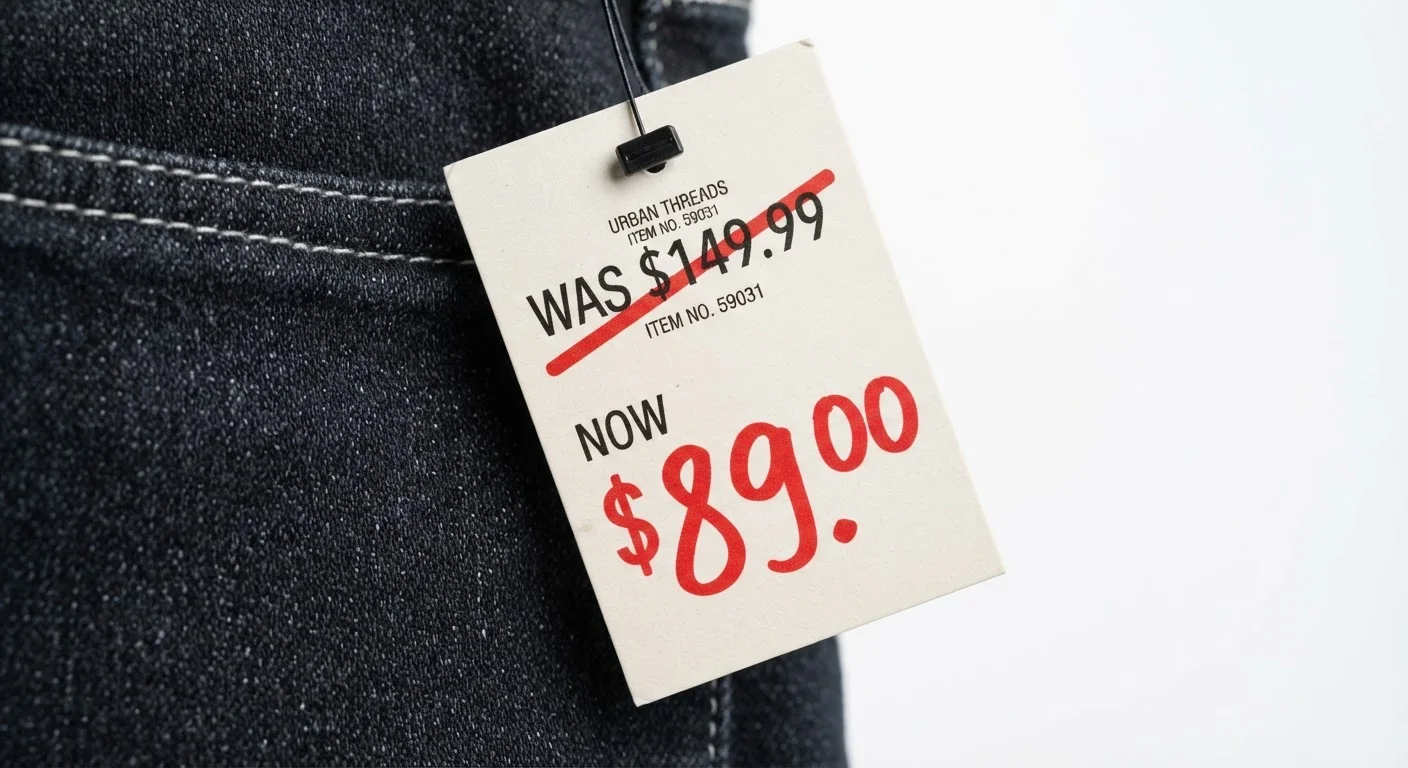
Walk through any retail store or scroll any e-commerce site during a promotional period, and you'll encounter the same familiar sight: a large number crossed out, a smaller number displayed boldly beneath it, and a percentage off highlighted in red. These two numbers - the sale price and the reference price - are doing very different jobs, and understanding that distinction is one of the most practical things a shopper can learn.
The sale price is straightforward: it's what you pay. It's a real, transactional number. The reference price - also called a comparison price, original price, or "was" price - is a contextual number. Its entire purpose is to make the sale price feel like a bargain by establishing a higher benchmark. The problem is that benchmark can be manufactured, inflated, or technically true but practically meaningless.
For a deeper look at how retailers construct these psychological signals, see our article on retail pricing psychology.
| Criterion | Sale Price | Reference Price |
|---|---|---|
| What it represents | What you actually pay | A benchmark to anchor perception |
| Reliability | Always accurate as stated | Varies - can be genuine or inflated |
| Regulatory scrutiny | Less frequently challenged | Subject to FTC and state deceptive pricing rules |
| How to verify | Compare to other retailers | Check price history tools and sale duration |
| Psychological role | Triggers the purchase decision | Creates the perception of savings |
| Most useful signal when... | You know the fair market price | It's verified as a genuine prior price |
When Reference Prices Are Legitimate - and When They're Not
Not every reference price is deceptive. If a jacket genuinely retailed at $120 for several months and is now marked down to $80, that crossed-out $120 gives you real information. The issue is that retail practice has frequently stretched well beyond that honest scenario.
Common forms of reference price inflation include:
- Phantom original prices: An item is briefly offered at an inflated price - sometimes for just a day or two - before being "discounted" to the intended selling price. Technically, it was offered at that price; practically, no one paid it.
- Manufacturer's suggested retail price (MSRP) as the reference: MSRP often bears little relationship to actual street prices. Using it as a reference inflates the apparent savings.
- Perpetual sales: Some retailers run the same "sale" continuously, meaning the sale price is simply the real price and the reference price is theater.
The Federal Trade Commission has issued guidance on deceptive pricing, and multiple states have taken legal action against retailers for exactly these practices. The rule of thumb: a reference price is meaningful only if the item was regularly sold at that price for a substantial period at the same retailer.
State Laws on Reference Pricing Vary
Several U.S. states - including California and New York - have specific statutes governing how retailers may use comparison prices in advertising. Requirements typically include that the reference price must have been the actual selling price for a defined minimum period. Enforcement has varied, but consumers in these states may have additional recourse if they believe a reference price was deceptive. Checking your state's consumer protection office is worthwhile if you encounter a pricing practice that seems misleading.
For a broader breakdown of what actually constitutes a genuine deal, see The Anatomy of a Good Deal.
How to Verify a Reference Price Before You Buy
The most reliable way to evaluate a reference price is to check what the item has actually sold for over time. Price history tracking tools - available for many major e-commerce platforms - log historical prices and display them as a chart. If the reference price appears only briefly before the current sale, that's a significant red flag.
87%
Shoppers influenced by crossed-out prices
Research in consumer behavior has consistently shown that the presence of a higher reference price significantly increases purchase intent, regardless of whether the reference price reflects actual prior value.
2-3 days
Minimum offer period for some phantom prices
Investigations by consumer journalists and regulators have found some retailers briefly listing items at inflated prices for as little as a day or two before running a 'sale' at the intended selling price.
Beyond price history, comparison shopping across multiple retailers is often the most grounded reality check. If competitors are selling the same item at or near the "sale" price without any crossed-out reference price, the reference price at the first retailer is likely inflated.
Other practical checks:
- Search the item's model number with the word "price" to find what others are currently charging.
- Note whether the sale has an end date - perpetual sales rarely do.
- Check whether the reference price matches the listed MSRP. If it does, the implied savings may be overstated since MSRP is rarely the actual street price for most goods.
If you're building these habits from scratch, the deal hunting fundamentals guide is a useful starting point. And for category-specific pricing dynamics - including why the same item may cost different amounts on the same platform - see how online pricing actually works.