

Key Takeaways
- A lower unit price on bulk goods doesn't guarantee savings if product goes to waste.
- Storage costs, spoilage risk, and cash flow impact all affect the true value of bulk buying.
- Unit pricing labels - required in many U.S. states - are your best tool for real comparison.
- Bulk buying makes the most sense for non-perishables you use at a reliable, consistent rate.
- Retailers use large packaging and club memberships strategically to increase average spend per visit.
The Bulk-Is-Better Assumption - and Where It Comes From
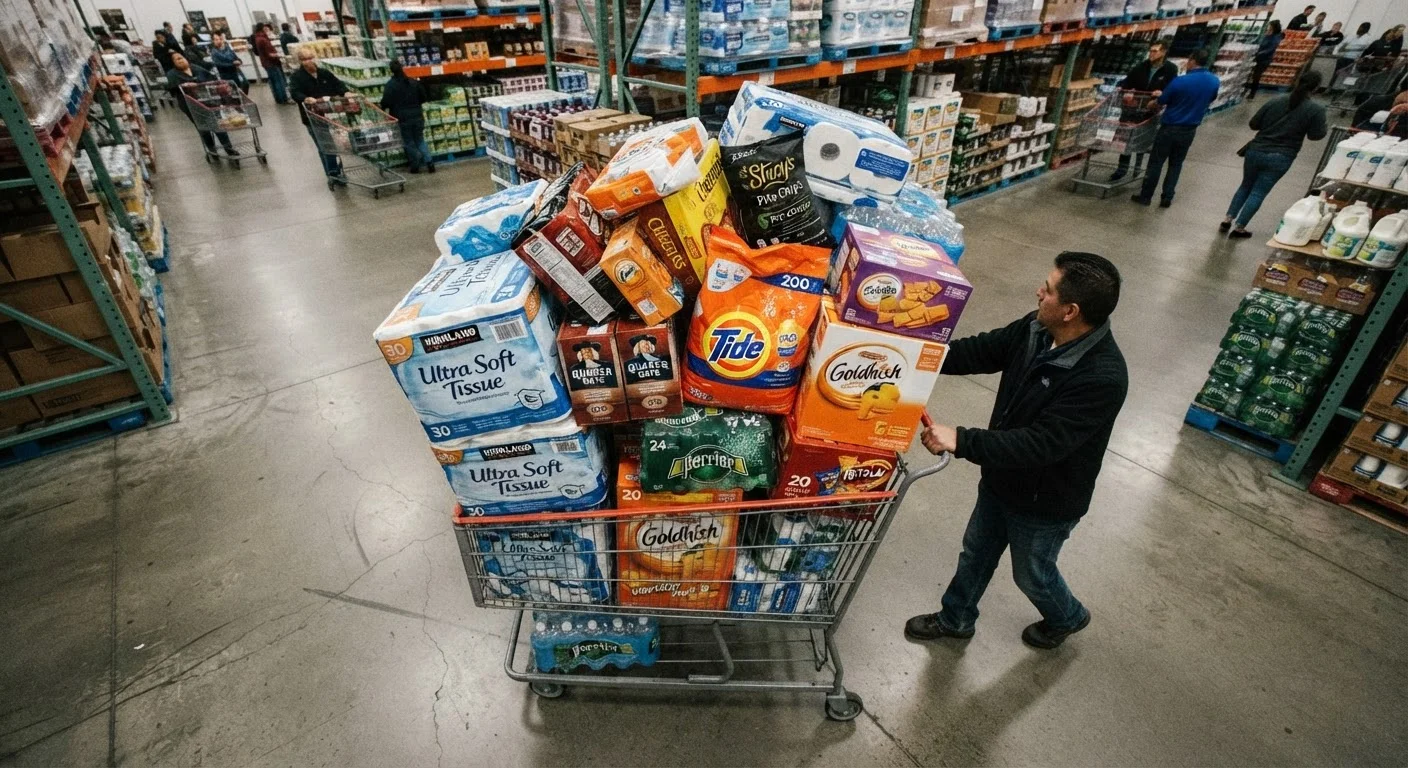
Walk into any warehouse club or big-box store and the message is unmistakable: buy more, pay less per unit. It's a compelling pitch, and it's not entirely wrong. Economies of scale are real, and manufacturers do pass some savings along when packaging and shipping costs are distributed across larger quantities. The problem is that shoppers often stop the analysis right there - at the shelf price - without accounting for what happens after the product leaves the store.
Retailers are skilled at designing the bulk-buying experience to feel like a smart financial move. Oversized packaging makes price tags look small. Club membership fees create psychological pressure to justify the investment by spending more. And the sheer abundance of a 48-pack or a 5-pound bag triggers a sense of security that can override rational calculation. Understanding these mechanics is the first step to shopping around them. For a broader look at how retailers shape perceived value, see what actually separates real savings from marketing noise.
Myth vs. Fact: What Bulk Buying Actually Delivers
Let's work through the most persistent misconceptions about buying in bulk - and replace them with a more complete picture.
Myth
The bulk package always has a lower price per unit than the regular size.
Fact
Unit pricing audits consistently find exceptions - sometimes the regular or mid-size package is cheaper per ounce or per count.
Many U.S. states require retailers to display unit pricing on shelf tags, specifically so consumers can make apples-to-apples comparisons. When shoppers actually use those tags, they frequently discover that the bulk size isn't the cheapest option. Retailers may discount a smaller size to move inventory, or price the bulk item at a premium because customers assume it must be the deal. Always check the price-per-unit figure, not just the total sticker price. If a unit price label isn't visible, divide the total price by the quantity yourself before putting anything in your cart.
Myth
Buying in bulk always saves money over time.
Fact
Savings are only realized if you use the product before it expires, degrades, or becomes unwanted - and many households don't.
Consumer researchers have documented a pattern sometimes called "pantry blindness" - when you have an abundance of a product, you're less careful about using it efficiently because scarcity isn't signaling urgency. Bulk purchases of food, in particular, can result in significant waste. The USDA has estimated that American households discard a substantial share of the food they buy. If even a fraction of a bulk purchase ends up in the trash, the unit-price advantage evaporates quickly. Calculate your realistic consumption rate before committing to a large quantity.
Myth
Warehouse club memberships pay for themselves just by shopping there regularly.
Fact
Whether a membership generates net savings depends entirely on which items you buy, how often, and whether those specific items are genuinely cheaper there.
Annual membership fees at major warehouse clubs typically run $60-$130. To break even, you need to generate at least that much in genuine savings - compared to what you'd actually pay at the alternatives you'd otherwise use, not compared to full retail prices. High-margin perishables like rotisserie chicken and gasoline are often the strongest value drivers at these stores. If your bulk purchases consist primarily of items where the unit price advantage is marginal or nonexistent, the membership fee becomes a net cost rather than an investment. Treat the membership fee as a fixed overhead line item in your household budget and evaluate it annually.
Myth
If you have the storage space, there's no downside to stocking up.
Fact
Even with available storage, bulk buying can tie up cash, create clutter that leads to disorganization, and cause you to miss better prices later.
Buying a year's supply of any product assumes today's price is the lowest you'll ever see - which isn't necessarily true. Prices fluctuate due to promotions, competition, and supply chain changes. Stocking up heavily also reduces your flexibility to take advantage of future deals on the same category. There's also an organizational cost: when storage areas become overstocked and disorganized, households frequently lose track of what they have and buy duplicates anyway. Storage availability is a necessary condition for bulk buying to make sense, but it's not sufficient on its own. The real cost of convenience applies here too - the time spent managing an overstuffed pantry has value.
The Hidden Costs That Erode Bulk Savings
Even when the unit price genuinely is lower, three factors can quietly cancel out that advantage.
Spoilage and Expiration
Perishables are the most obvious risk, but even shelf-stable goods have a window. Cooking oils go rancid, flour attracts pests, and medications lose potency. If you don't consume the product before it degrades, you've paid for goods you can't use. The savings calculation has to include a realistic waste estimate - not an optimistic one.
Storage Costs
Space isn't free. A chest freezer consumes electricity year-round. Renting a storage unit to handle overflow negates almost any per-unit discount. Even in your own home, dedicating square footage to bulk inventory has an opportunity cost. This is especially relevant in high-cost-of-living areas where living space is at a premium.
Tied-Up Cash
Buying twelve months of laundry detergent upfront locks capital that could have been used elsewhere. For households on tight monthly budgets, that cash-flow strain is a real cost - one that doesn't appear on any price tag. This is a consideration that often goes undiscussed in conversations about frugal shopping strategies.
30-40%
Estimated share of food wasted per U.S. household
The USDA and EPA have both estimated that U.S. households waste roughly 30-40% of the food supply, a figure that directly undermines the logic of bulk perishable purchases.
$60-$130
Typical annual warehouse club membership fee
Major U.S. warehouse clubs charge annual fees in this range, meaning shoppers must generate at least this much in real savings just to break even on the membership itself.
When Bulk Buying Is Genuinely Worth It
None of this means bulk shopping is a bad idea - it means it requires judgment. The strongest case for buying in bulk involves three conditions being true simultaneously: the item is non-perishable (or you'll consume it well before expiry), you have verified via unit pricing that the bulk option is actually cheaper per unit, and you have adequate, cost-free storage available.
Household staples like toilet paper, dish soap, and canned goods often pass all three tests. Items you use at an unpredictable rate, products you've never tried before, or anything with an expiration date shorter than your realistic consumption window often fail them. It's also worth comparing the bulk price to non-bulk prices at different retailers - in-store and online channels price goods differently, and a regular-size item on sale at a standard grocery store can sometimes undercut a warehouse club's bulk unit price.
Always Check the Unit Price - Not Just the Tag
The shelf unit price (price per ounce, per count, per sheet) is the only reliable basis for comparing package sizes. Many U.S. states legally require retailers to display this figure, but the label can be easy to miss or formatted inconsistently. If you can't find it, do the math yourself: divide the total price by the total quantity. A few seconds of arithmetic can prevent a surprisingly common and costly assumption.
This article is for general informational purposes only and does not constitute financial advice. Shopping decisions depend on your individual household circumstances.